NBA's '3-2-1 Lottery' Reform Is Real, Imminent, and the Futures Market Hasn't Caught Up
By Justin Erickson ·
The league is about to make deliberate losing structurally irrational — and that changes how you should be thinking about every bottom-feeder's win-total and futures price right now.
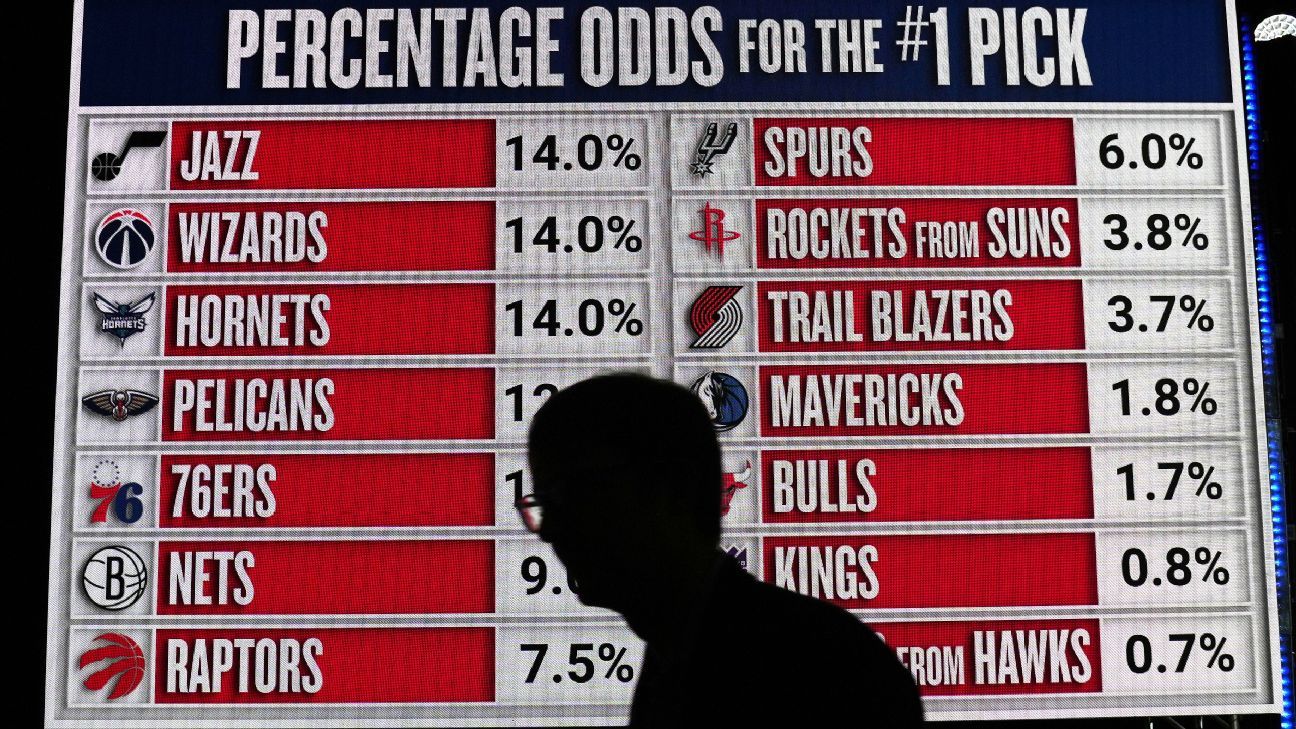
The NBA is weeks away from reshaping the incentive structure that has governed tanking for a generation. As ESPN reported Tuesday, the league has presented its 30 general managers with a sweeping draft lottery overhaul — the '3-2-1 Lottery' — set for a Board of Governors vote on May 28. The framework expands the lottery field from 14 to 16 teams, flattens odds across the middle tier, and punishes the three worst teams in the league with fewer lottery balls and a guaranteed floor of only the 12th pick. The vote is a formality. The support is already there.
Here's the mechanical core of what changes: teams finishing fourth through tenth in the non-playoff standings each get three lottery balls — equal footing, no reward for being slightly worse than your neighbor. The bottom three teams drop to two balls each, stripping away the probabilistic jackpot that made tanking a coherent front-office strategy. Play-in participants get two balls (9 and 10 seeds) or one ball (7-8 game losers), pulling winning-adjacent teams into the lottery mix entirely. Commissioner Adam Silver, who declared in March that fixing tanking was his singular priority, put it plainly: 'We are going to fix it. Full stop.' Additional teeth include a ban on consecutive No. 1 picks, a prohibition on three straight top-five wins, and expanded league authority to directly penalize organizations it deems to be tanking.
The sunset clause — the system expires after the 2029 draft, aligned with the current CBA window — tells you this is a structural experiment, not a permanent constitution. But from a competitive-behavior standpoint, the effect is immediate once teams internalize the new math. The relegation zone punishes the bottom three specifically, which means a team finishing 28th rather than 27th faces a materially worse outcome. That reverses the current logic where the gap between 27th and 30th is largely irrelevant — even slightly preferable. Front offices will now fight to escape the bottom tier, not settle into it. Second-half schedules in rebuilding markets just became meaningfully more contested.
For bettors, the practical impact kicks in during the 2026-27 season — the first campaign played under these rules. Win totals for perennial lottery squads like the Wizards, Jazz, Hornets, and Spurs are going to be priced with legacy assumptions baked in: books will open these teams in the 20-25 win range because that's what the historical tanking floor looked like. But if the 3-2-1 framework actually rewires roster decisions and coaching incentives, those teams play harder in March and April. That's a structural lean toward the over on win totals for confirmed rebuilders. The effect won't be enormous — you're not turning the Jazz into a playoff team — but shaving four to six genuine tank-mode losses off a 162-game NBA regular season is plausible, and a 24.5 win total for a team that would have previously targeted 20 wins is a line worth attacking.
Futures pricing on lottery-position odds also deserves a second look once books start posting 2026-27 props. The flattened structure means the difference between the 4th-worst and 10th-worst record carries almost no lottery consequence — three balls is three balls. That compresses the value of marginal tank positioning and, in theory, should push mid-tier rebuilders toward roster decisions that prioritize development and competitive reps over raw losing. Any book posting team win-total props before this rule is fully digested by the market is offering stale lines. The edge is in getting there first.