Vanderbilt Out With Dislocated Pinky: What It Costs the Lakers Against OKC
By Justin Erickson ·
Losing your best perimeter defender in Game 1 of a second-round playoff series isn't just bad injury luck — it's a structural problem that reshapes how you bet this series.
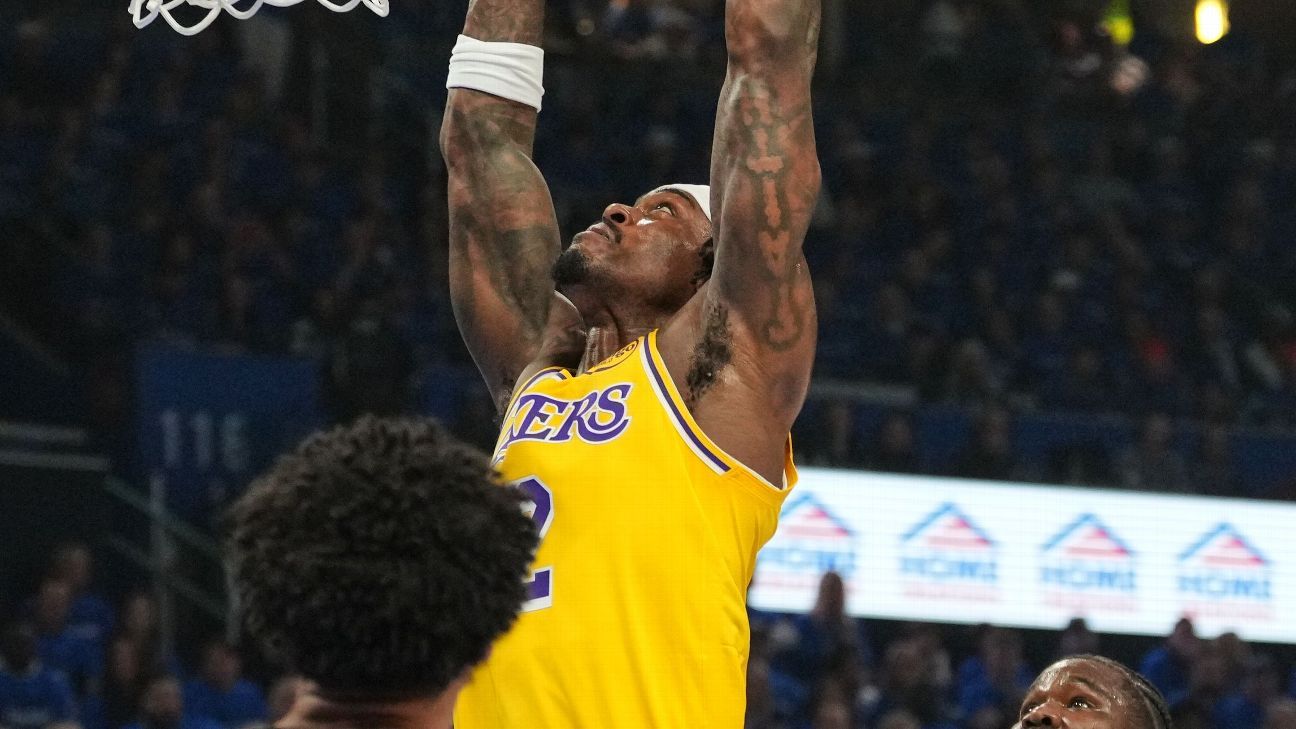
As ESPN's Shams Charania reported, Lakers forward Jarred Vanderbilt suffered a full dislocation of his right pinky finger late in the second quarter of Tuesday's Game 1 blowout loss to Oklahoma City, a 108-90 defeat that wasn't as close as the final score suggests. The injury occurred when Vanderbilt attempted to block a Chet Holmgren dunk and caught his finger on the backboard — a freak play with real consequences for a Lakers roster that can't afford to lose depth in any direction.
Vanderbilt's value to Los Angeles has never shown up on a box score in an obvious way. He's a connective defender — the kind of player who takes the other team's most dangerous wing, clogs passing lanes, and absorbs contact so primary scorers like LeBron James and Austin Reaves don't have to. In a series against a Thunder team built around perimeter movement and high-efficiency creation from Shai Gilgeous-Alexander, losing that defensive anchor isn't a footnote. It's a rotation problem. Whoever steps into Vanderbilt's minutes — Dorian Finney-Smith, Cam Reddish, or a smaller Rui Hachimura — will be working against a team that already looked comfortable scoring in Game 1.
OKC's offensive engine doesn't need an invitation, but this hands them one. SGA finished with 25-plus in Game 1, and the Thunder shot efficiently across the board. With Vanderbilt sidelined or compromised in Games 2 and beyond, expect more switching confusion and rotational breakdowns in the Lakers' half-court defense. That's a problem at the team level, not just the matchup level — and it's the kind of problem that inflates opponent scoring totals game by game.
From a prop-betting standpoint, the immediate read is to look hard at SGA's points line for Game 2. If Vanderbilt is out or limited, Gilgeous-Alexander — who already operates at an elite level against quality defenders — sees his path to 30-plus widen considerably. His points prop has been hovering around 30.5 in this series; that number may be light if the Lakers can't field a credible primary defender. Simultaneously, Lakers team totals deserve scrutiny in the opposite direction: a depleted rotation playing from behind against a Thunder defense that suffocated them in Game 1 is not a recipe for offensive output. The Lakers scored 90 in a game where Vanderbilt was available for a half — that ceiling doesn't improve from here.
The broader series spread angle also shifts. OKC was already a comfortable favorite; this injury doesn't flip a series, but it does reinforce leaning toward Thunder covers on a game-by-game basis. Watch for the official status update ahead of Game 2 — if Vanderbilt is ruled out, expect the line to move another point or two in Oklahoma City's favor, and the smart money gets there early.