Dosunmu's $112M Commitment Signals Minnesota's Pivot Away From Star Power
By Justin Erickson ·
The Timberwolves locked in their bench scoring anchor on the same night they traded Julius Randle, revealing a roster construction bet that could reshape their offensive surface.
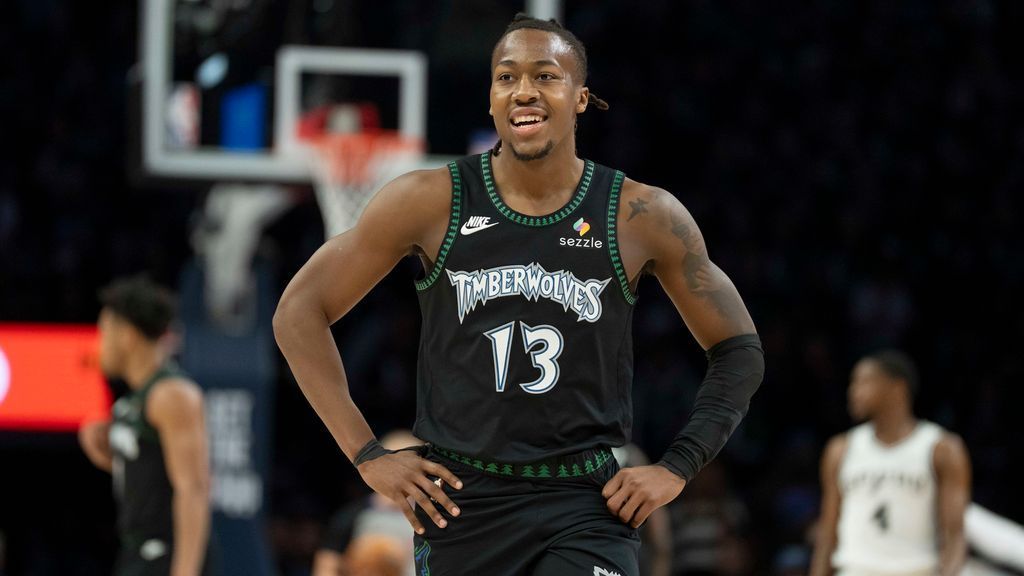
Ayo Dosunmu agreed to a five-year, $112 million contract with the Minnesota Timberwolves on Monday night, cementing his place as a long-term rotation cornerstone just hours after the franchise shipped three-time All-Star Julius Randle to Brooklyn. The timing is not accidental. Minnesota is consolidating around depth and secondary scoring rather than adding another high-usage star.
Dosunmu arrived in Minnesota in February via trade from Chicago, costing the Timberwolves four second-round picks and former lottery pick Rob Dillingham. Over a 10-game playoff stretch, he averaged 15.6 points in 29.2 minutes, establishing immediate chemistry with Anthony Edwards. His peak moment came in Game 4 against Denver when Donte DiVincenzo suffered a torn right Achilles—Dosunmu responded with 43 points off the bench in an upset victory. That performance, however, masked an underlying durability concern: right calf tightness forced him out of Game 6 against the Nuggets and Game 1 against San Antonio, and lingered into the second round, where he shot 36% over five games. The calf issue was chronic enough late in the regular season to warrant monitoring, yet Minnesota has committed to him as a five-year fixed asset anyway—a calculation that prioritizes his scoring floor and secondary creation over the injury risk.
The Randle trade reframes Minnesota's offensive architecture. Randle's usage rate typically sits in the 28-30% range; his departure creates a vacancy in mid-range scoring and secondary playmaking that Dosunmu, operating as a bench scorer and occasional fill-in starter, does not fully replace. Instead, Minnesota appears to be reducing iso-heavy offense in favor of a higher-paced, guard-centric attack centered on Edwards and primary ball-handler Donte DiVincenzo (pre-injury) or backup depth. Dosunmu thrives in this environment: his 15.6 playoff PPG came primarily in transition and off-ball movement, not iso creation. The five-year structure with a player option in year five tells the market that Minnesota values his scoring consistency over potential ceiling plays.
For prop bettors, this reshuffling creates two distinct angles. First, Dosunmu's per-game scoring projection faces compression if he returns to a pure bench role—his 15.6 playoff average was inflated by starting opportunities born of injury necessity. A regression to 12-14 PPG is likely unless his calf clears completely and he earns consistent starter minutes alongside Edwards. The over on his season-long PPG line will carry elevated risk in October and November as the true depth chart clarifies. Second, and more durable, is the Timberwolves' team-total range. By shedding Randle's 20+ PPG allocation, Minnesota's offense becomes more distributed but potentially lower-volume. Games where Edwards is contained or the perimeter bench struggles will see sharper drops in team total relative to a Randle-era roster. Fade team total overs in the 112-116 range against top-five defenses; the Wolves no longer have the star redundancy to guarantee their historical PPG floor.
Dosunmu's contract is also a bet against the calf becoming chronic. If the injury recurs before December, Minnesota locks itself into a $20M+ annual commitment for a part-time scorer. Monitor his workload in preseason closely; light minutes early would signal front-office caution.