NBA · transaction
Simons' Bench Role Anchors Sixers' Depth Bet as Load Management Looms
Philadelphia's offseason bench rebuild pivots on Anfernee Simons' two-year deal, but his defensive ceiling will determine playoff viability alongside minute restrictions for Embiid and James.
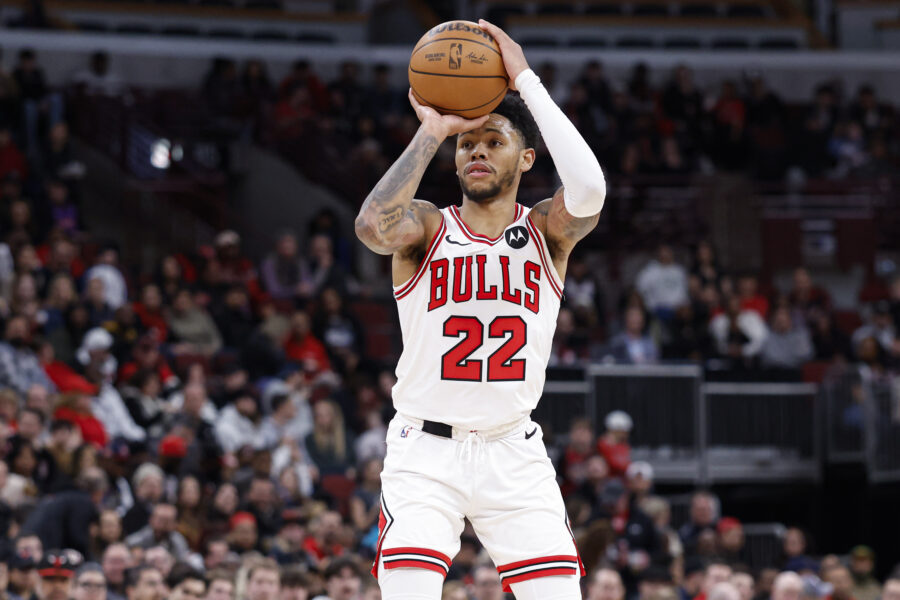
The Philadelphia 76ers spent the summer acquiring star talent, but the real foundation work happened on the margins. Anfernee Simons, who signed a two-year deal with the team this offseason, arrives as the engine of their bench offense—a scoring guard tasked with generating points when the three All-Stars rotate to the sideline. That role is straightforward enough. What complicates it is what Simons brings defensively, which will ultimately determine whether the Sixers can actually deploy him in playoff rotations when spacing and personnel flexibility matter most.
The concern isn't subtle: Simons figures to be the weakest individual defender on Philadelphia's roster. The question for a contending team isn't whether he'll occupy that distinction, but whether the gap between him and the next-worst defender grows so wide that playoff opponents can consistently hunt him in isolation or screen situations. In a league where role players are increasingly required to handle multiple defensive assignments, a non-switchable guard who can't recover off-ball carries real playoff liability. The Sixers' front office clearly believes Simons' scoring production and bench spacing justify that risk—otherwise they wouldn't have committed two years and financial resources. But the math only works if the offensive load he carries more than compensates for the defensive warts.
ManagingEmbiid and James' workload through the regular season will be crucial to that calculation. Both players have carried injury history that demands conservation; neither will (nor should) play 38+ minutes nightly. The more minutes Embiid and James sit, the more the Sixers depend on Simons to generate efficient scoring without requiring touches from role players who should be moving without the ball. If Simons can average north of 14 points per game on reasonable volume while maintaining a true shooting percentage above 55%, the defensive liability becomes a necessary trade-off rather than a roster-construction error.
From a prop perspective, Simons' scoring total in the regular season is the window into whether this gamble will hold through the playoffs. A player hitting 15+ points per game on solid efficiency signals that the offensive burden is manageable and the defensive concession is worth it; anything below 12 points per game starts to reveal a net negative impact even in the softer regular-season environment. The market will initially price Simons conservatively given his reserve role, but the Sixers' willingness to commit guaranteed money in a two-year structure tells you the team itself projects robust production. Watch the early-season scoring lines closely—they'll price in significant uncertainty around role definition, and that gap between conservative market pricing and team valuation is often where bench pieces prove most valuable to prop bettors.
NBA Intelligence — Basketball intelligence beyond the box score. Open NBA Intelligence →