The Porter Question: Brooklyn's Timeline Mismatch Creates Offseason Leverage
By Justin Erickson ·
Michael Porter Jr. enters free agency as a pawn caught between a rebuilding Nets roster and league-wide cap constraints that may price him out of market.
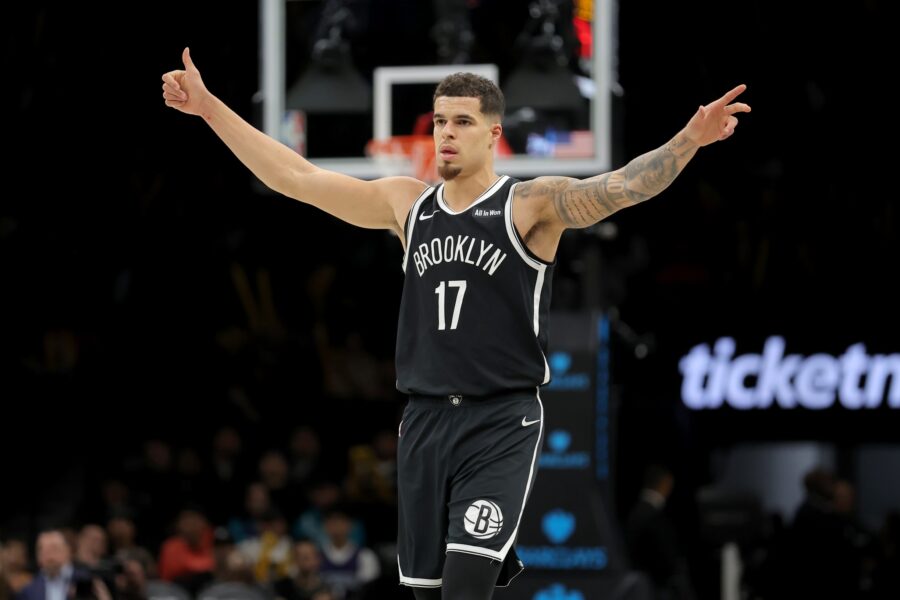
Michael Porter Jr. is eligible for a contract extension with Brooklyn this offseason, but the Nets' front office faces a fundamental problem: Porter is 28 and entering his ninth NBA season, while the franchise is stocked with five rookies added last year and preparing to draft another on June 23. The math doesn't align. Per Michael Scotto's reporting, league executives are skeptical that Porter fits Brooklyn's long-term arc beyond his current $40.8 million salary in 2026/27—the final year of his deal before hitting free agency in summer 2027.
The Warriors explored acquiring Porter at the deadline and considered surrendering a first-round pick, but that avenue collapsed when Jonathan Kuminga went to Atlanta as part of the Porzingis package instead. Golden State's cap structure offers limited flexibility now; any summer pursuit of Porter would require the team to shed Jimmy Butler's expiring contract while Butler recovers from an ACL tear. That's a marginal likelihood. More broadly, the market for Porter faces a chilling effect. Teams with non-taxpayer mid-level exception room exist, but they're thin on the ground. The Cavaliers sit well over the second apron and can't easily retain their own free agents. The Raptors face similar constraints. The Nets themselves, meanwhile, lack leverage to extend Porter before he tests the open market next summer.
This compression of available suitors creates a negotiating disadvantage for Porter that may not fully reflect his on-court value. A player averaging the production he did in 2025/26 would normally command premium dollars, but the cap-constrained landscape—exacerbated by second apron penalties for teams like Cleveland that operated there this past season—means fewer bidders with real ammunition. Brooklyn, if it declines to extend him, pays no penalty for letting him walk; the Nets save money and stay on their rebuilding timeline. Porter, by contrast, enters a softer market than his age and talent might otherwise command.
For bettors, the Porter situation carries indirect implications for Nets player prop volatility over the next 12 months. If Porter remains in Brooklyn through 2026/27, his scoring touches and usage should stay stable—a known quantity for prop modeling. But if a surprise contender dips into luxury-tax spending to acquire him in a mid-season deal or if Porter lands with a playoff team on an MLE-adjacent contract, his role morphs unpredictably. The uncertainty is the story, not the direction. Monitor Nets offensive load distribution closely if Porter's status shifts; bench depth and closing-unit usage could swing meaningfully depending on roster construction post-June 23 draft.