Bulls Front-Office Overhaul Signals Long-Term Rebuild, Not Quick Fixes
By Justin Erickson ·
Chicago's hiring of veteran evaluators Mervis and Law under new EVP Graham points to a multi-year player-construction project—one that will reshape roster composition before any meaningful on-court impact.
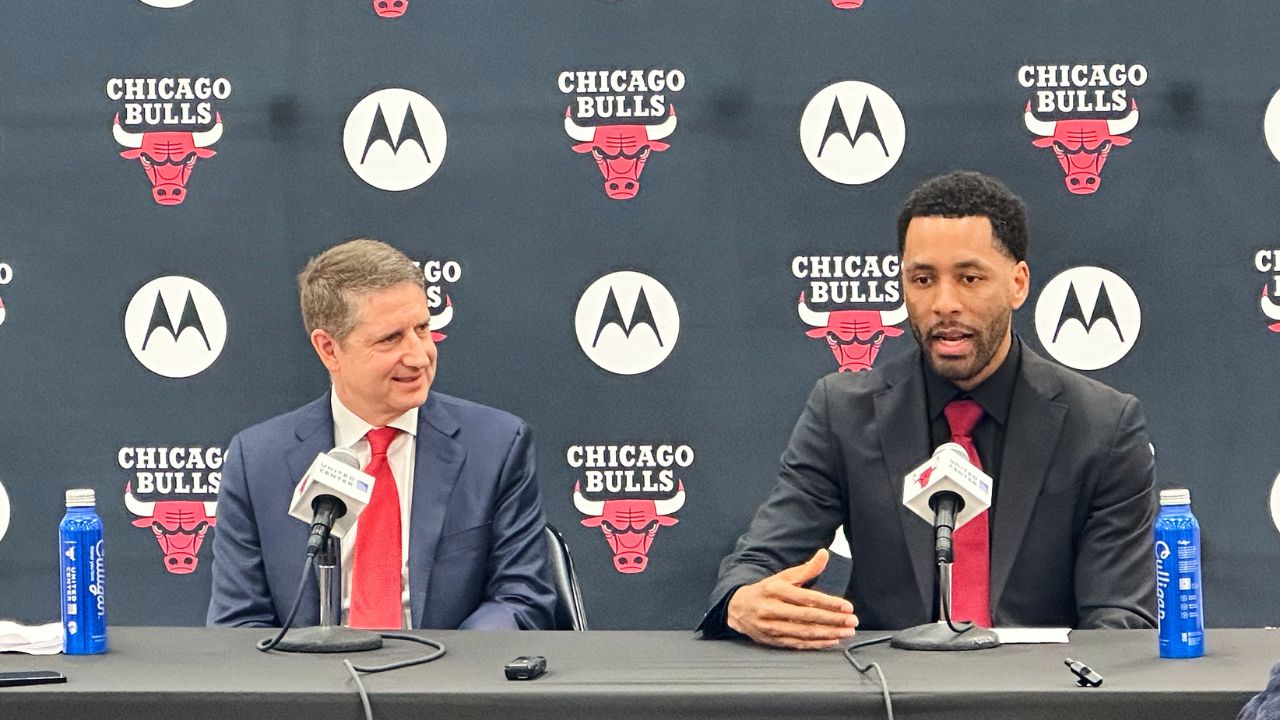
The Chicago Bulls are assembling a front office built for patient evaluation rather than win-now urgency. As ESPN reported, the team finalized hires of Stephen Mervis as senior vice president of basketball operations and Acie Law as vice president of player personnel, both joining new executive vice president Bryson Graham. Mervis spent 12 years as Orlando's assistant general manager, where he focused on strategy and player evaluation. Law comes from Sacramento's personnel department, with scouting roots at Oklahoma City and previous NBA playing experience that includes a 2009-10 stint with the Bulls themselves.
The composition of this trio reveals a deliberate hiring philosophy. Mervis's decade-plus tenure in Orlando speaks to organizational stability and deep roster-building expertise—the Magic have consistently competed despite minimal free-agent spending. Law brings both amateur scouting credibility (his OKC background) and recent front-line personnel experience in Sacramento, a franchise that has quietly become one of the league's best drafting operations. Graham, the new EVP, now has a support structure designed to execute a long-term player-evaluation strategy, not patch immediate roster gaps.
For the Bulls, this matters more than the typical executive hire because Chicago operates in a zone of uncertainty. The team has talent (Zach LaVine, DeMar DeRozan, Nikola Vucevic) but has underperformed relative to payroll investment for three consecutive seasons. The front office is signaling that roster surgery takes priority over marginal veteran additions or salary-cap gymnastics. That mindset typically means fewer trades for aging All-Stars, more patience with draft picks in year two and three, and a willingness to let marginal pieces walk rather than overpay for familiarity.
From a prop-betting perspective, this restructuring influences team-total and player-usage forecasts over the next 12-18 months. Front offices built on evaluation expertise tend to rotate through lower-cost role players and bench options more frequently than those built on veteran relationships. If the Bulls move toward a leaner, younger rotation with greater emphasis on draft-pick development, bench scoring becomes more volatile—backups accumulate more playing time in non-competitive stretches, inflating their per-game averages but introducing noise into consistent prop-bet targets. The core stars (LaVine, DeRozan, Vucevic) should see stable usage if the team remains competitive, but expect depth-chart churn and bench-player minute fluctuation to increase over the offseason and into the 2026-27 season.
Graham's ability to shape the roster will not show up in immediate stat changes. The real edge lies in forward-looking team-construction patterns: if Mervis and Law push for younger, more athletic rotations (a hallmark of modern evaluation departments), the Bulls' bench-scoring window tightens and starter isolation touches may consolidate around DeRozan and LaVine. Monitor training-camp reports and preseason minutes distribution closely; the first visible tell of this new philosophy will be which complementary pieces are retained or shed.