Mosley's Playmaking Pivot: Why Zion's Assist Rate Is About to Jump
By Justin Erickson ·
New Pelicans coach Jamahl Mosley sees Zion Williamson as a high-IQ playmaker trapped in a scoring-volume role—and the tactical shift toward free-throw hunting and floor spacing opens a direct path to higher assist volume.
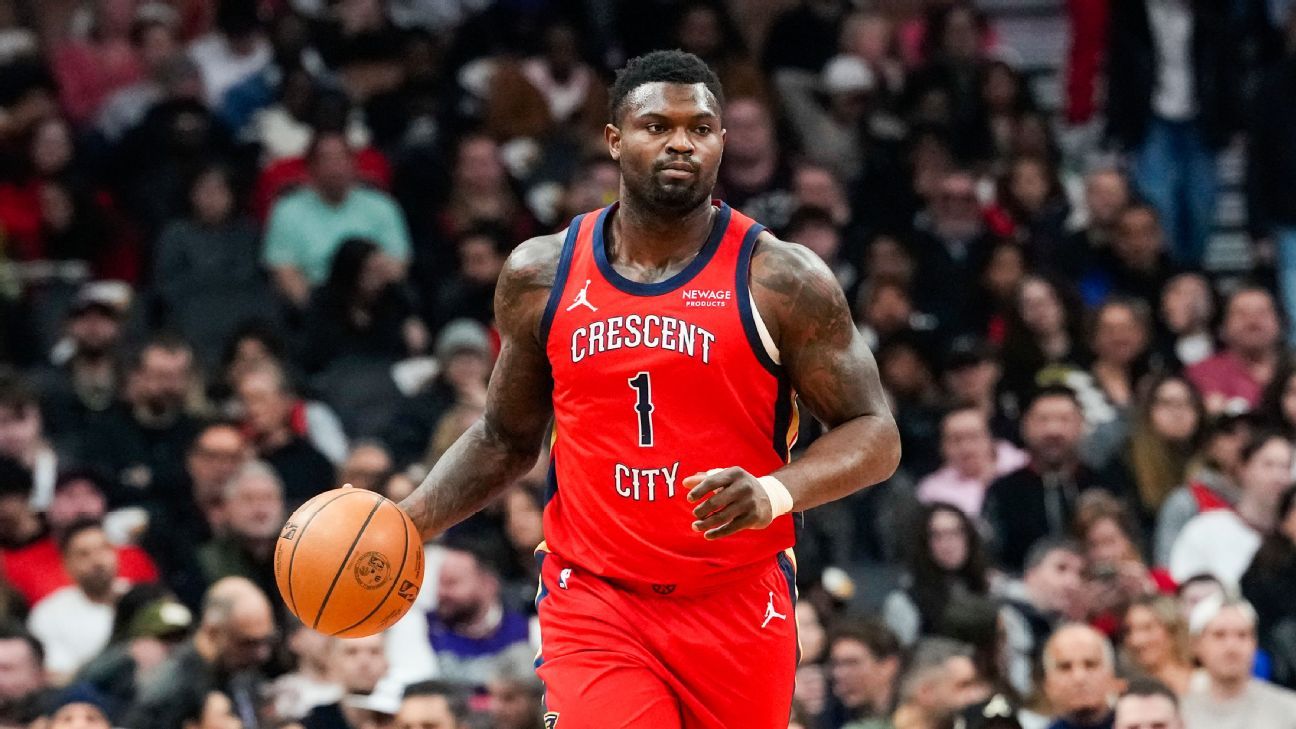
Jamahl Mosley arrived in New Orleans on Tuesday with a specific mandate: extract Zion Williamson's playmaking DNA. Per ESPN, the newly hired Pelicans coach said at his introductory presser that Williamson "hasn't even scratched the surface" of what he can do, particularly as a facilitator who elevates teammates. That framing matters more than typical first-day coach-speak because it signals a structural reallocation of Williamson's offensive touches—away from isolation scoring and toward high-leverage passing opportunities.
Williamson averaged 21.0 points on 60% shooting last season across 62 games, a season that represented both his most durable year (health-wise) and his most constrained offensively. Mosley's stated plan—opening the floor with better spacing, positioning Williamson to "live at the free throw line," and deploying him across multiple positions—directly addresses why Williamson's assist numbers have lagged behind his basketball IQ. A 6'6", 285-pound forward with his footwork and court vision naturally generates playmaking opportunities when defenses are forced to collapse on him; the previous regime didn't consistently weaponize that gravity. When a coach publicly commits to using a player's high-IQ passing and then backs it with positional flexibility and spacing adjustment, that's a structural change, not wishful thinking.
The mechanism is straightforward: free-throw hunting requires Williamson to absorb contact and draw fouls at the rim, which forces interior defenses to help or double. That collapsing action opens weak-side passes, kick-outs to shooters, and short-roll opportunities for cutters—all natural playmaking venues. Mosley's track record with the Magic included three straight playoff appearances (though first-round exits), a tenure that leaned on ball-movement offense and positional versatility. His public commitment to unlocking Williamson's playmaking isn't theoretical; it aligns with how he coached.
Williamson's assist rate last season sat at 15.3%, translating to roughly 3.2 assists per game in a role that asked him to score first. Under a coach explicitly designed to maximize his passing touches and surrounded by shooters tasked with spacing the floor, that baseline should rise materially. The market has not yet priced in the structural offensive reallocation. Sportsbooks set Williamson's assist props based on last year's role and usage patterns; a coaching change that fundamentally retasks him as a playmaker-first distributor will move that line, but early-week numbers will lag the actual scheme shift.
The risk is health: Williamson has played 30 games or fewer in three of his seven seasons. But if he stays on court—a prerequisite the coaching staff has already acknowledged as paramount—his assist ceiling under Mosley's framework is meaningfully higher than his 3.2 game average suggests. That gap between perceived (last year's volume) and realized (a playmaking-first system) is where the early-week edge lives.