Saddiq Bey Locks Into Pelicans Long-Term After Resurgent Bounce-Back Season
By Justin Erickson ·
New Orleans cements Bey's role as a high-volume scorer with a fully guaranteed three-year extension, signaling confidence in his durability and offensive ceiling.
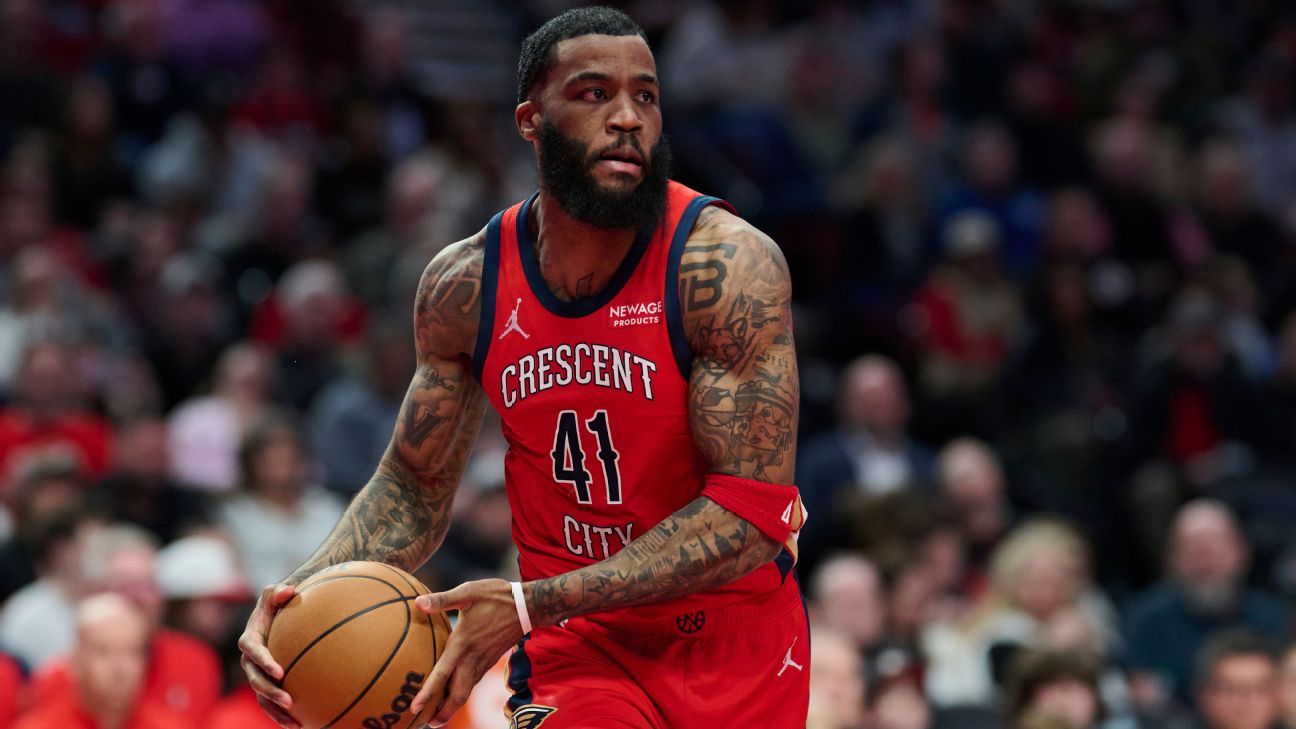
Saddiq Bey and the New Orleans Pelicans have agreed to a three-year, $55.5 million contract extension that locks him in through the 2029-30 season with full guarantees, per ESPN. The deal includes a trade kicker and represents the franchise's formal commitment to a player who has emerged as a primary offensive option since arriving in New Orleans.
Bey's path to this deal ran through one of the NBA's most severe injuries and a remarkable recovery. He missed the entire 2024-25 season with a torn ACL suffered while with Atlanta. Rather than fade into secondary status upon his return, Bey posted a career-high 17.7 points per game across 72 appearances last season—64 of them starts—while adding 5.6 rebounds and 2.5 assists. The scoring production came with legitimate volume: he attempted 2-point and free throw attempts at career highs, and shot 40% from three after the All-Star break en route to averaging 20 points per game over that stretch. Three of his four highest-scoring games as a professional happened last season: a 42-point explosion against Utah on Feb. 26, a 36-point night against Memphis on Jan. 23, and a 34-point performance versus Philadelphia on Jan. 31.
What makes this extension strategically interesting is the Pelicans' willingness to fully guarantee the money despite Bey's recent medical history. Teams typically hedge against injury recurrence with partial guarantees or escalators tied to games played. New Orleans chose differently—a signal that the front office has high confidence in both his health trajectory and his ceiling as a shot creator alongside Zion Williamson and CJ McCollum. The inclusion of a trade kicker suggests the Pelicans also view Bey as tradeable value if roster construction demands it, but the fully guaranteed structure indicates they're building around him as a permanent piece.
From a prop lens, Bey's extension carries dual implications. First, his usage rate should stabilize or increase slightly in year one of the deal, given the psychological anchor of long-term security and the organization's clear commitment to his offensive role. Second, volume-based props—points, threes made, and combined scoring thresholds—become more reliable constructs because his playing time floor is now contractually reinforced. A player on a prove-it deal or short-term contract faces cut-risk incentives that can compress minutes; Bey no longer does. Over the next three seasons, the Pelicans have locked in his availability, which means seasonal scoring averages and game-by-game totals should exhibit lower variance than comparable role players. His 17.7 PPG average last season, supported by elite volume efficiency post-All-Star break and career-best shot creation, becomes the floor rather than an outlier. When New Orleans tips off its preseason schedule against Oklahoma City on Oct. 6, Bey enters the campaign as a guaranteed primary scorer with organizational backing—a structural advantage that prop markets often underweight when pricing season-long or multi-week player totals.