Cavaliers-Knicks Game 1: Eastern Conference Finals Primer
By Justin Erickson ·
The Knicks host Cleveland in an East Finals matchup where perimeter defense, transition pace, and pick-and-roll weaponry will dictate both series trajectory and individual prop performance.
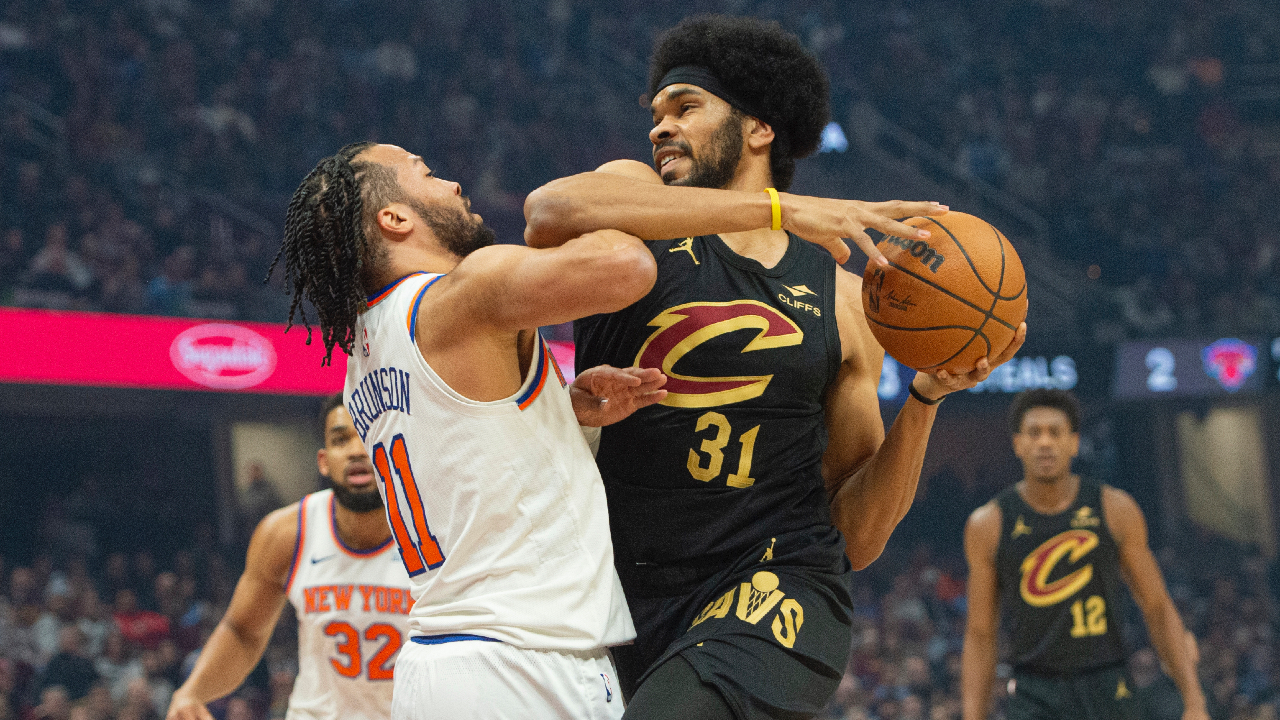
The Eastern Conference Finals tip Tuesday night with the New York Knicks hosting the Cleveland Cavaliers in what shapes as a clash between two distinct offensive architectures. The Knicks operate through structured half-court sets anchored by Jalen Brunson's pick-and-roll orchestration, while Cleveland has leaned heavily on ball movement and three-point volume to reach this stage. Game 1 serves as a tone-setter for which system can impose its pace and defensive parameters on the other.
The Cavaliers' path to the Finals has been built on perimeter shooting and transition efficiency. Their willingness to launch from distance—they ranked among the league's top five in three-point attempts per game during the regular season—creates both spacing advantages and rebounding vulnerability. The Knicks' interior presence, particularly Julius Randle's activity on the glass, will be tested early. Conversely, New York's half-court defense thrives when they control tempo and force opponents into set defenses; Cleveland's transition game becomes lethal against lazy rotations or extended offensive possessions.
Brunson's usage in pick-and-roll sequences carries direct implications for assist totals and secondary scoring. Against Cleveland's switching schemes, Brunson averaged 8.1 assists per 100 possessions in the regular season when facing switching defenses. If the Cavaliers commit to switching off screens—a default given their personnel—expect Brunson to hunt mismatches relentlessly. The flip side: Cleveland's perimeter length (Donovan Mitchell, Isaac Okoro) can disrupt passing lanes when they stay attached to cutters. Josh Hart's floor spacing and offensive rebounding will be crucial in creating secondary break opportunities that relieve pressure on Brunson in the half-court.
For prop purposes, Game 1 pricing will reflect preseason expectations and series-level metrics rather than opponent-specific adjustments. The Knicks closed the regular season with a 113.8 offensive rating at home; the Cavaliers' defense allowed 110.2 points per 100 possessions in clutch situations. Team total markets for New York will likely open around 108–110 points, which appears appropriately calibrated for a Game 1 venue advantage in a defensive-leaning playoff series. Brunson's assist line (typically 7.5–8.5 in playoff games) becomes valuable if Cleveland's perimeter defenders play physically—tighter coverage often forces him into skip passes and secondary actions that inflate assist totals. Conversely, if the Knicks execute early and establish offensive rhythm, Brunson's touches in isolation and mid-range sets may increase, depressing assist volume relative to total offensive involvement. The crucial variable: turnover rates. High-pressure playoff defense from Cleveland's guards could spike Brunson's TO rate above his regular-season 2.1 per game, which would suppress both assist and points-per-possession efficiency.
Monitor first-quarter pace and three-point make frequency. If Cleveland establishes shooting early (hitting 35%+ from three in the opening frame), totals for the full game will likely hold or inch upward. If the Knicks force halfcourt execution and limit transition, the game tightens to 104–108 range, rewarding under-play on totals. Brunson's early foul trouble—a frequent complication in playoff games where referees let defenses work—would dramatically alter assist expectations, as backup Noah Clowney's pace and decision-making differ fundamentally from Brunson's rhythm. These first-game variables are too volatile for single-game prop conviction, but they establish the baseline for series adjustments.