Fox and Hartenstein Drive Game 6 Props: Western Conference Finals Shifts to Bench Depth
By Justin Erickson ·
San Antonio's depth rotation and Oklahoma City's defensive scheme create measurable edges in Thursday's elimination game.
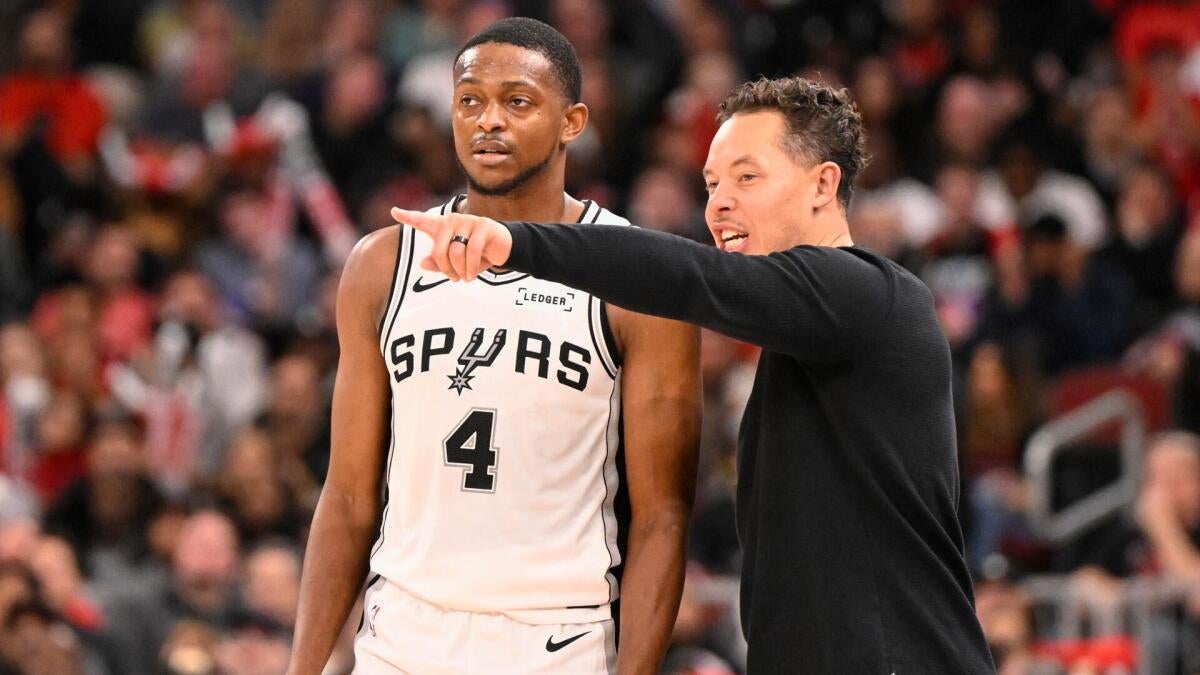
Thunder and Spurs face a Game 6 elimination scenario Thursday night, and the structural imbalance in how each team is being forced to deploy rotational pieces has created distinct prop openings. De'Aaron Fox, returning from an ankle injury that nearly sidelined him at the series start, has been a reliable contributor in the box-score corners—not the scoring line, but the assists and rebounding columns where the Spurs need secondary creation.
Fox's volume in those categories is the mechanical story. Over his last three games since returning, he's logged at least 31 minutes in each contest and cleared 12 combined rebounds and assists in all three. Tonight's over/under sits at 9.5, and the sample is clean: five regular-season matchups against Oklahoma City show him averaging 3.6 boards and 6.2 dimes—well north of the nightly combined total he needs. The Thunder's switching-heavy defense, built to take away Wembanyama in the post, actually creates passing lanes for secondary ball handlers operating within five feet of the basket, where Fox operates most efficiently. This isn't a one-game spike; it's a repeatable positional mismatch that has held through three elimination-stage games.
On the other side, Isaiah Hartenstein has become a functional defensive anchor for Oklahoma City in ways the box score initially obscures. After playing just 12 minutes in Game 1, he's expanded to a substantive role anchoring the pick-and-roll defense against Wembanyama and cleaning glass on possessions where San Antonio commits shooters. His points total of 7.5 reflects his secondary offensive role, but his shot selection has tightened dramatically—he's 12-of-19 on his floater over the past two games, which is a high-variance shot that he's now executing at 63%. The Spurs have compressed to a seven-man rotation, forcing more offensive rebounding attempts and live-ball opportunities. Hartenstein's defensive assignment and his rhythm with a single shot type (the floater) create a narrow but defined edge on the over.
Dylan Harper's rebounding prop similarly benefits from structural depth: the Spurs rookie has cleared 3.5 boards in 11 of his 15 full playoff games, including 3 of 4 against Oklahoma City. More importantly, he's moved past his adductor issue and is now receiving 24-28 minutes in a compressed rotation. His role as a baseline cutter and offensive-glass crasher when Wembanyama operates at the high post has generated nine rebound chances in each of the last two games—a rate that independently projects to a 4-plus rebound night. The Thunder's strategy of walling off Wembanyama in the post (18 total boards across the last three games) has starved San Antonio's primary rebounder, creating vacancy that Harper is positioned to fill on hustle opportunities.
The prop texture here is not randomness or hot shooting; it's role compression, defensive assignment clarity, and shot selection that has stabilized over a multi-game window. Fox's assists are repeatable against switching schemes. Hartenstein's floater rhythm has persisted through two full games. Harper's rebound-chance generation has stayed consistent as the Spurs' rotation tightened. These are multi-game patterns, not single-outlier plays that will fade when the line moves.