Duren's Postseason Collapse Sets Up a Negotiation Minefield for Detroit
By Justin Erickson ·
The Pistons' All-Star center imploded in the playoffs after a career year, forcing Langdon to bet on a rebound while managing cap constraints that may cripple the team's title window.
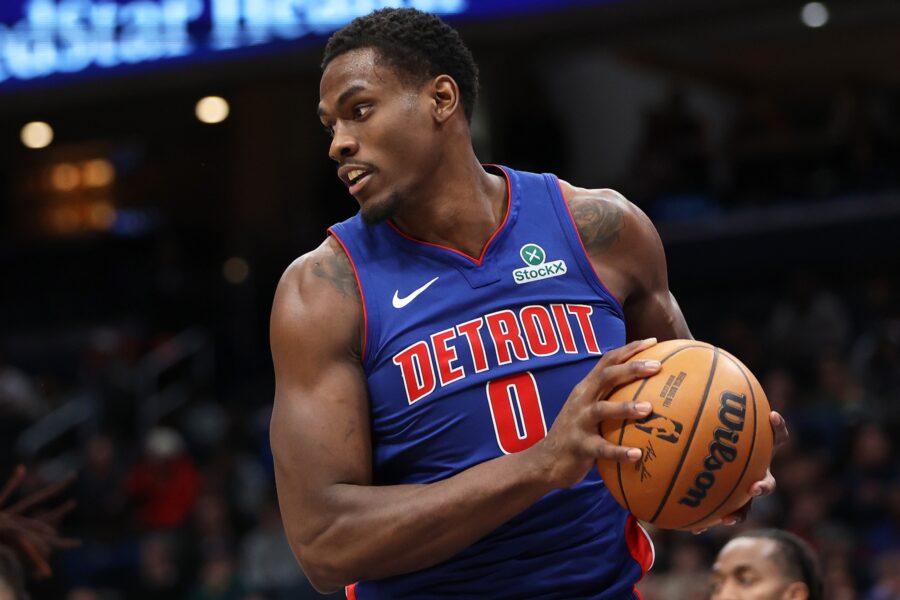
Jalen Duren posted a 19.5-point, 10.5-rebound regular season that vaulted him onto the East's All-Star roster and anchored the Pistons' No. 1 seed. Then the postseason arrived, and he disappeared. In 14 playoff games, Duren collapsed to 10.2 points and 8.5 rebounds per 30 minutes—a 47% decline in scoring output—while riding the bench in second halves as the team opted for Paul Reed's floor spacing and defensive mobility. Detroit's Game 7 loss to Cleveland last Sunday exposed a hard ceiling: Duren and Ausar Thompson, the other restricted piece Langdon must now retain, both carry significant offensive liabilities that no amount of regular-season volume can hide.
Langdon's public posture—"fantastic season," "incredible leap," "we look forward to coming together"—is managerial spin covering genuine negotiating leverage. The Pistons can offer Duren a five-year max (likely north of $200 million over five years at current salary-cap trajectories), but Langdon's own words betray his constraint: "JD and AT will be expensive and once that happens, the optionality decreases." This is admission that locking in both young starters devours cap room meant for a secondary playmaker or reliable third scorer—the exact help Cade Cunningham desperately needs to justify a championship window that, on current evidence, is closing faster than advertised. Langdon inherited a 23-win roster two years ago; reaching the East Finals in Year 2 feels like acceleration, but the margin for error is razor-thin. One postseason implosion by a centerpiece player usually triggers a reset, not a supermax extension.
Duren's leverage is counterintuitively weak despite his All-Star badge. Other teams will test the market with offer sheets, but few will commit nine figures to a 22-year-old whose postseason tape reveals he cannot operate in pick-and-roll isolation at scale, nor defend certain perimeter-oriented centers without fouling. The Pistons will match any reasonable offer sheet out of necessity—they cannot afford to start over again—but this gives Duren an implicit ceiling on negotiating room. He'll sign, the Pistons will extend Thompson, and Langdon will spend the next two offseasons scrambling to thread a needle: adding shot-creation and playmaking help without going over the luxury tax while Cunningham ages into his prime years.
For prop bettors, Duren's postseason collapse and imminent extension create a three-tiered pricing opportunity. First, his regular-season point and rebound totals next season will likely anchor to his 19.5/10.5 clip, assuming the market extrapolates the All-Star year forward without fully repricing the playoff downside. Second, his playoff performance—a 10.2-point average in high-leverage games—suggests that overs on his scoring totals carry structural risk when games matter most, a variance most books do not fully weight into mid-season pricing. Third, his assist line (currently sits in the 1.8-2.2 range per game league-wide for a player of his volume) will be set without accounting for the Pistons' likely addition of a playmaking secondary creator, which could depress his touch rate by 5-8% as the offense spreads out. Duren signed a three-year, $102 million extension in 2024; the new deal will reset that floor significantly upward. Monitor his game logs against Western Conference opponents who switch pick-and-roll assignments—that's where his isolation scoring breaks down fastest, and it's the cleanest tell for next season's overs carrying hidden variance. Bettors should fade his scoring overs in the first 10 games of 2026-27 when the market still carries All-Star-season bias, then reassess once real playoff positioning enters the picture in January.