Knicks' Ball-Handling Collapse Ends 13-Game Run—And Reshapes Series Prop Angles
By Justin Erickson ·
Karl-Anthony Towns diagnosed the real problem in New York's Game 3 loss: turnovers and offensive stagnation, not refereeing—a mechanical breakdown that carries immediate implications for assist and combo pricing.
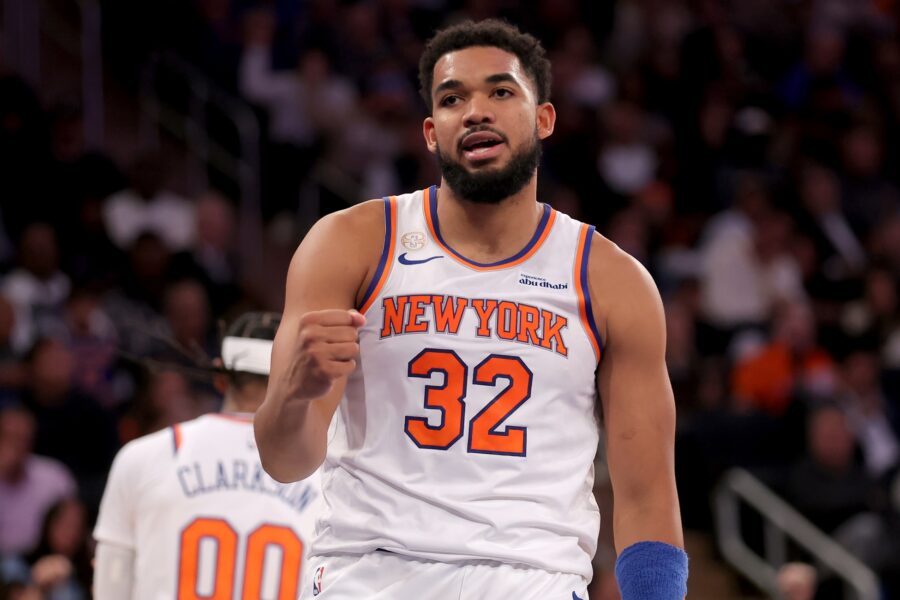
The Knicks' 13-game playoff winning streak ended Monday not because of free throw disparity, but because the offense forgot what made it lethal. Karl-Anthony Towns laid it bare: 13 turnovers, unforced errors, players standing idle while the ball handler worked in isolation. Coach Mike Brown griped about officiating afterward, but Towns cut through the noise. "Threw the ball away," Towns said. "That's a clear indication of how you're going to lose a game, especially in the playoffs." The diagnosis matters because it's mechanical, not circumstantial—and mechanical problems tend to repeat until they're solved.
Jalen Brunson's stat line illustrates the dysfunction: 32 points, 12 in the fourth quarter, but only five assists on a night when New York's offense needed its traditional ball movement to generate clean looks. That 5-assist output sits well below his 7.4-game average in this series, and it correlates directly to Towns' observation about stagnant half-court sets and isolation-heavy execution. The Knicks had built their run on pick-and-roll pace, quick passes out of double teams, and positional flexibility that forced defensive rotations into chaos. Monday they abandoned that template. Brown acknowledged it: too often guys were watching the ball rather than moving to create spacing and secondary options.
The streak breakdown reveals a critical vulnerability for prop pricing going forward. When the Knicks operate in their high-pace, high-movement mode, Brunson's assist floor sits around 7.5 per game and often climbs to 9-10. When isolation offense and turnovers creep in—as they did in Game 3—his playmaking volume compresses sharply. The same dynamic applies to Towns' assist line; when the offense flows, he's a secondary hub in the pick-and-roll and short-roll game, moving the ball with purpose. When the Knicks revert to isolation ball, Towns becomes a corner spacer with minimal playmaking reps. Game 4 presents a live angle: if New York returns to the motion offense that generated 13 straight wins, assist totals for both Brunson and Towns should operate at their series-high ranges. If Brown doesn't correct the mechanical issues—if isolation remains the default—both players' assist ceilings drop measurably.
The Knicks' roster continuity gives them institutional memory to fix this type of problem quickly. Towns, Brunson, and Josh Hart have been running these sets for an extended stretch; the film from 13 consecutive wins exists as a blueprint. But one-game correctives sometimes stick, sometimes don't. Bettors should track pre-game coaching commentary and early offensive flow in the opening minutes of Game 4 to gauge whether the Knicks have actually reset. If Towns and Brown emphasize getting back to fundamentals and the pace picks up in the first quarter, lean toward the higher assist ranges on both. If the ball sticks and isolation creeps back, fade those lines and lean toward unders on playmaking props. The edge isn't in predicting whether they'll fix it—it's in knowing the mechanical signal to watch for and sizing accordingly when the market hasn't yet adjusted to the difference between "13-game winner execution" and "Game 3 dysfunction execution."