LaVine's $49M Option Exercise Signals Desperation, Not Confidence
By Justin Erickson ·
Sacramento locked in its aging acquisition, but the Kings' silence on his role reveals the real story: this partnership was built on leverage, not fit.
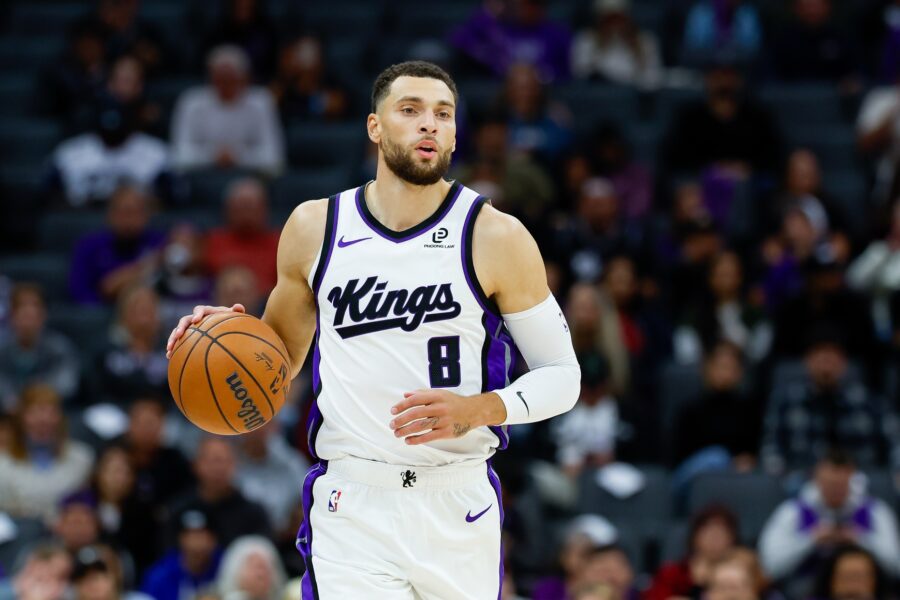
Zach LaVine exercised his $49 million player option for 2026–27 on Sunday, keeping himself in Sacramento's salary structure for another season. The decision was mathematically inevitable—he'll never command that figure as a free agent—but it masks a deeper organizational misalignment. According to ESPN's James Ham, the Kings have offered LaVine no assurances about his role or rotation depth, suggesting Sacramento's front office is doubling down on its youth development strategy rather than leveraging its two-time All-Star's scoring gravity.
LaVine arrived in Sacramento as a win-now acquisition meant to complement De'Aaron Fox and Domantas Sabonis. Instead, he's become a luxury the Kings can't fully maximize without sacrificing minutes and defensive flexibility for their younger core. At 31 years old and carrying a $49 million cap hit, LaVine doesn't fit the timeline Sacramento is now chasing. The organization's public silence on his future usage isn't oversight—it's a statement. Teams that view players as centerpieces to their rotation communicate that clearly. Vague organizational messaging around role and minutes is how front offices manage declining assets without triggering public friction.
For the betting market, LaVine's props reflect this tension poorly. His scoring volume last season remained stable because he was still taking shots, but his efficiency dipped as defenses tightened on him in crunch situations. If Sacramento genuinely reduces his usage in favor of younger wings and ball handlers, his scoring line will compress. The Kings' pivot toward development isn't accidental timing—it's a reset signal that LaVine's primary role in 2026–27 will be depth, not anchor.
Bettors should monitor early-season play-by-play data closely. If LaVine's minutes dip below 28 per game or his shot attempts fall below 12 per night in the first two weeks, the market will have overcorrected by then, pricing him as a full-time starter when he's been downgraded to situational. The real edge emerges when Sacramento's coaching staff confirms what the lack of organizational commentary already tells us: LaVine is a fallback option, not a primary weapon. His point totals should trade at a premium to their underlying usage for at least the first month, creating a fade opportunity on aggressive over-lines that assume 2025–26 volume carries forward.