LaVine Locks in Sacramento: $49M Opt-In Signals Confidence in Kings Rebuild
By Justin Erickson ·
With his right hand healed and Sacramento entering a critical offseason, LaVine's commitment to the 22-60 Kings changes the calculus on their path forward.
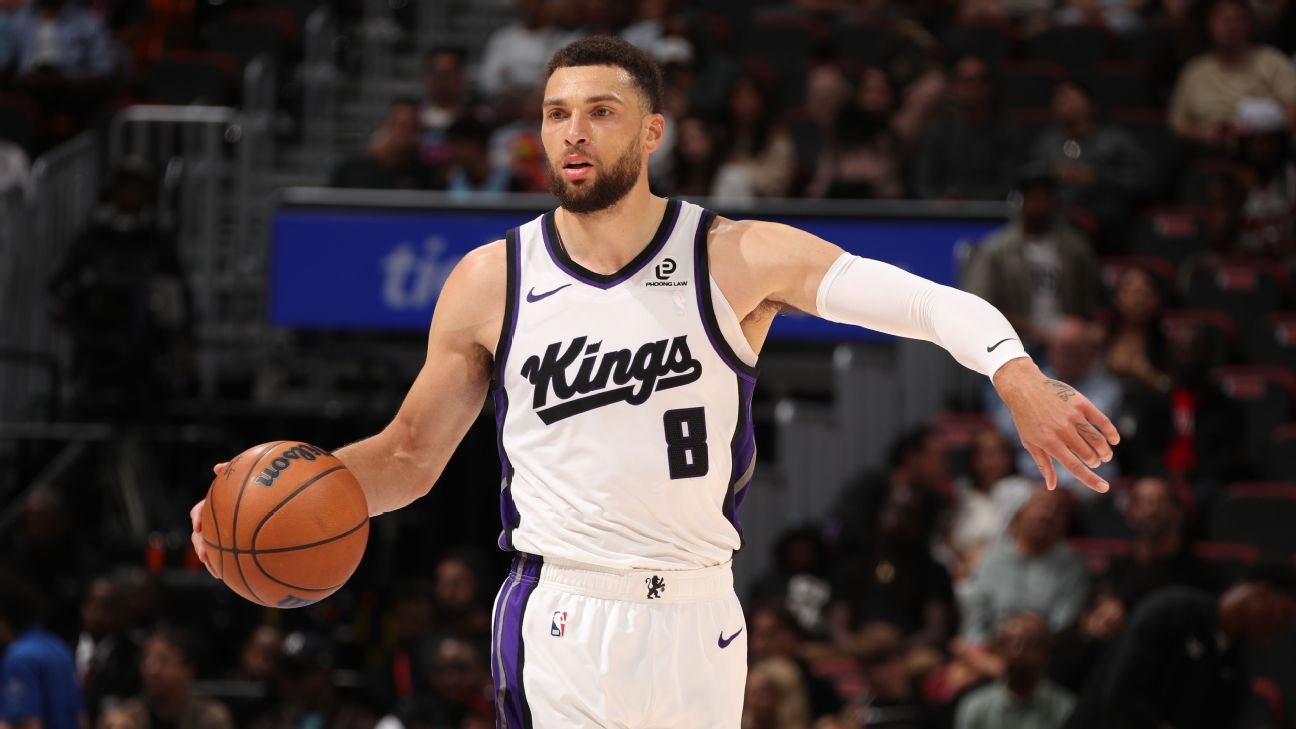
Zach LaVine is staying put in Sacramento. The Kings guard exercised his $49 million player option for the 2026-27 season, per Klutch Sports CEO Rich Paul, cementing his place in a franchise that finished 22-60 last year—worst record in the Western Conference. The opt-in is not, on its face, a vote of confidence; it is a pragmatic financial decision from a player in his 13th season managing his own earning window. But in the broader context of Sacramento's rebuild and LaVine's recovery timeline, it speaks to a calculation worth examining.
LaVine's 2025-26 season ended before the All-Star break when he underwent surgery on a tendon injury in his right hand. At the time of the procedure, Sacramento was 12-44 and clearly pivoting away from contention. In the 39 games before the break, LaVine averaged 19.2 points—down from his career norm of 20.7—on a roster that deteriorated around him while he played. Domantas Sabonis underwent season-ending surgery the same day, further signaling the depth of Sacramento's problems. The organization explored trades for both players ahead of the deadline and found no market. That exploration is critical context: the Kings had a chance to move LaVine and didn't. That silence speaks louder than any opt-in.
LaVine is now nine months removed from his procedure and presumably heading into training camp healthy. A right-hand tendon injury for a guard carries specific risk—ball handling, shooting touch, consistency in high-volume scenarios. But LaVine has 39 games of 2025-26 film to suggest he was already moving past the injury's mechanical impact. The opt-in locks him in at $49 million with a full training camp and preseason ahead to establish himself as the anchor of Sacramento's core. He has two years left on his deal after this; staying through the 2026-27 season also positions him for another extension or a clean market in 2027-28 if the rebuild stalls.
For prop purposes, LaVine's commitment matters most in how it shapes Sacramento's forward roster construction and his offensive role. A 22-win team that keeps its leading scorer signals one of two things: either a genuine belief in the young talent around him (Sabonis, the draft capital they'll hold), or a pragmatic acceptance that they're in a multiyear rebuild and LaVine is the steady scoring throughline. If the Kings add a secondary ball-handler and a perimeter defender in free agency—likely targets given their needs—LaVine's touch count could actually decrease, pushing his seasonal points closer to his 2025-26 pace (19.2 ppg over 39 games) than his 20.7 career average. A full season at 19-20 ppg is not a decline story; it is a role-fit story in a low-volume offense. When Sacramento adds personnel, monitor whether LaVine's shots tick down even as the team wins more games. That's the prop edge: the under on his seasonal points total would not be a fade on his health or ability—it would be a recognition that winning teams in rebuild mode often compress their leading scorer's volume.