Clarkson's Return Solidifies Knicks' Bench Depth—But His Scoring Role Stays Compressed
By Justin Erickson ·
The Knicks retain their reserve guard on a minimum deal, choosing chemistry and fit over upside, signaling confidence in their rotation construction but capping Clarkson's volume prop ceiling.
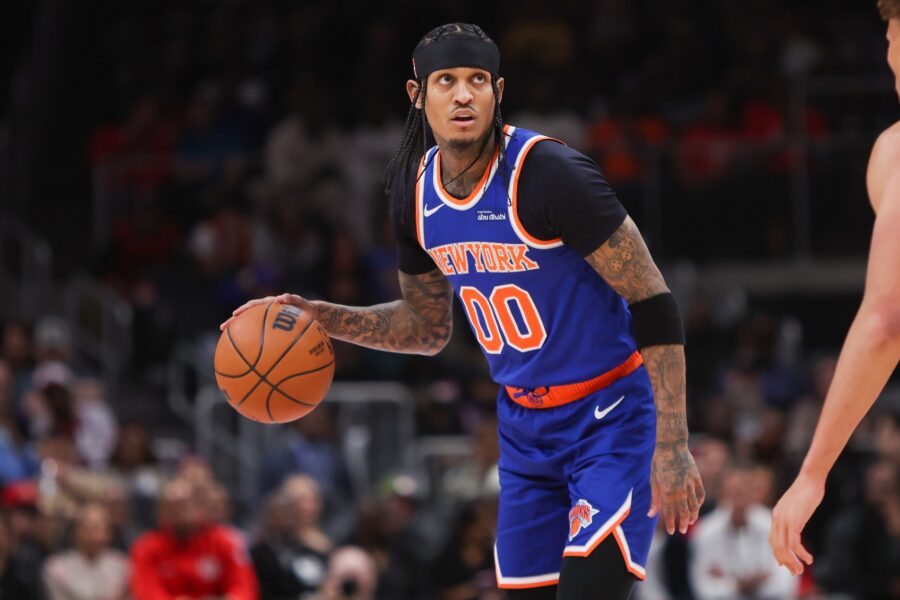
Jordan Clarkson is staying in New York. The veteran guard re-signed with the Knicks on a one-year, $3.9MM minimum-salary contract—a move that costs the team almost nothing against the salary cap and keeps continuity intact after his first season as a bench contributor. Per The New York Post and ESPN, the deal underscores the Knicks' strategic calculus: known commodities and locker-room stability matter more than chasing marginal upgrades at guard.
Clarkson's return is less about offensive creation and more about role definition. Last season, playing behind Jalen Brunson and Isaiah Thomas in a reserve capacity, Clarkson averaged modest scoring on limited shot volume—a deliberate demotion from his volume days in Utah. The Knicks built him into a perimeter spacer and secondary ball-handler, not a primary shot-creator. That's a functional fit in a championship window; it's not a projection for increased usage. The market reportedly considered sharper names—Beal and DeRozan had higher individual ceilings—but the Knicks prioritized the player who already understands the system and doesn't require offensive touches to impact winning.
For prop bettors, the signal is straightforward: Clarkson's scoring and assist lines will remain depressed relative to his career norms because his role is intentionally compressed. A minimum-salary deal and a championship roster with established playmakers (Brunson, possibly upgraded wings) mean Clarkson stays a role player. His usage rate should fall within the 18–22% band, well below the 26–28% he posted in Utah. That constraint translates to single-digit point totals and assist lines that rarely exceed 3.5–4.0 per game, even in start situations. Any spike in volume is a blowout-game anomaly, not a new baseline.
The bet angle here pivots on fade discipline. If a book hangs Clarkson points or assists lines that presume elevated usage—say, 10.5+ points or 4.5+ assists—those are takeaways to exploit on the under side, especially in games where the Knicks' starting backcourt (Brunson, upgraded perimeter talent) is healthy and on-court. Clarkson's bench role is intentional architecture, not a temporary demotion awaiting correction. The Knicks' front office essentially told the market: 'We don't need him to score more; we need him to stay ready and fit.' That's a ceiling, not a floor.