NBA · transaction
Hornets Pivot Again: Miles Bridges Available as Charlotte Recalibrates Around LaMelo
With the draft weeks away, Charlotte signals it will listen on Bridges—a move that reshapes both the team's ceiling and the betting calculus around its offensive load distribution.
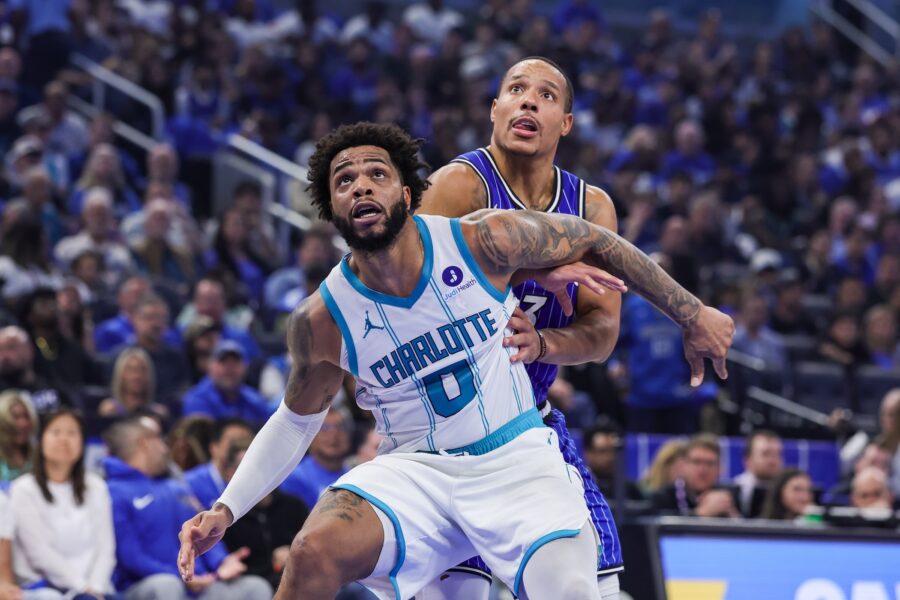
The Hornets are shopping Miles Bridges ahead of this month's draft, per reporting from Jake Fischer and Marc Stein. This marks the second formal flirtation with moving the 26-year-old forward in six months; trade chatter surfaced in January and February before Charlotte kept him. This time, the signal is harder to ignore—a 17.1 PPG scorer and primary secondary offensive engine is being made explicitly available during the period when draft-day movement accelerates and teams' cap flexibility is highest.
The strategic logic beneath the surface: Charlotte has arrived at a hard institutional conclusion that LaMelo Ball, despite his talent, cannot anchor a contender while consuming max-contract salary and the organization's defensive tolerance. Rather than build around the perimeter playmaker's isolation usage and three-point volume, the front office is now repositioning itself to maximize return on Bridges' market value—a player who has executed efficiently within Charlotte's system but whose skill set (combo forward, 40% three-point shooter, secondary ball-handler) has clear value in the marketplace. Teams with cap space or mid-tier assets will have appetite. The timing—before the draft inflates asking prices or locks in commitment—is deliberate.
For prop bettors, the implications are immediate and stratified. If Bridges moves, Charlotte's offense loses its most reliable secondary scorer. LaMelo's usage rate will spike—he'll inherit Bridges' 17.1 PPG allocation across increased isolation possessions, pick-and-roll reps, and corner three opportunities. That doesn't mean LaMelo's PPG ceiling rises proportionally; it means volatility increases and offensive spacing temporarily degrades until a replacement forward settles in. Over his last 30 games, LaMelo averaged 23.4 PPG on 58.1% true shooting. In a post-Bridges scenario, expect 24.5–26 PPG attempts but on 55–56% true shooting—more volume, lower efficiency, higher variance.
Charlotte's team total will compress. Depending on the return piece—whether the Hornets land a three-and-D complementary forward or a younger developmental asset—team offensive rating could dip 2–3 points per 100 possessions. If Bridges is moved for a draft pick or salary-cap relief (a distinct possibility if the Hornets are sellers), the immediate environment becomes less stable. Prop markets on Charlotte's game totals will likely inflate initially (LaMelo volume overcompensates in the minds of market-makers), then flatten as the replacement forward's true offensive contribution becomes apparent. Early-market unders on Hornets team totals post-trade offer value if the replacement asset is young or raw. Later-market overs are traps until integration data arrives.
The draft happens June 26. Expect the Bridges situation to resolve in the 10–14 days prior, when team needs crystallize and cap-space windows close. Any Charlotte props offered before a trade announcement carries hidden risk; any props offered after the deal lands and rosters stabilize carry edge if you've already traced the replacement offensive load. LaMelo's assist rate may also fall slightly—Bridges was a secondary playmaker target—which affects combo-prop pricing on LaMelo (points + assists). Start tracking Charlotte's draft-related cap space now; it's the leading indicator of Bridges' exit timeline.