NBA
Harris to Spurs: Veteran Floor-Spacing in a Youth Movement
Tobias Harris joins San Antonio on a discount deal, adding proven shotmaking to a Finals-contender frontcourt alongside their young core.
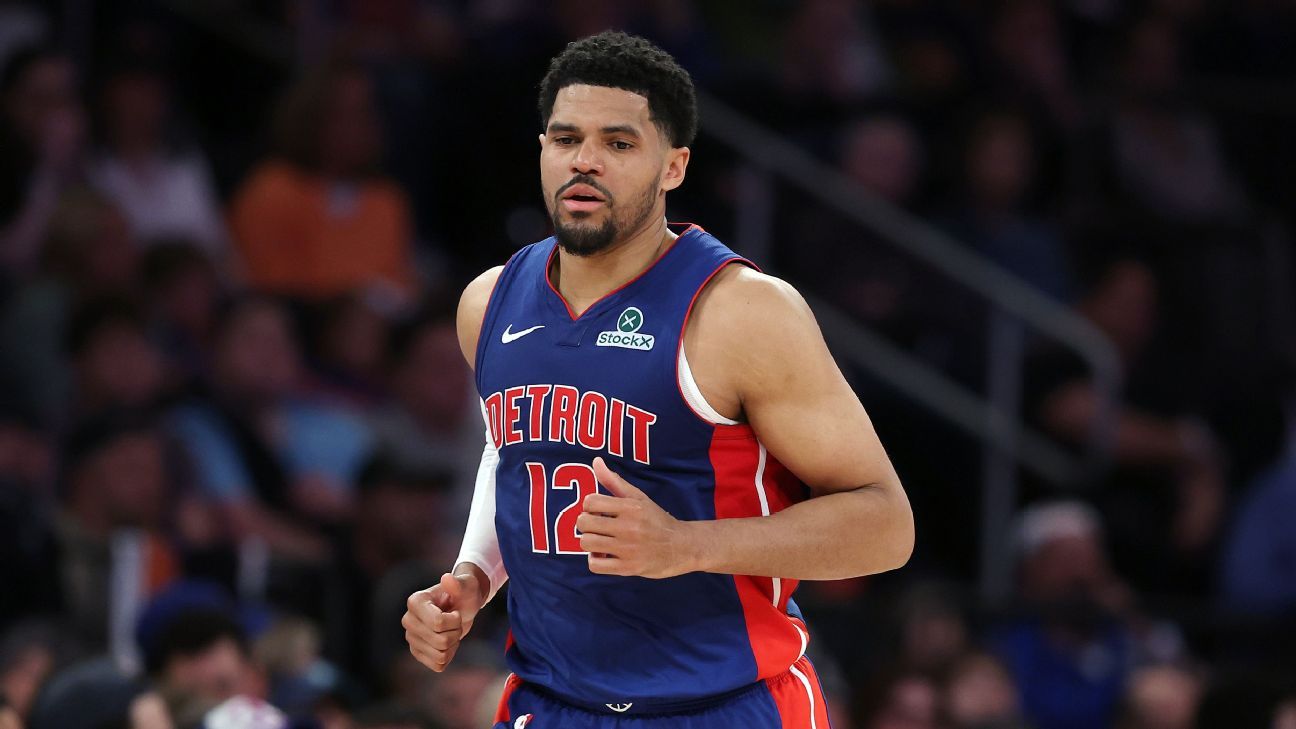
Tobias Harris is heading to the San Antonio Spurs on a two-year, $31 million deal, the veteran forward leaving Detroit after two seasons that reshaped the Pistons' trajectory. Harris, 33, departs a franchise he helped stabilize—averaging 13.5 points and 5.6 rebounds as the Pistons climbed from lottery status to 60 wins and their first playoff appearance since 2008. The Spurs, fresh off a Finals run, are banking on Harris's floor-spacing and mid-range competence to complement their ascending young roster.
The deal signals San Antonio's strategic calculus: keep the window open without overcommitting. At $15.5 million per year, Harris accepts less than the $26 million average he commanded in his two-year Pistons pact (signed in summer 2024), a meaningful discount that reflects both the guard-heavy wing market and his age. For the Spurs, the value is clear. Their Finals squad proved they can win with efficient, position-flexible scoring; Harris provides exactly that. He spaces the floor from the power forward spot, runs in transition, and won't demand volume in clutch situations—a luxury role for a veteran on the back nine of his career.
Detroit loses a stabilizing presence but gains cap flexibility and messaging clarity: the Pistons are pivoting fully toward Cunningham, Ivey, and their defensive identity. Harris's departure also opens frontcourt minutes for younger pieces like Collins (just acquired from the Hawks), allowing the Pistons to accelerate their youth timeline rather than manage a mixed-age roster. The Spurs, meanwhile, add the kind of role player who doesn't disrupt chemistry—he fits, spaces, and knows his lane.
From a prop perspective, Harris's floor-spacing arrival reshapes Spurs frontcourt economics. His 34.2% three-point rate over the last two seasons means opposing defenses must respect his perimeter shot, pulling rim-protectors further from the paint. That opens driving lanes for the Spurs' ball handlers and increases their overall perimeter-to-interior spacing efficiency. Look for Spurs guard assist lines to tick upward early in the season as Harris's gravity forces rim-collapse; Popovich's sets are built around spacing, and Harris is the exact complementary piece. The mechanism is durable—not a single-game spike but a season-long schematic edge. Early-season Spurs assist totals and guard playmaking lines should tighten as books recognize Harris's impact, but the first 1-2 weeks of the season offer window for positional adjustment before public recognition catches up.