Cunningham's 39 Points Weren't Enough: Why the Pistons' Isolation Collapse in Game 5 OT Loss Signals a Deeper Offensive Problem
By Erik Schwartz ·
Detroit's star carried a 39-point load against Cleveland, yet his teammates went silent when it mattered most—a pattern that will determine whether they escape elimination.
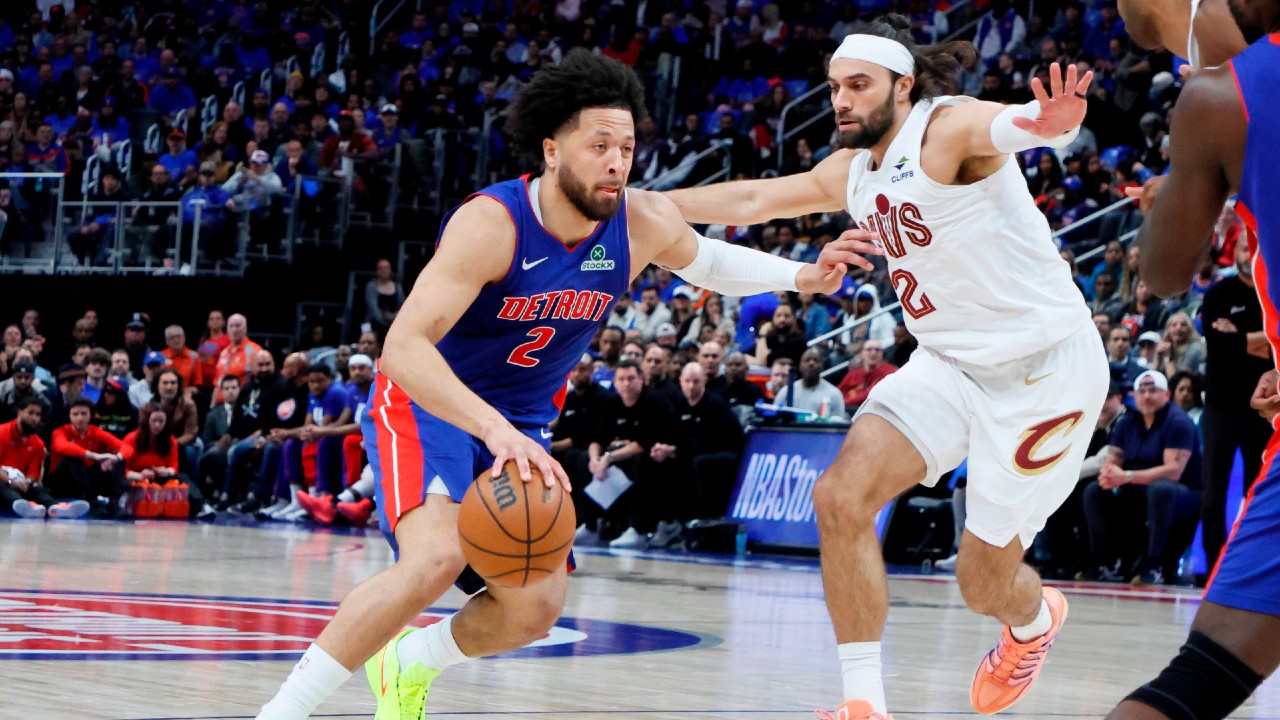
The Detroit Pistons had Game 5 in their grip. Leading by nine with 2:06 remaining in regulation, they held the kind of control that should have tightened their stranglehold on a series they already owned at 2-1. Instead, the Cleveland Cavaliers stormed back to force overtime and won 117-113 on Wednesday, stealing a road victory to even the Eastern Conference semifinal at 3-2 and position themselves to close out the first seed on Friday in Cleveland.
Cade Cunningham's line—39 points and nine assists—would ordinarily anchor a playoff victory. His scoring burden was immense, and he carried it. But the Cavaliers executed a calculated playoff adjustment: they suffocated Cunningham in the final minutes, forcing the ball away from him and daring Detroit's supporting cast to beat them. That supporting cast crumbled. Tobias Harris, Detroit's second-tier scorer, misfired on 13 of 19 attempts for 13 points. Jalen Duren, the All-Star center acquired partly to provide secondary punch, managed nine points and five rebounds in another postseason performance that fell well below his regular-season standard. When Cleveland forced turnovers late—17 total, converted into 27 Cavs points—Detroit had no secondary engine to bail out the offense. James Harden, operating as the Cavaliers' playmaker, posted 30 points with eight assists, and role players Max Strus (20 off the bench) and Donovan Mitchell (21) chipped in the margin of victory.
The deeper problem isn't Cunningham's 39-point night. It's that those 39 points were almost necessary just to keep Detroit afloat. In a seven-game series, single-player performances that dominant don't scale—teammates eventually have to execute. The Pistons' supporting cast is facing a choice: generate consistent secondary offense within Cleveland's switching defense, or watch Cunningham gas himself trying to will a team to the Finals. Harris and Duren have the tools; they showed it during the regular season and during Detroit's earlier playoff series against Orlando. In Game 5, execution abandoned them precisely when spacing and secondary scoring mattered most.
For bettors, this loss rewrites the series narrative and the prop calculus for Game 6. Cunningham's points total will likely drift upward—books will price in his expanded role—but his assist total becomes the sharper angle. When teammates shoot poorly and forced isolation situations tighten, playmaking volume often ticks higher as a desperate team leans on its star to manufacture something, anything. More importantly, Harris and Duren prop lines merit scrutiny on the downside. Harris's 13 points on 19 shots represents extreme inefficiency against Cleveland's perimeter-heavy defense; his offensive rebounding kept him somewhat relevant, but his shot-creation dried up in crunch time. Duren's nine points on limited touches suggests fewer opportunities or diminished aggression—both problems likely to persist if Detroit doesn't adjust pick-and-roll schemes to get him more involved early, before the game tightens.
The Pistons aren't dead. They've clawed back from a 3-1 deficit once already in this postseason against Orlando, and Bickerstaff's team possesses the resilience to steal Game 6 in Cleveland. But their path forward depends entirely on whether Harris and Duren remember who they are on the offensive end. Until they do, Cunningham's 39-point nights remain a marker of desperation, not dominance.