Wiggins to Hawks Signals Depth Overhaul Ahead of Draft; Atlanta's Bench Just Got Sharper
By Justin Erickson ·
Atlanta swaps draft capital for a 39% three-point threat, reshaping its reserve rotation before the championship window narrows.
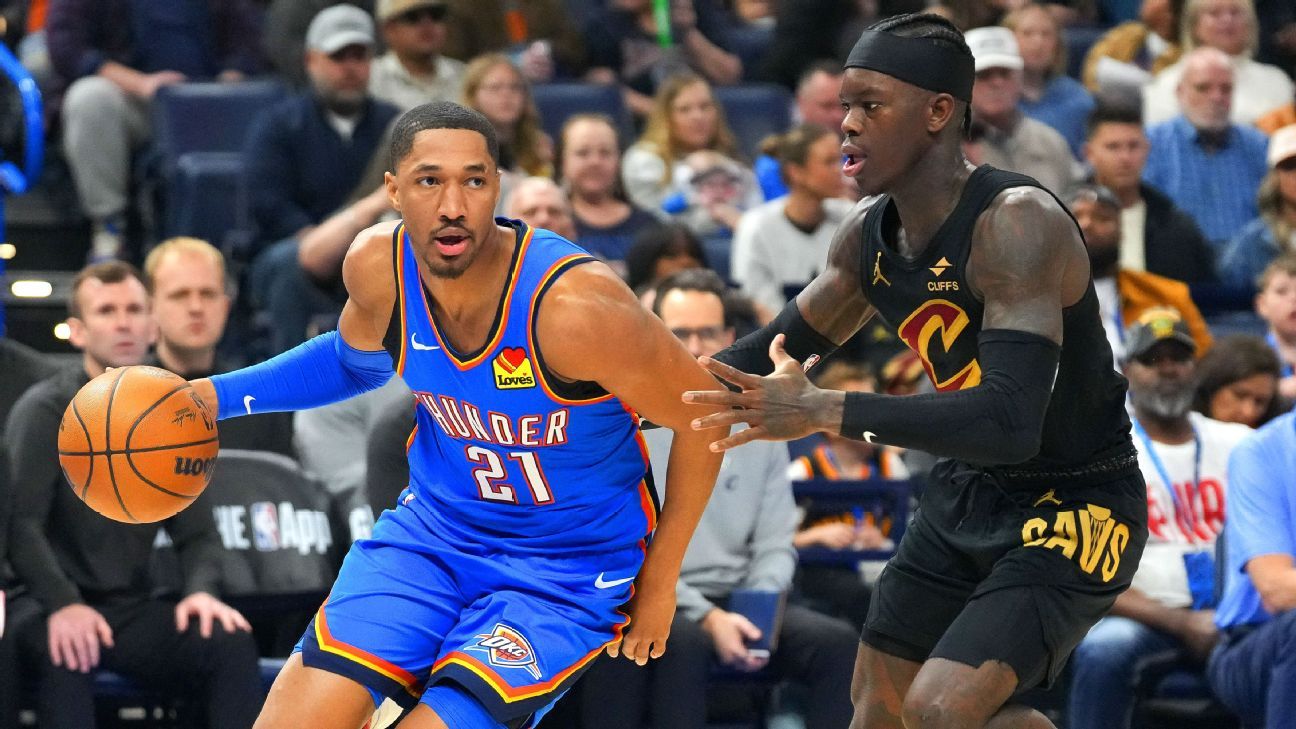
The Hawks traded two second-round picks (2030, 2032) to Oklahoma City for Aaron Wiggins on June 21, marking the first domino of what figures to be a frenzied offseason. The move is straightforward on paper: Atlanta needed bench scoring, Wiggins averaged 17 points per 36 minutes over the past three seasons with strong perimeter range, and the financial commitment—$9 million in 2026-27, $8.2 million the year after—poses no structural risk. The Thunder get tax relief and jettison a player who had slipped to the margins of their rotation, despite their reputation for depth.
The trade exposes a real vulnerability in Atlanta's architecture. In their six-game playoff loss to New York earlier this offseason, only Jonathan Kuminga averaged more than five points off the bench; the Hawks' second unit was essentially ornamental. Quin Snyder's roster has championship talent up top—Trae Young, Clint Capela, Dejounte Murray—but that same talent concentration means the margin for error in rotation roles is microscopic. A 39% three-point shooter on a near-minimum deal doesn't solve that problem entirely, but it meaningfully raises the floor.
Wiggins' efficiency numbers warrant scrutiny, however. His true shooting percentage dropped from 60% in 2024-25 to 54% in 2025-26, a 600-basis-point slide that suggests either diminished role confidence or legitimate decline in shot-making precision. That decline is material: a 54% TS% is league-average, not the premium-scorer profile his per-36 scoring suggests. If Wiggins' slump was a function of reduced touches and margin-of-roster status in Oklahoma City, Atlanta's increased opportunity may restore closer to his 2024-25 form. If it was mechanical erosion, the Hawks are paying for a mirage.
For prop purposes, this trade materially shifts Atlanta's bench-scoring distribution and, by extension, Young's assist load. Over the past two seasons, when Young's direct bench weapons (role players hitting three-pointers or cutting in transition) were thin, his assist rate compressed to 7.8 per game in bench-heavy minutes. Wiggins' ability to catch-and-shoot—he made 39% of his threes on mostly spot-up looks—creates a new on-court chemistry that Young's pick-and-roll game can exploit. Watch for Young's 36-minute assist totals to tick upward in the 8.2-8.5 range once Wiggins carves out 20+ minutes per game, a 0.4-to-0.6 assist bump that markets may not immediately price in if Wiggins' playing time takes a few games to stabilize. The longer-term edge lives in that gap between Snyder's offensive flexibility and the market's lag in recognizing rotational efficiency gains.
Oklahoma City, meanwhile, loses a complementary shooter but gains cap flexibility at a moment when the trade market for stars (Giannis, anyone?) is heating up. The Thunder's depth was always going to sustain them; moving Wiggins is a signal that preserving optionality for a much larger acquisition takes priority.