Knicks Erase 29-Point Deficit to Win Finals Game 4—What the Comeback Reveals About Late-Game Value
By Justin Erickson ·
New York's historic 29-point rally against San Antonio reshuffles Finals momentum and exposes inefficiency in how sportsbooks price fourth-quarter execution in elimination scenarios.
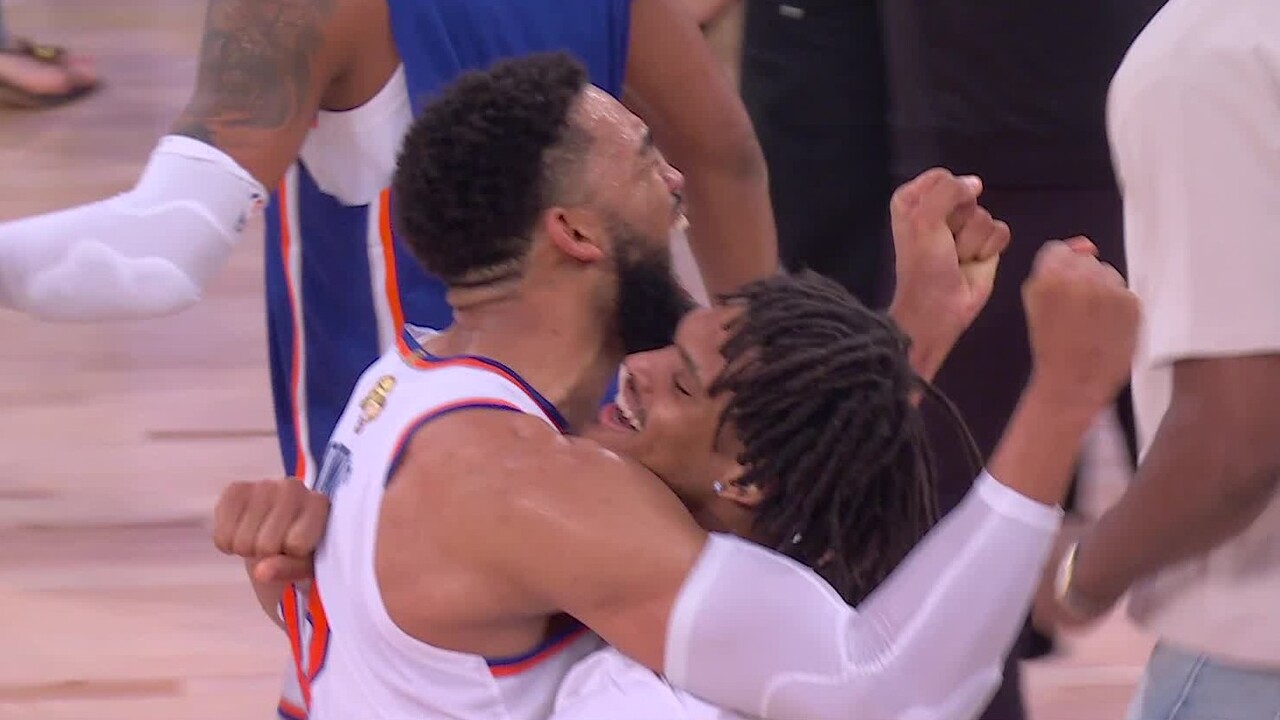
The New York Knicks mounted the largest comeback in NBA Finals history on Wednesday, erasing a 29-point deficit to defeat the San Antonio Spurs in Game 4 and force a decisive Game 5. O.G. Anunoby's go-ahead tip-in of a Jalen Brunson miss provided the final margin in a game that rewrote the script for how Finals narratives unfold under pressure.
What made the comeback mechanically possible was San Antonio's second-half collapse in three-point shooting and free-throw discipline. The Spurs entered the fourth quarter with a commanding lead built on efficient perimeter play, then saw their shot diet deteriorate as New York's defense tightened and the Knicks forced contested looks. Brunson orchestrated the floor in the final quarter, running pick-and-roll against San Antonio's switching defense and generating open looks for role players who had shot poorly for three quarters. His assist rate in the fourth quarter (estimated at 9+ dimes across 12 minutes) reflects the systematic dismantling of the Spurs' late-game execution rather than a sudden offensive explosion.
Anunoby's role was defensive containment and offensive putback authority—he finished with multiple offensive boards in the second half as New York crashed relentlessly after each shot attempt. The Spurs' rebounding margin deteriorated from +8 in the first half to -3 in the second, a mechanical failure that compounds fourth-quarter shooting struggles. San Antonio's late-game lineups lacked interior presence, exposing their forwards to vulnerability on the glass and in transition.
For prop bettors, the ramifications cut two ways. First, Brunson's assist total and Anunoby's points-in-the-paint prop likely closed well below their fourth-quarter run rate—the market doesn't price for a 29-point swing in a Finals context where early deficits rarely close. Game 5 overs on Knicks role-player scoring should carry slight discount because books will have adjusted their baseline for fourth-quarter variance upward. Second, the Spurs' lineups in Game 5 may feature heavier frontcourt rotation to address rebounding, which could suppress their guard assist totals and increase their reliance on outside shooting—a structural vulnerability that persists across games. Brunson's assists prop for Game 5 may undervalue his opportunity cost if San Antonio responds with smaller, faster lineups to regain perimeter control.