Hezonja's Paperwork Maze and Watson's Contract Standoff Reshape Free-Agency Timelines
By Justin Erickson ·
Real Madrid's hold on Hezonja and Denver's lowball offer to Watson expose the friction points where roster construction meets bureaucracy and leverage.
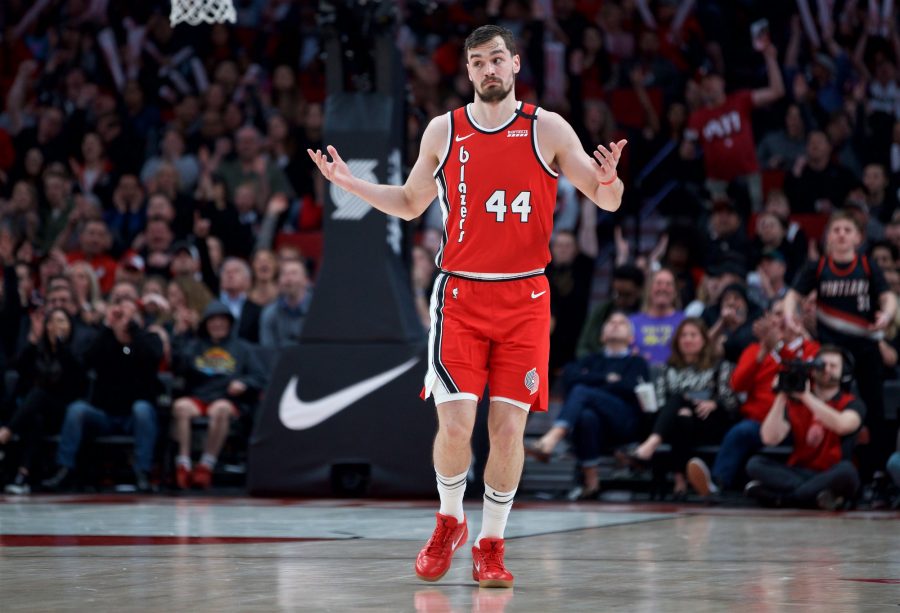
Mario Hezonja's path to a Cleveland uniform hit a procedural wall this week. The Cavaliers agreed to sign the 3-and-D forward to a minimum deal, but a FIBA letter of clearance from Real Madrid—a standard requirement for EuroLeague-to-NBA transitions—remains unsigned. The complication: Real Madrid contends that Hezonja missed the July 20 deadline to exercise his NBA exit clause and failed to pay the $1 million opt-out fee by the agreed window. Hezonja didn't finalize terms with Cleveland until July 26, nine days after the cutoff. The Spanish club now worries that he could use a brief NBA stint as a springboard to a rival EuroLeague team if released mid-season, so they're floating a counterproposal: retain his EuroLeague rights in exchange for clearing him to sign. That leverage play has real teeth because without FIBA's stamp, the deal cannot be registered.
The Watson situation in Denver showcases a different flavor of stalemate. The Nuggets have offered the 23-year-old wing somewhere between $16 million and $18 million annually on either a four- or five-year frame—reports conflict on the exact structure. Watson wants north of $25 million per year, matching what teammate Christian Braun secured last offseason. Denver's apron restrictions limit their ability to escalate further without sacrificing depth. Cleveland has quietly expressed interest in acquiring Watson via sign-and-trade, but the Cavs face their own apron complications, making a three-way deal mechanically painful. The result is a holding pattern where Watson remains unsigned and Denver's offer sits rejected.
These twin delays matter for team construction because they're keeping rosters in flux deeper into August than usual. The Lakers, who have already made center additions in the form of Walker Kessler (via sign-and-trade) and Kevon Looney (free agent), are still hunting for interior depth despite holding 16 guaranteed contracts. That suggests they may pursue a cut-rate trade target rather than compete in free agency for remaining names. For prop bettors, the timing creates an asymmetry: rosters are still being finalized during a window when preseason totals and individual season-long props are setting, but the full complement of players and roles won't stabilize for another two to three weeks.
Hezonja's eventual arrival in Cleveland—assuming the FIBA letter comes through—will add a useful three-point shooter to a Cavs offense that has relied heavily on Donovan Mitchell and Darius Garland for perimeter creation. His presence doesn't dramatically alter scoring gravity or assist distribution, but it does increase the probability that off-ball shooters see more consistent touches in the corner and wings. Watson's eventual landing spot (Denver, Cleveland, or elsewhere) carries bigger swing potential because he's a younger, more explosive wing capable of changing pick-and-roll dynamics and defensive versatility. A Watson sign-and-trade to Cleveland would reshape Cavs wing depth and possibly alter how aggressively the team attacks in transition—a direct mechanism for shifts in pace-adjusted scoring volume.
For bettors, the safest play is to monitor preseason totals as these moves formalize. If Hezonja lands in Cleveland within the next 10-14 days and the market hasn't yet repriced Cavs team total or bench scoring props, early-week action on those lines may offer value before the full 15-man roster is public. Watson's destination remains too uncertain to project reliably, but if Cleveland lands him, watch for Cavs assists total to rise noticeably—a Watson-plus-Garland backcourt generates more pick-and-roll frequency than the current roster allows. Avoid locking in season-long props on either player until their landing spots are official and we see at least one preseason appearance.