Jokic, Wembanyama, and the Return Class Reshape Fantasy Roto Value
By Justin Erickson ·
With Haliburton and Irving back from injury and the 2026-27 season opening drafts this week, roto league construction demands a recalibration of scarcity at point guard and elite wing depth.
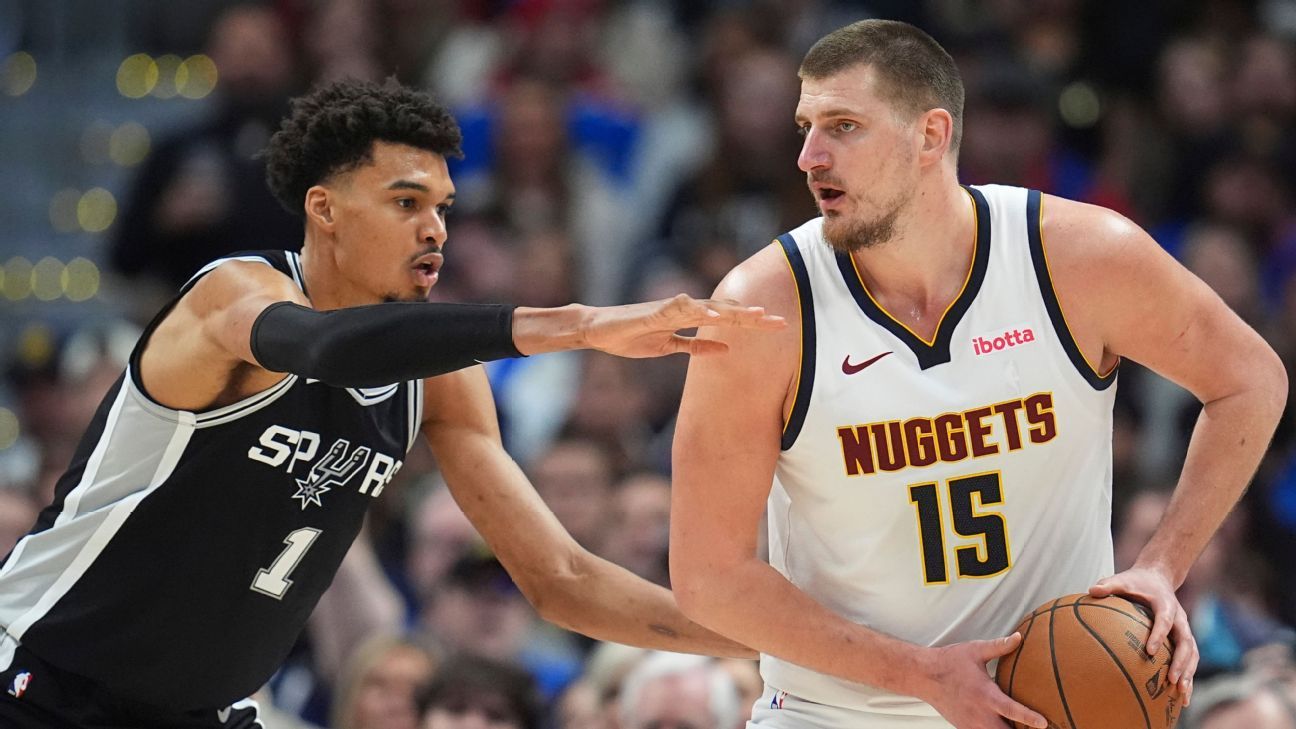
Nikola Jokic holds the top roto ranking heading into the 2026-27 season, fending off Victor Wembanyama's ascent in a race that will likely define elite fantasy architecture for the next three months. The two-horse race at the peak is less contentious than the structural question beneath it: how much league equity shifts when Tyrese Haliburton (ranked 12th) and Kyrie Irving (48th) rejoin a point-guard class already densely stacked with Shai Gilgeous-Alexander, Luka Doncic, and Tyrese Maxey in the top tier.
Jokic's three-category floor—reliable scoring, playmaking volume, and board work—remains the safest anchor in roto formats, where consistency across eight categories matters more than ceiling games. Wembanyama's rise reflects his combination of scoring efficiency, shot-blocking upside, and positional positional flexibility that punishes depth-heavy drafting. The tension between them isn't about who's better—it's about who you can afford to miss in later rounds if you wait on point guard. Haliburton's return from his missed season lands him behind Maxey but ahead of Donovan Mitchell, a placement that flattens what was a thinner three-to-five band. Irving's ranking at 48th—below both Karl-Anthony Towns and Giannis Antetokounmpo—signals caution: the market is pricing durability risk, not skill recession.
For roto teams, the return of these guards creates a two-tier arbitrage. Drafters who overweight early scoring (Luka at four, Anthony Edwards at five) deplete secondary scoring depth and cede playmaking volume to rivals who pivot to secondary playmakers. A team loading Jokic, then punting point guard until round five, can stack secondary scorers like Cade Cunningham or Scottie Barnes—both ranked above 12—and still land a functional lead guard in Haliburton or even late-round fliers like Trae Young (47th). The risk surfaces in three-point categories: Wembanyama's two-way shooting and shot-making pull volume away from ball-handlers, meaning fewer corner threes for wings and fewer volume looks for guards in spacing-heavy systems.
The prop angle emerges from positional value compression. Jokic's per-game assist floor (8.0+) should remain stable in Denver's offense, but his relative advantage over Doncic (7.5 assists per game last season in LA) shrinks if you're paying 20% draft premium for consistency. In roto scoring, that's dead equity. Haliburton's assists-per-game line, if sportsbooks open it at 7.5 or higher, becomes a value edge: he lands twelfth overall because scouts weight his injury recovery, not because his playmaking profile degraded. The market is underpricing the assist volume of both Haliburton and Irving relative to their roto ranking—a structural inefficiency that persists until public perception catches up to roster construction reality. Taking assists overs for Haliburton (7.5+) and Irving (6.5+) through the first month captures that correction window before sharp money reprices positional scarcity.
Wembanyama's three-point volume, ranked behind Edwards and Doncic but ahead of Jayson Tatum, suggests his ceiling in three-point categories remains undervalued relative to his overall rank. If he's shooting 2.2+ threes per game—a reasonable expectation for a wing in modern offensive schemes—his 15th-percentile scoring prop (points at 22.5+) looks artificially suppressed next to players ranked 8-10. The depth at small forward and power forward, where Wembanyama slots, means teams chasing roto balance will reach for him to secure a second elite three-ball. His per-game over on threes made (1.8+ or 1.9+) should carry positive expected value in opening week lines before the market fully adjusts to his elevated draft capital.