NBA · transaction
Duren Signs $200M Extension, Ends Pistons Standoff—Valuation Signal for Detroit's Core
Jalen Duren accepted $87 million less than his max eligibility to lock in security; the Pistons' discount reflects postseason doubts that now shape his offensive usage going forward.
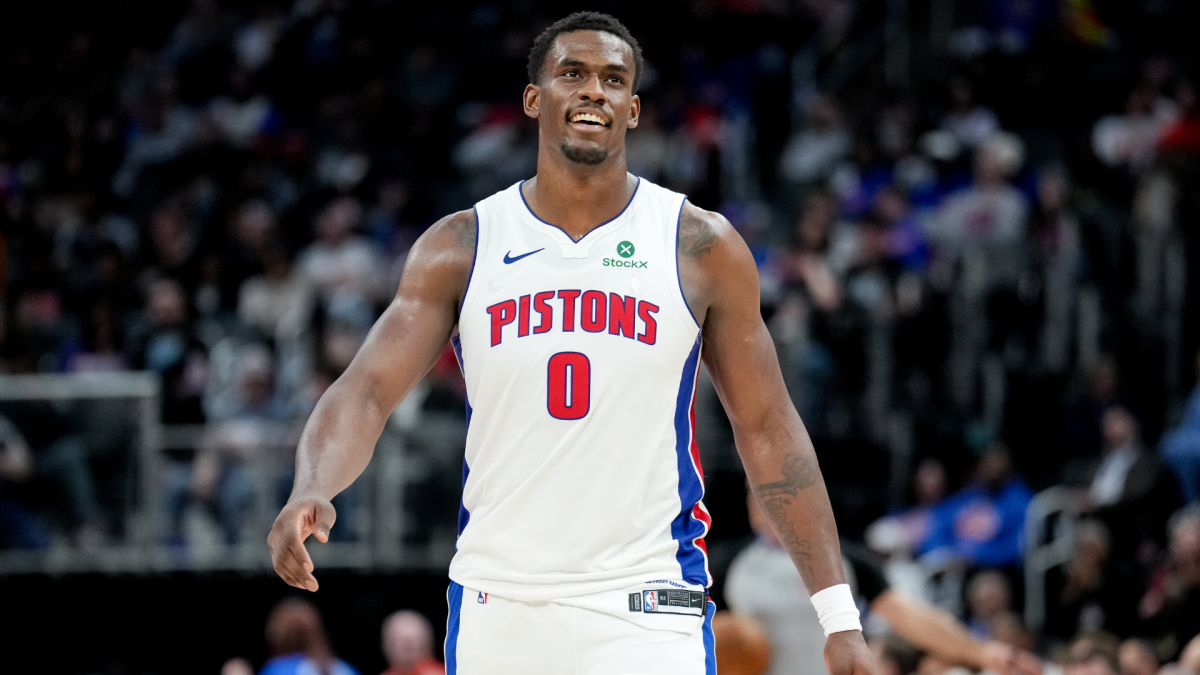
Jalen Duren and the Detroit Pistons ended their monthslong restricted free agency standoff on Thursday night, with the All-Star center inking a five-year, $200 million deal just hours before the qualifying offer deadline expired. The agreement caps a contentious negotiation that began after the season and carried the added friction of a proposed weight clause—since removed—that left Duren feeling disrespected by the organization he's played for since the 2022 draft.
The numbers tell a clear story about how the market views Duren's value relative to his peers. He was eligible for up to $287 million over five years on a maximum deal. Instead, he accepted $200 million—a $87 million haircut from the full max. The gap reflects Detroit's calculation: a third-team All-NBA regular season followed by a disappointing postseason showing materially reduced his leverage. Early free agency meetings with the Lakers and Kings generated little real competition because few teams had the cap space to force Detroit's hand, and the Pistons made clear they had no interest in sign-and-trade discussions that might have sent Duren elsewhere. By waiting until the final day, Duren had to confront a genuine trade-off. Taking the $9.6 million qualifying offer would have preserved unrestricted free agency in 2027, but it carried dual risk: injury during a prove-it season, or further performance decline that could tank his value below $198.8 million (the QO plus the projected free-agent max from any other team). With the Pistons' $200 million offer secured now, Duren eliminated that variance for guaranteed money.
What matters for the Pistons' offensive construction going forward is what the discount implies about usage and role. Detroit already signed Cade Cunningham to a five-year, $269 million deal before this offseason, cementing him as the franchise centerpiece. By paying Duren less than Cunningham and significantly less than a max-caliber pivot, the organization is signaling that his primary role is efficient finishing around the rim—not expanded playmaking or high-volume touches. The Pistons also recently extended wing Ausar Thompson, building a young core with clear hierarchy: Cunningham as primary creator and ball-handler, Duren as an elite roll man and rebounder, Thompson as a defensive wing. This structure directly impacts Duren's assist floor and ceiling. His 1.4 assists per game last season were already modest; in a system where Cunningham controls the offense and defenses collapse on Duren in the short roll, the assists prop carries risk of overcorrection if the market assumed his touches would increase.
For prop bettors, the valuation gap carries an immediate implication: Duren's scoring volume is unlikely to expand despite his All-NBA season status. Teams that pay a star less than the max typically do so because they've identified a usage ceiling or role constraint that justifies the discount. Detroit's decision to underpay Duren relative to Cunningham's contract and the full max eligibility signals that his on-court responsibility will remain concentrated in the paint. Expect his PPG line to hold in the 18–20 range—a modest uptick from his 19.5 last season, but not the 22–24 range that a max deal would imply. His rebounds, already elite at 10.5 per game, are his most durable prop; rim-running volume doesn't change with offensive hierarchy. His assists, however, remain fragile and should be faded on the over unless the Pistons' ball-handling architecture shifts. The contractual signal is clear: Duren is priced as a star role player, not a star creator, and the market's expectations for his offensive load should reflect that structure.
NBA Intelligence — Basketball intelligence beyond the box score. Open NBA Intelligence →