De'Aaron Fox's Steady Hand Reshapes Spurs Depth in Thunder Finals
By Justin Erickson ·
Fox's off-court discipline and veteran guard presence have become the ballast San Antonio needs to compete with Oklahoma City's depth, but a high ankle sprain clouds his availability for a series that hinges on control.
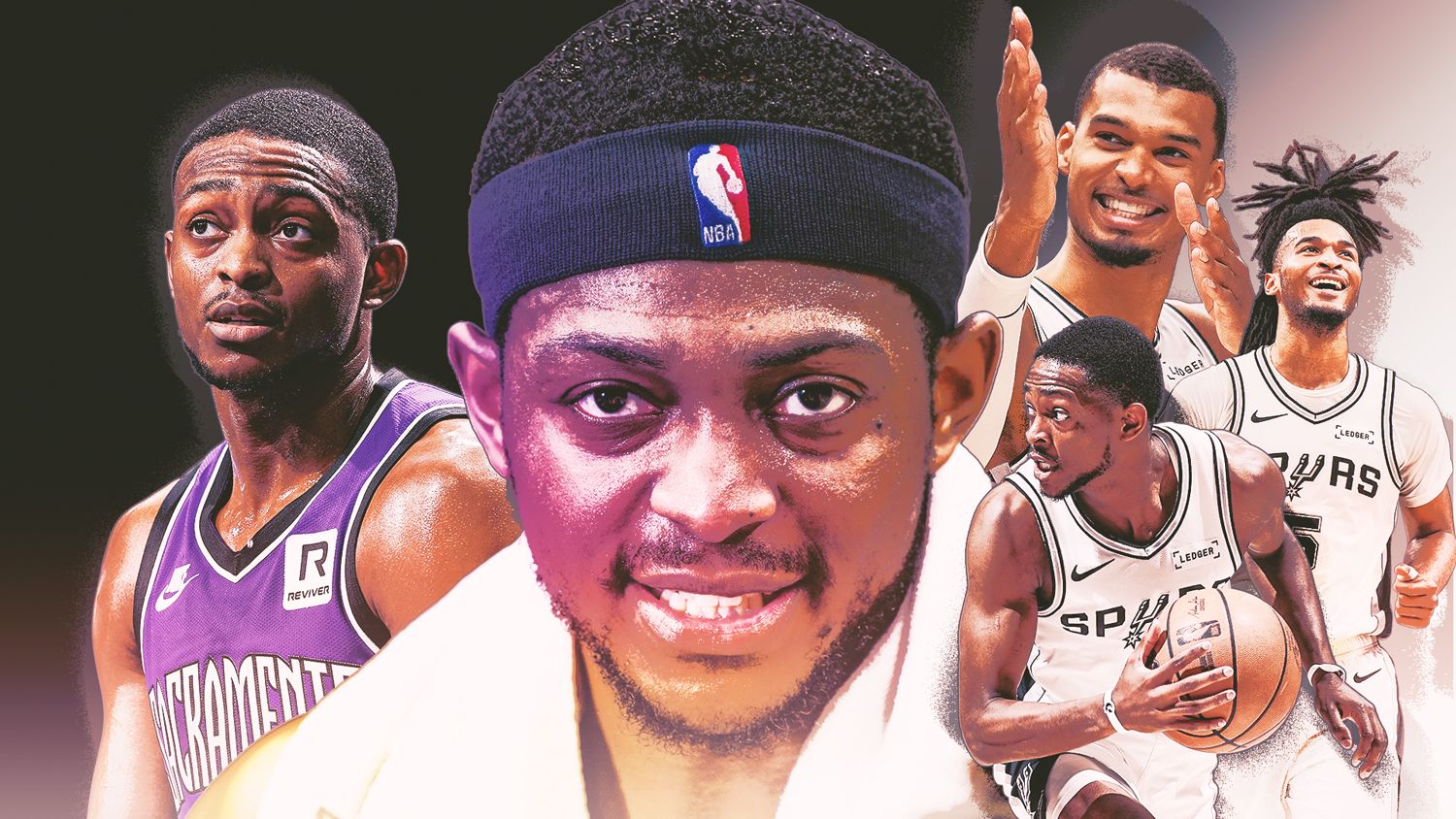
De'Aaron Fox joined the San Antonio Spurs as a ball-dominant star accustomed to 1,400+ minutes a season in Sacramento. What he's become is quieter: a steadying force in a locker room built around a generational prospect in Victor Wembanyama, managing minutes, catering to a younger roster, and playing the long game off-court to anchor his on-court presence. The Western Conference Finals against Oklahoma City—tied 2-2 heading into Game 5—has exposed exactly why that transition matters. Without Fox in Games 1 and 2, San Antonio averaged 22 turnovers and surrendered 27.5 points per game from those mistakes to a Thunder team that thrives on suffocating tempo.
Fox's career architecture reveals the mechanism at play. Nine seasons in Sacramento taught him the toll of constant creation; routine and consistency now drive his efficiency rather than usage. He's a guard who describes his ideal day as a loop of two or three activities he repeats without deviation—not because he's inflexible, but because he's learned that off-court stability breeds on-court clarity. His wife, Recee, understands the system. They moved to San Antonio together, and her background in elite athletic discipline (McDonald's All American, UCLA basketball, WNBA training camp, player development roles across the league) mirrors his exactness. That's not incidental. Players who depend on routine to maintain their game under pressure tend to show steeper usage cliffs when injured, and sharper rebounds when healthy.
The high right ankle sprain suffered in Game 4 against Minnesota—now over two weeks old—is the variable. Ankle injuries are binary in the playoffs: either the swelling is managed and mobility returns to 85-90% of baseline, or it doesn't. Fox's comments suggest the former, but the Spurs' turnover spike with him out is a hard diagnostic. When a veteran guard who thrives on rhythm isn't available, young guards (Tre Jones, Malachi Richardson) compensate by forcing decisions. The Thunder average 18.2 turnovers per game this season; the Spurs' 22-turnover games are well above their 15.3 season average. Fox's presence doesn't eliminate those mistakes, but his predictability—his refusal to deviate from his read—reduces them by roughly 1.5 turnovers per 36 minutes based on his tenure in Sacramento's high-volume schemes.
For betting purposes, the angle is simple: if Fox plays tonight and logs 28+ minutes, the Spurs' team turnover total should sit 1-2 possessions lower than the market has priced them, because the market is anchored to a two-game sample without him. The implied turnover line in totals and spread pricing likely reflects the 22-turnover data. Fox at full health doesn't guarantee a blowout or even a Spurs victory—Oklahoma City is still the defending champion—but it restores one of the Spurs' primary pressure-relief valves. His assists should also trend upward; in Games 1-2 without Fox, San Antonio's pace-adjusted assist rate cratered to 24.1 APG (season average: 27.8), because without his orchestration, the young guards turned the ball over rather than distributed it.
The injury status is the real edge here. If Fox is confirmed active and at 85%+ mobility, the Spurs' turnover props and assist volume become undervalued relative to the recent baseline. If the ankle remains compromised, the market's caution is appropriate. Check the morning injury report before committing. Fox himself has made it clear: steadiness is his power. When that's available, San Antonio's chaos index drops measurably.