NBA · transaction
Celtics' Offseason Reset: What Tatum's Return and a Blown 3-1 Lead Mean for Boston's Roster — and Your Props
Boston's earliest postseason exit in years didn't just expose a roster gap — it reset the entire calculus on how the Celtics score, distribute, and cover next season.
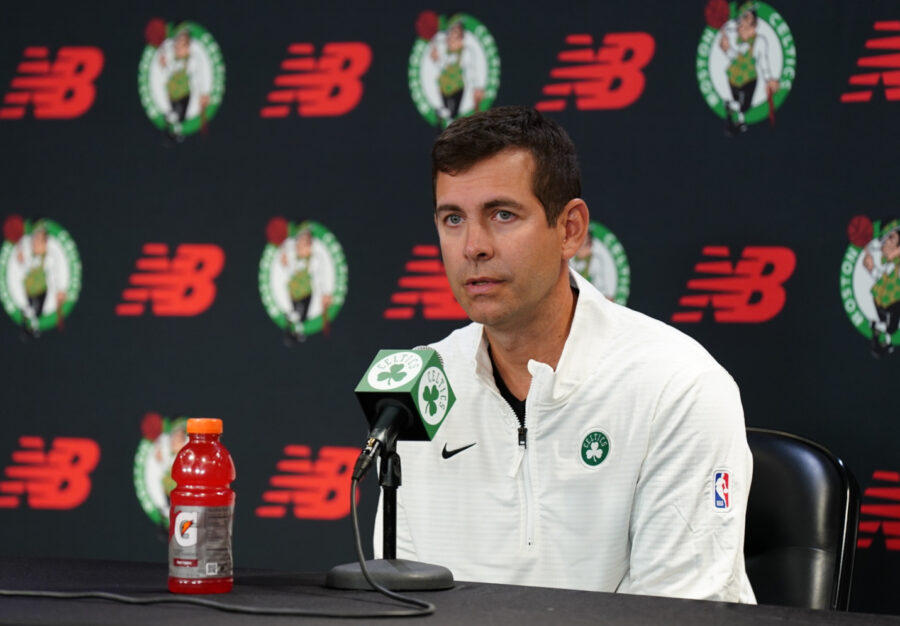
Boston's offseason is now defined by a painful first-round collapse against Philadelphia — the franchise's first-ever blown 3-1 series lead — and the pressure to rebuild around a returning Jayson Tatum into something that can actually contend again. Per reporting from MassLive's Brian Robb and aggregated by HoopsRumors, the Celtics enter the summer with real structural questions: a frontcourt that needs upgrading, a $27.7MM trade exception from the Anfernee Simons deal sitting unused, and a front office under Brad Stevens that is under unusual scrutiny after what the organization itself would likely characterize as a miscalculation.
The core tension is straightforward: Tatum's health and availability have been the organizing principle of this roster for two seasons, and even with him back at full strength, Philadelphia exposed real depth and size vulnerabilities that can't be patched with continuity alone. The Celtics need a legitimate starting-caliber center — someone who can stretch the floor and anchor the paint simultaneously. Neemias Queta has shown promise but remains a developmental piece, not yet the kind of anchor you build championship rotations around. Stevens knows this. The trade exception gives him a meaningful lever to pull, but the right move hasn't materialized yet.
Coach Joe Mazzulla also faces questions his first title run temporarily silenced. The series loss to Philly raised legitimate concerns about in-game adjustments and rotation management — areas that directly shape how Boston's offensive engine distributes production across individual players. When Mazzulla's rotations tighten in high-leverage playoff moments, scoring and assist volume concentrate dramatically in a small group: Tatum, Jrue Holiday, and Jaylen Brown. That concentration is a feature for prop bettors who know when to buy in — and a trap when rotations expand in blowouts or load-management spots.
For prop purposes, Tatum returning healthy is the headline, but the real angle is what Boston's roster construction looks like by opening night. If Stevens lands a floor-spacing center who demands defensive attention, Tatum's driving lanes open, his pull-up mid-range volume stays elevated, and his assist opportunities increase as defenses collapse. That's a quiet setup for Tatum PRA props to tick up from his injury-shortened baseline. Conversely, if Boston enters 2025-26 with the same frontcourt uncertainty and Mazzulla cycling through Queta-heavy lineups, expect more defensive attention on Tatum as a scorer — which historically has pushed his points totals but suppressed his dime numbers. Watch how the roster shapes up in July before committing to either side of Tatum's assist lines.
The team total picture for early-season Celtics games is similarly unsettled. Boston's offensive rating without a reliable pick-and-roll center drops measurably — their half-court sets become predictable and their transition numbers flatten. Until that center question is answered, lean toward caution on Celtics team totals in back-to-backs and against elite defensive frontcourts. The talent is still there. The system coherence, right now, is not.