Free Agency Opens Tomorrow: How Roster Churn Reshapes Scoring Equity and Backcourt Props
By Justin Erickson ·
With official free agency beginning tomorrow at 6 p.m. ET and trades still moving at pace, the market repricing of backcourt depth and wing scoring means early-window prop lines carry significant edge before rosters solidify.
Free agency officially tips off tomorrow evening, but the NBA's roster construction is already three moves ahead of the public line. Per ESPN's coverage, impactful agreements have been announced across the league—trades involving superstars like Giannis Antetokounmpo reshuffled draft capital and player equity—yet the bulk of decision-making remains unresolved. That lag between major moves and full roster clarity creates a distinct betting window: books haven't finished repricing role-player availability, bench-guard minutes, and secondary-scoring responsibilities that shift once free agents land.
The timing matters. When a star player moves or a team's cap structure opens suddenly, general managers move faster than sportsbooks adjust. The Giannis trade on draft eve, combined with subsequent agreements already locked in, means teams are still finalizing their backcourt depth and forward rotation. That creates asymmetry: some teams face minute reallocation across their entire roster, others are chasing specific fill-in role players. A guard moved off a contender's bench might become a starter elsewhere. A wing brought in for shooting changes that team's spacing and offensive flow. The books open with pre-free-agency prop lines that assume last season's minute distribution and offensive load. By tomorrow night, those assumptions begin to expire.
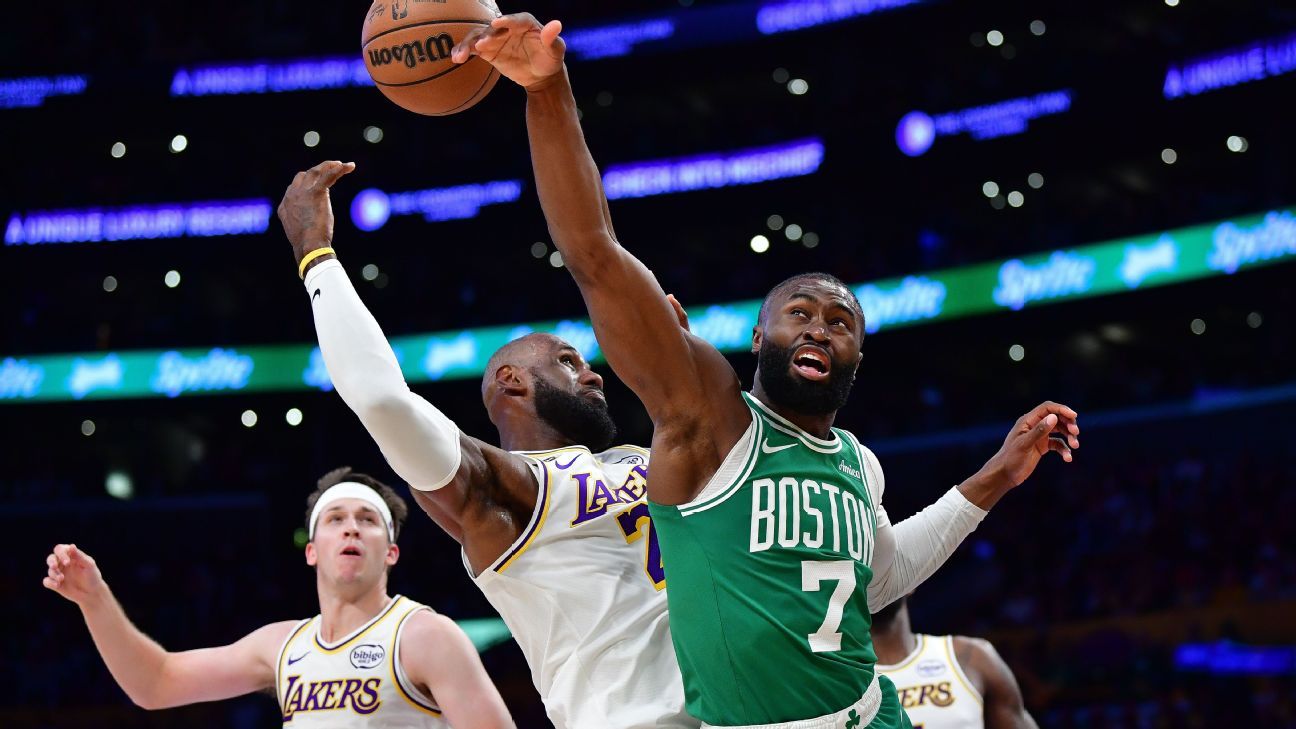
Focusing on the Lakers and Celtics as case studies: LeBron's contract status and any surrounding roster moves (particularly in the backcourt and at wing) will determine whether supporting cast scoring props should lean over or under pre-free-agency pricing. If the Lakers add guard depth and resolve their ball-handling, secondary playmaking responsibilities spread across multiple players, meaning no single role player inherits an unusually heavy offensive load. The Celtics, by contrast, operate with settled hierarchy; Jaylen Brown's role is already defined. But if either team trades for a new piece or loses a contributor, assist distribution and scoring volume for secondary players shift materially. Early lines won't account for those changes until the roster is publicly finalized.
The practical edge emerges in role-player and bench-guard scoring props during the first 48 hours of free agency. Teams announcing signings in rapid succession create inventory chaos: the books price point guards and wings based on last year's team context, not tomorrow's. A backup guard going from 15 minutes per game on a deep roster to 28 minutes on a thinner one doesn't move his individual prop line until games are played and minutes are confirmed. Smart bettors ahead of roster announcements can target unders on role players destined for reduced roles (joining deeper benches) and overs on those inheriting larger offensive shares (joining thinner rotations), because the market won't reprrice those until the roster is locked in and early-season data confirms the minute change. Patience through opening week is the edge; many early props will reverse once teams stabilize.