Simons to Philadelphia Fills Guard Depth Gap, But Bench Role Limits His Scoring Ceiling
By Justin Erickson ·
Anfernee Simons signed with the 76ers as a high-volume three-point option, but his backup role behind Tyrese Maxey will cap his per-game usage and scoring upside in 2026–27.
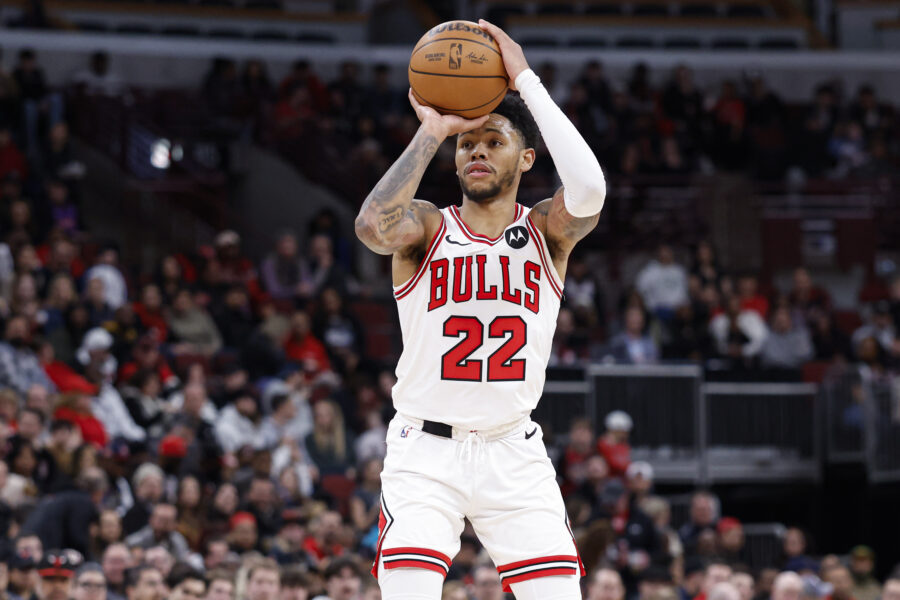
Anfernee Simons agreed to a two-year deal with the Philadelphia 76ers worth $12.3 million with a player option in year two, addressing a roster gap at guard depth. The signing positions him as Maxey's primary reserve and gives Philadelphia another shooter capable of spacing the floor—a critical asset in the Eastern Conference arms race. Simons carries legitimate credentials: he's ranked among the league's elite three-point volume producers and has demonstrated the ability to play both guard positions without sacrificing efficiency.
The fit makes surface-level sense. Philadelphia's offensive architecture flows through Maxey's playmaking and pick-and-roll gravity; adding a capable scorer and off-ball shooter should compound that pressure on opposing defenses. Simons averaged 15.2 points per game last season on 37.8% three-point accuracy, the kind of floor-spacing that translates cleanly into playoff rotations. He won't demand ball-handling duties or usage at the expense of the core cast—a crucial ingredient for a contender already built around established volume creators.
But the backup classification matters for prop valuation. Simons' scoring upside hinges on minutes availability and shot diet, both of which contract when he's not the primary option. In Portland's system, where he operated as a secondary creator, his volume touched 13.4 field goal attempts per game. As Maxey's platoon mate in Philadelphia, expect that to settle around 10–11 attempts, compressing his per-game scoring ceiling to 11–13 points depending on efficiency. The 76ers won't need him to hunt shots; they'll deploy him to space defenses and knock down open looks created by Maxey and Joel Embiid's gravity.
For bettors, this shapes the calculus on Simons' individual prop lines when the 2026–27 season opens. His season-long scoring average will price in 27 minutes per game and reduced usage—likely landing in the 10.5–12.5 range depending on sportsbook conservatism. The edge lies in fading his overs early in the season, when public perception may overweight his three-point prowess and underweight the reality of limited bench touches. His makes line (likely 2.5–3.0 threes per game) will be more reliable than his total points because it isolates his actual function in the offense: a high-efficiency spacer, not a high-volume scorer. Fade scoring overs until live data confirms he's holding 29+ minutes in standard rotations.