Julio Rodríguez's May Aberration Reshapes His Season Arc—and His Betting Profile
By Justin Erickson ·
After a career-worst April, J-Rod exploded in May with his highest monthly slugging percentage in four years, forcing a fundamental recalibration of his predictable first-half fade.
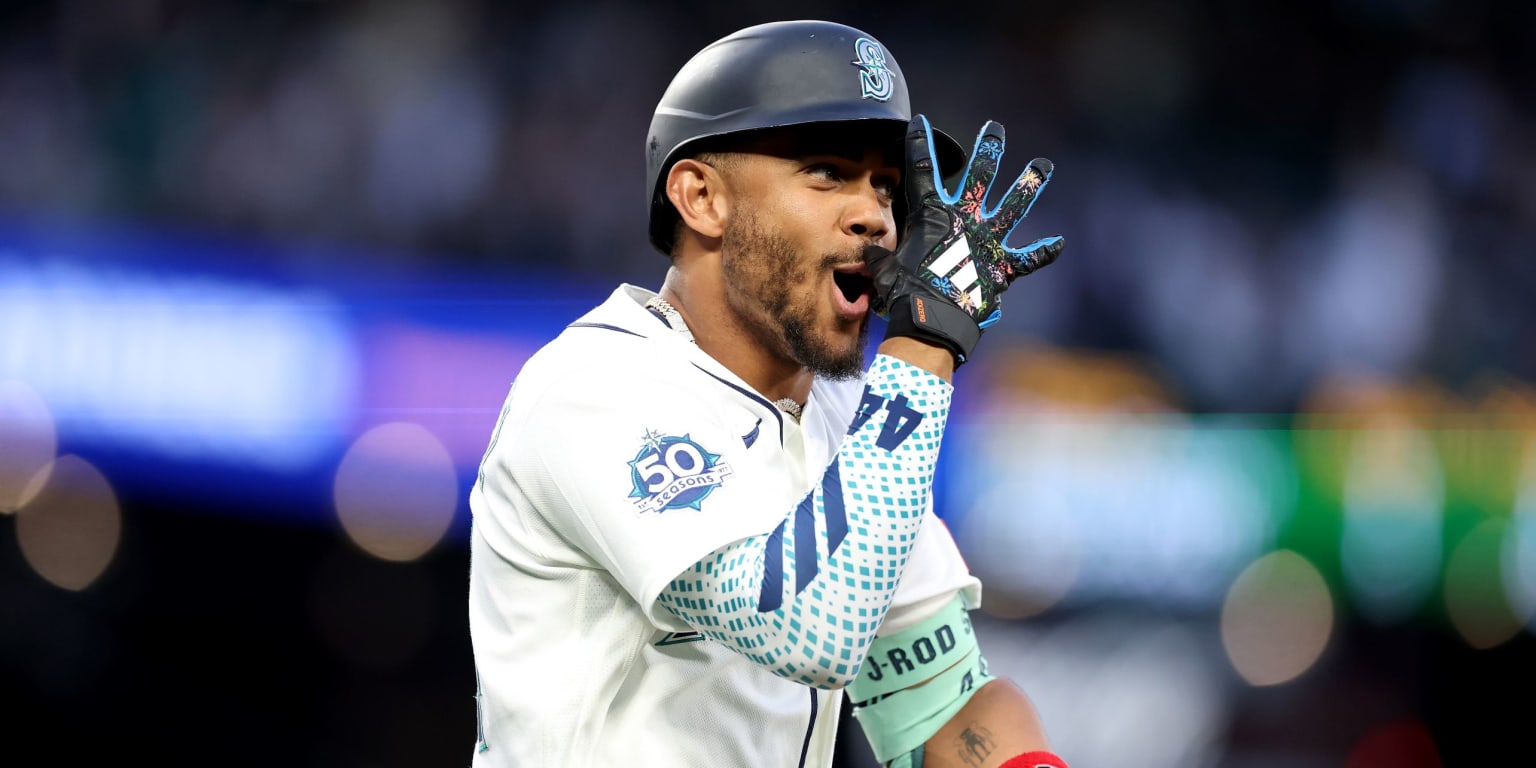
Julio Rodríguez has spent four seasons establishing one of baseball's most consistent platoon splits: a .737 OPS before the All-Star break, then .902 after it—a 165-point gulf that made him a reliable seasonal fade for bettors who understood the pattern. This year, that calendar has been scrambled. After taking more than two weeks to record his first extra-base hit, Rodríguez exploded through May with 10 homers, 17 extra-base hits, and a .590 slugging percentage—his highest monthly SLG in any calendar month spanning at least 100 at-bats except for one August in 2023. He's now compiled 27 extra-base hits in his past 53 games with a .528 slugging mark. Through 67 team games, his home run total (13), doubles (14), walks (22), and overall OPS (.767) are all career-bests for that stage of a season.
What makes this May run genuinely different from his typical April fade is the velocity of the correction. Past years showed Rodríguez starting slow and gradually warming; this year he hit a wall in April, then flipped a switch hard enough to produce his second-best calendar month on record. That distinction matters because it suggests either a mechanical adjustment that's held—or a variance spike that will regress toward his seasonal mean. The Mariners have also surfaced at the right time to benefit. They've climbed to first place in the AL West with a 13-6 stretch after a 22-26 start, and Rodríguez's outburst has been central to that run. Catcher Cal Raleigh, last year's AL MVP runner-up, has been absent since early May with an oblique injury, shifting more offensive load onto the center fielder's plate appearances.
The betting calculus has shifted accordingly. Rodríguez entered June—historically his weakest month (career .699 OPS)—as a dark-horse MVP contender and a near-certainty for the All-Star Game ballot. Aaron Judge's stress fracture at shortstop has created a vacuum in AL outfield voting; Rodríguez is positioned to capitalize. His three prior MVP top-seven finishes all came from deficit positions after April struggles, meaning he has a proven template for late-season traction if his second-half surge materializes as scheduled. The risk is binary: either this is a compression of his typical two-half split into a single explosive month, or it signals a legitimate mechanical breakthrough that erases his seasonal fade entirely.
For prop bettors, the May explosion has already baked into public perception and line movement. Rodríguez's monthly slugging and home run totals will be repriced upward across June and July; that edge is gone. The surviving angle is whether his June collapse—historically his worst month—will arrive on schedule. If he hits .280+ with 1.5+ XBH per game in June, the narrative shifts from "he's fixed his swing" to "he's had a genuinely different 2026." A June regression would confirm that May was an outlier within his proven seasonal rhythm, and would set up a second-half surge that the market is already pricing at mid-tier odds. The long-dated play is on Rodríguez's season-long performance, not his near-term prop lines, which have already adjusted for his May tear.