Orioles Face the Test That Defines Their Season—and Your August Slate
By Justin Erickson ·
Baltimore's seven-game win streak masks a structural problem that the next three weeks will either solve or confirm: young position players still can't hit.
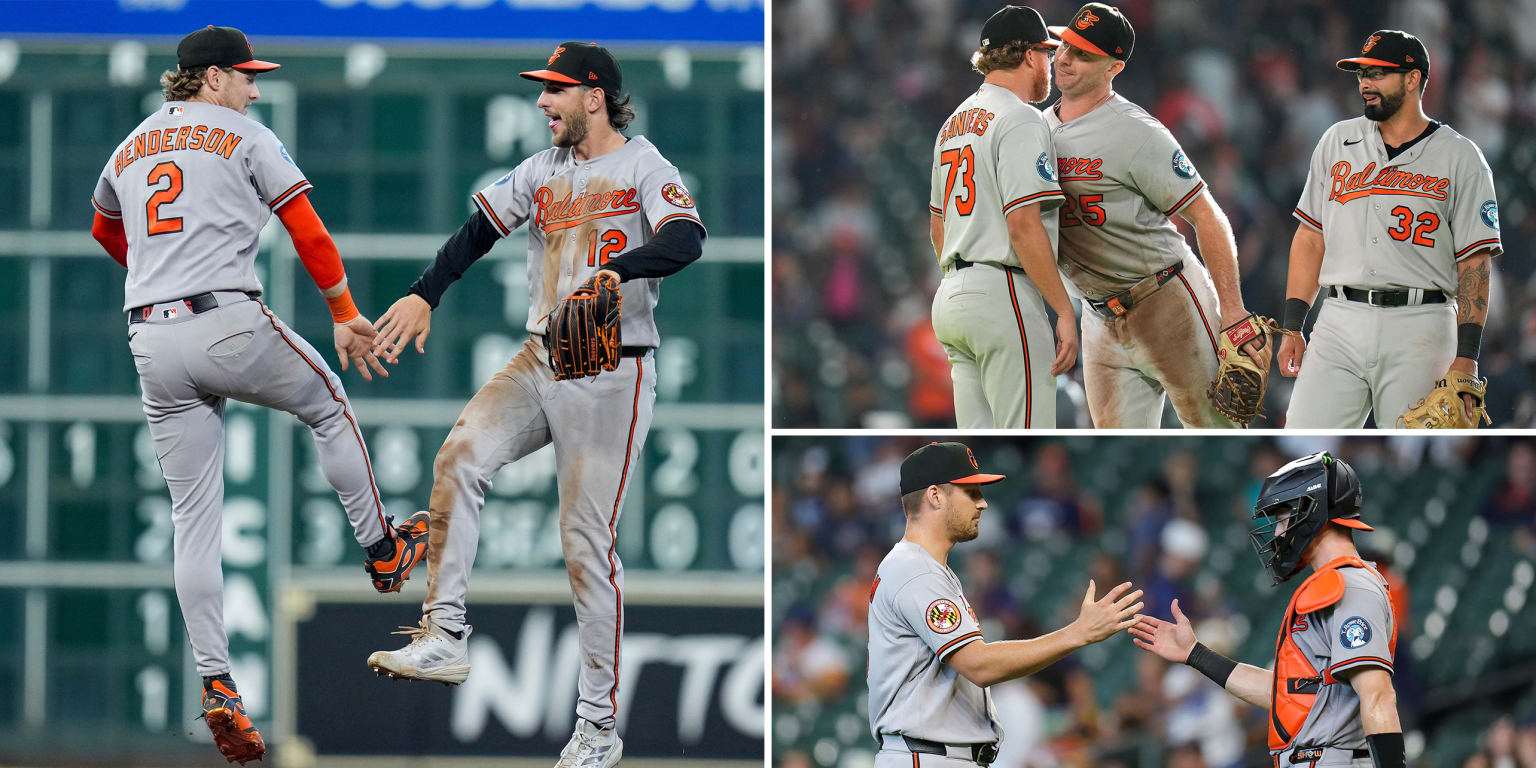
The Orioles swept Houston over the weekend and arrived at Fenway on Monday riding the kind of momentum that baseball headlines love to celebrate. Seven consecutive wins. A rotation throwing 2.75 ERA baseball in July. A front office narrative—seven years of patient rebuilding under Mike Elias—that finally seems to be paying off. But narrative is not the same as substance, and Baltimore's sudden ascent hides a troubling fact: the position players the organization has spent years developing remain, collectively, below league average.
Start with the July 20 context. The Orioles were last in the AL East a week ago. Now they're streaking into a critical three-game set at Boston—a Red Sox team that has won 13 straight, its longest streak since 1948. The timing matters. Baltimore plays Boston starting Monday, then travels to face Atlanta July 24-26. Between now and the August 3 trade deadline, the Orioles will face two of the AL's best-equipped teams in immediate succession. A collapse from here doesn't just damage the standings; it reopens questions about whether Elias's core group—Dylan Beavers, Colton Cowser, Jackson Holliday, and Coby Mayo—can ever produce at league-average power levels.
The pitching staff, meanwhile, has become exactly what the organization hoped: Brandon Young, Shane Baz, Trevor Rogers, and Kyle Bradish form a rotation of 20-something arms that gives Baltimore a legitimate chance every fifth day. Bradish just signed a long-term deal. Baz is locked up. The infrastructure is solid. What the rotation cannot do is carry an offense indefinitely. Samuel Basallo and Adley Rutschman provide occasional offensive contributions, but Beavers (96 OPS+), Cowser (79 OPS+), Holliday (94 OPS+), and Mayo (86 OPS+) form a 15th-ranked offense by pure production. An offense ranked 15th does not sustain playoff runs against playoff-caliber pitching. It barely survives August.
For prop bettors, this setup creates a clear angle: Baltimore's run-line and total outcomes over the next 14 days will depend almost entirely on whether the pitching can deliver 1-run or 2-run margins consistently. A 3-run or 4-run win requires the bats to contribute. The Orioles' current streak has been driven by run prevention, not run production. Against Boston and Atlanta—two teams with legitimate offensive depth—that strategy becomes fragile. Lean toward unders on Orioles team totals in the 3.5-4.0 range through early August. The pitching is real. The hitting remains a problem. That mismatch favors lower-scoring outcomes.
The next three weeks will clarify whether Baltimore's rebuild has legs or whether another organizational reset is looming. The rotation gives them a floor. The position players have not yet provided a ceiling.