MLB · milestone
White Sox's 22-Run Explosion Exposes Royals Depth Problem; What It Means for Team Totals
Chicago's historic rout of Kansas City wasn't just a blowout—it was a controlled demolition that reveals structural vulnerabilities in Kansas City's bullpen and a White Sox offense suddenly capable of turning on entire lineups.
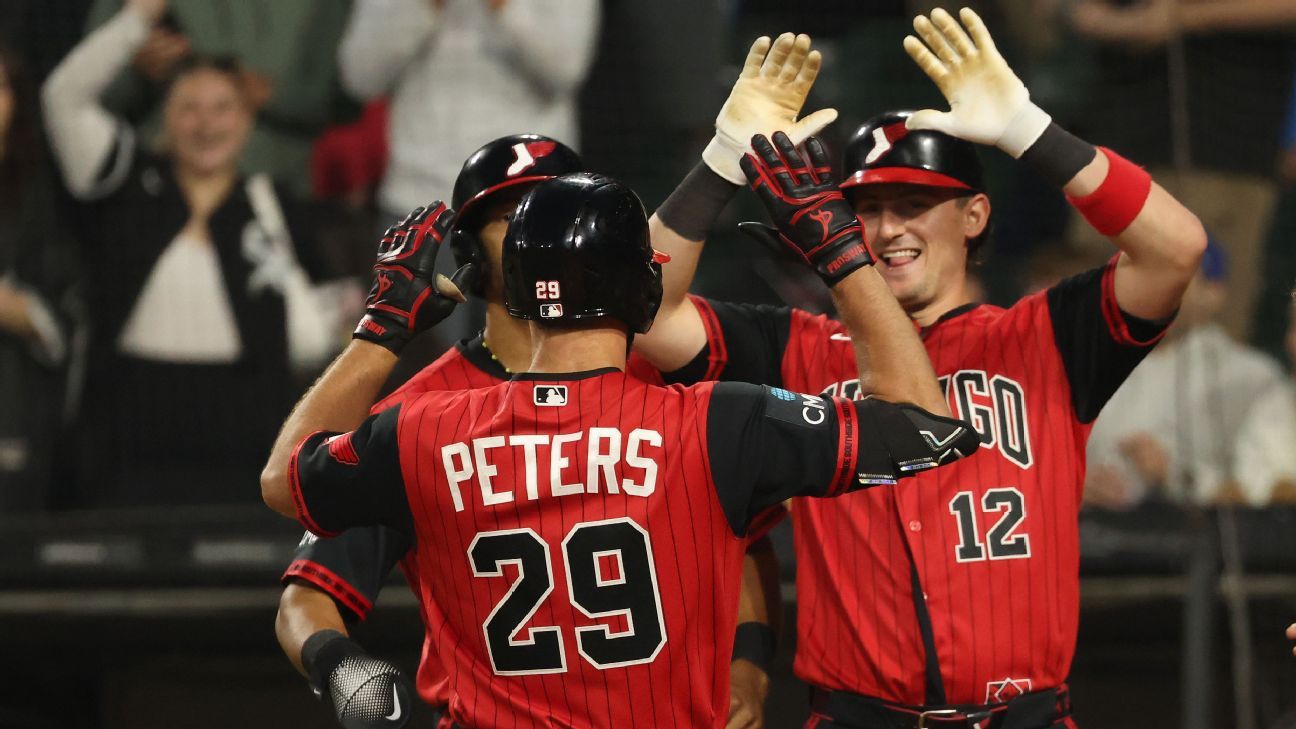
The White Sox dismantled the Royals 22-1 on Friday night, tying their franchise record for runs scored and producing one of the most lopsided defeats in Kansas City history. Tristan Peters drove in six runs on a grand slam, Miguel Vargas contributed a three-run homer and RBI double, and Chicago's lineup collected 23 hits across the evening. The damage concentrated itself in a catastrophic 10-run third inning that essentially ended the game before most fans had settled into their seats. This wasn't competitive baseball—it was an inventory of failures stacked into one night.
The execution mattered less than the exposure. David Sandlin, a 25-year-old rookie called up from Charlotte earlier that day, delivered six clean innings of work, allowing one run on three hits with six strikeouts. That's the performance of a competent fifth starter, not a Cy Young candidate. The Royals' bullpen—specifically Mitch Spence, who replaced Kansas City's opener Steven Cruz in the second inning—unraveled under pressure. Spence surrendered 10 runs in 1⅓ innings. This wasn't bad luck; Spence threw hittable pitches to a team that wasn't missing, and the Royals had no answer once the bleeding started. Bobby Witt Jr.'s appearance in that inning went nowhere when Michael Massey grounded into a double play with the bases loaded.
The White Sox have now won five consecutive games against Kansas City and sit 27-13 at home this season—tied with Tampa Bay for the best home record in baseball. That home dominance isn't an accident. Chicago's offense is built around a lineup capable of sustained damage when given mediocre pitching, and Rate Field amplifies that advantage. The Sox have won 23 of their last 28 home contests. For comparison, the Royals have surrendered 22 runs in a game for the first time in team history, and this marks their first loss by 20 or more runs. The structural gap between these two teams at this moment is real and measurable.
For prop bettors, the takeaway sits in the White Sox's home total range going forward. Chicago's recent 23-hit, five-homer performance wasn't a one-off; it was a demonstration of firepower against mid-tier pitching. When the White Sox face relief-heavy opponents or teams that cycle through struggling starters at home, their team total should carry higher confidence. The mechanism is straightforward: Chicago's lineup depth—evidenced by homers from Peters, Vargas, Jacob Gonzalez, and Kyle Teel—means they can score in volume even when a single starter implodes. The Royals' bullpen inability to stem the tide, combined with Kansas City's anemic one-run output, suggests that teams without dominant relief depth will continue to struggle in the South Side. The White Sox's 22 runs represent the upper bound of possible outcomes, but overs on their team total in the 5.5 to 7.0 range merit consideration in future home starts against comparable opposition.
Kansas City's organizational weakness in late-inning depth is now on full display. The Royals allowed Spence to hemorrhage 10 runs in 1⅓ innings without a quick hook, suggesting either a depleted bullpen or poor in-game management. Either way, teams facing the Royals on the road have a green light to stack their lineups with righty hitters and hunt fastballs early. The gap between Friday night's result and the Royals' season average isn't noise—it's evidence of a bullpen structure that can't support a competitive pitching plan.