Mayer's Shortstop Return Reshuffles Red Sox Infield—and His Offensive Ceiling
By Justin Erickson ·
Trevor Story's sports hernia surgery forces Boston to accelerate Marcelo Mayer back to his natural defensive home, but the real question is whether familiarity breeds consistency at the plate.
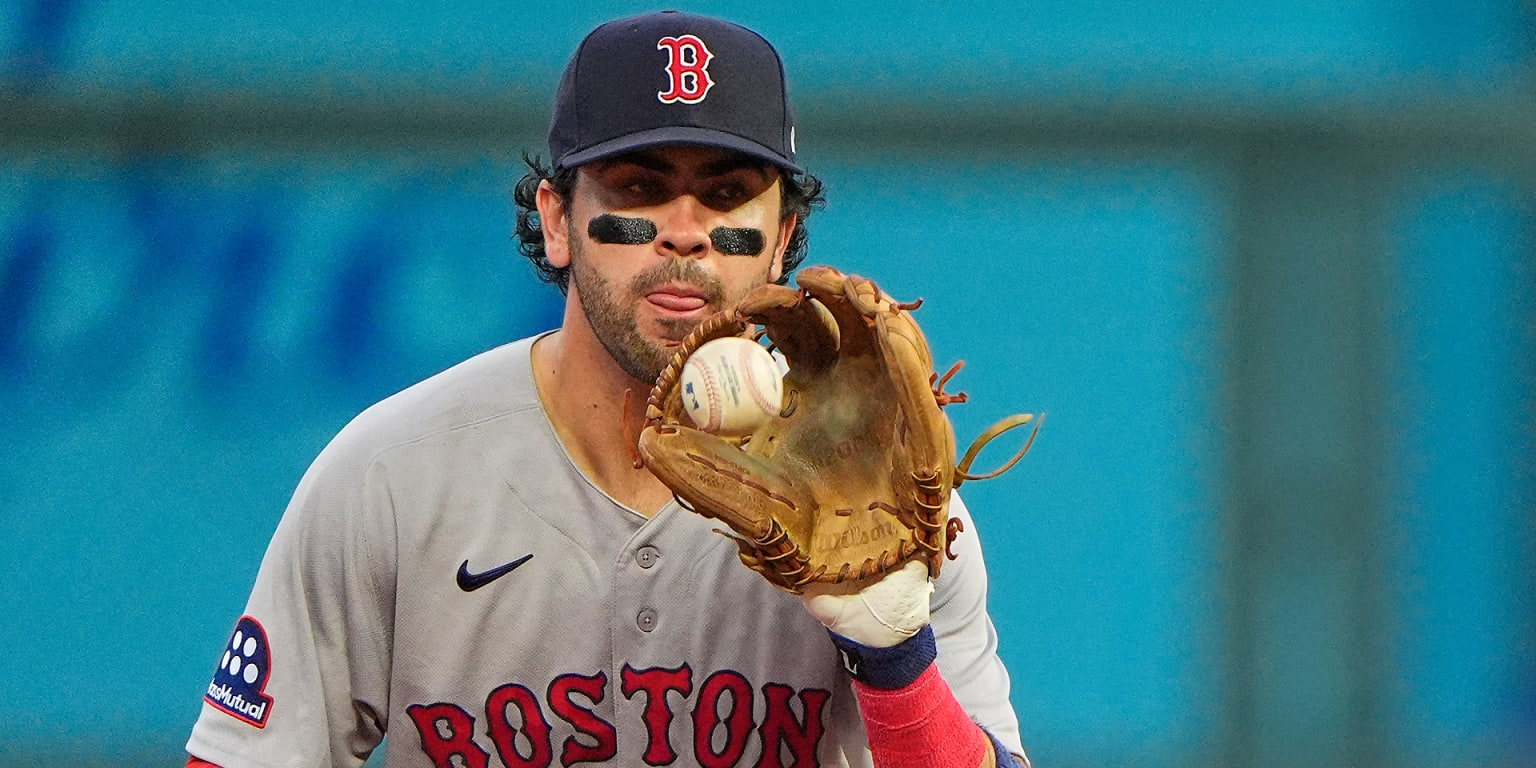
Trevor Story's sports hernia surgery will sideline the Red Sox shortstop for multiple months, clearing the path for Marcelo Mayer to reclaim the position he was drafted to play. Boston has already begun the transition, feeding Mayer ground-ball work at short during the Kansas City series this week. Interim manager Chad Tracy signaled Sunday's finale against Minnesota as a probable debut at the position, with the long-term plan to run Mayer there nearly full-time while Story heals.
Mayer was the fourth overall pick in 2021 with a "shortstop of the future" pedigree, but his rookie season and current campaign have unfolded with him displaced—third base last year, second base exclusively this season. The defensive mechanics shift is real: shorter throw distance at second, different approach angles at short, longer release window at a position he hasn't played in-game since spring. Tracy, who managed Mayer in Triple-A Worcester earlier this year, is confident the 23-year-old has the foundation to execute the transition. The manager emphasized defensive fungo work and angle-recognition drills rather than wholesale retooling. That's the right framing—Mayer has always graded as a plus defender; the rust is situational, not foundational.
Here's the betting tension: Mayer's bat has been a genuine problem. He's hit .221/.290/.313 in 146 plate appearances, with only two home runs and a slugging percentage that sits below .320. The narrative temptation—"returning to his comfort zone unlocks his offense"—is seductive but unproven. Tracy himself acknowledged the uncertainty when asked if shortstop familiarity would boost Mayer's production: "I don't know. We'll find out, I guess." That's honest management-speak for no evidence exists yet. Comfort matters in baseball, but it operates on the margins. A hitter struggling with bat path, timing, or opposing-pitcher adjustments doesn't suddenly solve those problems by moving 90 feet toward third base. If anything, the position move introduces cognitive load during a hitting slump—more angles to process defensively may dilute the mental bandwidth he needs to rebuild his stroke.
For prop bettors, the angle cuts two ways. On one hand, Mayer's move to short doesn't address the mechanical or timing issues suppressing his offensive output; his strikeout and walk rates won't change because his address changed. Unders on his batting-average props and strikeout totals remain rational, assuming the market doesn't overcorrect on nostalgia. On the other hand, increased playing time at a position of comfort could stabilize his plate appearances, which might lower the variance on his per-game hit or RBI outputs. But that's conditional on Mayer making real offensive strides independent of position—something his first 146 PA this season offer no evidence for. The Red Sox are solving a roster puzzle; they're not unlocking a dormant offensive tool.