Wheeler's Sidearm Evolution Unlocks a Lefty-Killing Paradox
By Justin Erickson ·
The Phillies ace has lowered his arm angle to historic extremes while simultaneously becoming one of baseball's most devastating pitchers against left-handed hitters—and the mechanism behind it rewrites what teams should expect from him going forward.
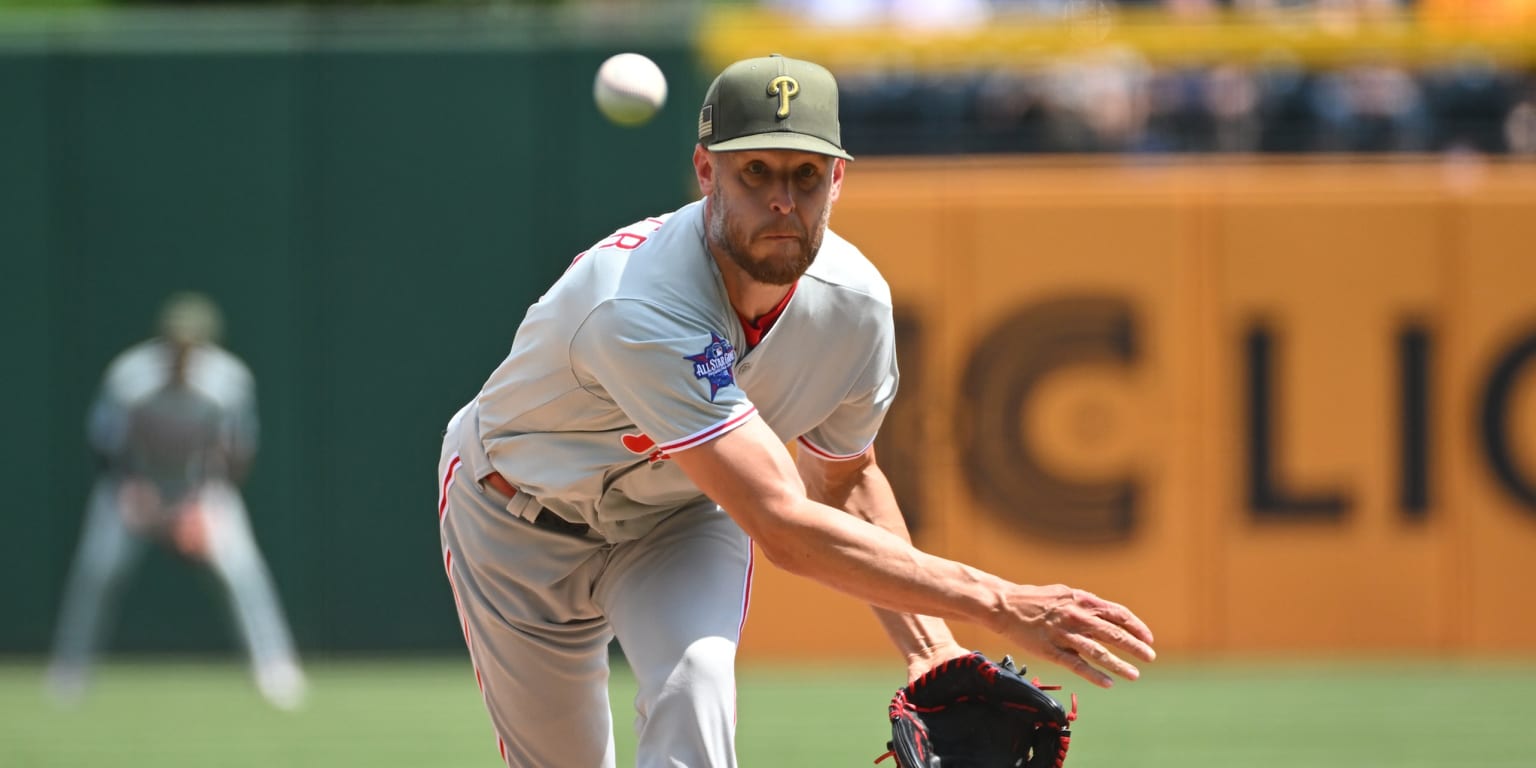
Zack Wheeler is throwing harder and flatter against left-handed hitters than almost any starter in baseball, and it's working at a scale that defies conventional platoon logic. Through five starts in 2026, the Phillies ace has held 72 lefties to a .156 batting average and .470 OPS. Last season, across a full complement of 336 left-handed at-bats, he posted a .193 average and .632 OPS. Those aren't edge numbers—they're domination numbers. The paradox is structural: Wheeler's arm angle has dropped roughly 15 degrees over his five-plus seasons in Philadelphia, placing him at 23 degrees, among the lowest release points of any right-handed starter. In theory, extreme sidearm throws create a sight-line advantage for righties but a disadvantage for lefties, who stare straight into an incoming pitch. Wheeler is doing the opposite.
The resolution lies not in Wheeler's arm slot but in his body mechanics. What appeared to the naked eye as a gradual shift toward sidearm delivery was actually a fundamental realignment: Wheeler stopped tilting his torso toward first base during his release. His trunk has straightened. By pitching more upright and square to the plate, his arm naturally dropped without changing its relationship to his body. The tree branch didn't angle differently—the tree trunk stopped leaning. This mechanical honesty matters because it means Wheeler wasn't chasing a gimmick. He was solving a problem: drive the ball straight at the batter rather than muscling it over-the-top. The sidearm appearance is incidental to the real lever—a more efficient, direct path to the zone.
That efficiency converts to velocity discipline and location precision that lefty hitters cannot adjust to in real time. A 95 mph fastball arriving from Wheeler's new release point compresses the visual processing window. Combined with his 72-contact rate against lefties (well below league average for starting pitchers), the fastball becomes a strikeout tool, not just a get-ahead pitch. His curveball, thrown from the same plane, gains an additional plane of deception because it now tunnels off a sidearm fastball rather than an over-the-top fastball. The pitch profile hasn't changed; the angle of attack has.
For prop bettors, Wheeler's platoon destruction opens a clean edge: lean strikeout overs whenever the Guardians or any opponent stack lefties in the lineup against him. The standard market assumption—that sidearm pitchers face elevated difficulty against same-handed hitters—is mechanically inverted in Wheeler's case. His K-prop lines are likely built on historical data showing righties struggling against lefties from extreme arm angles, not accounting for the fact that Wheeler's sidearm appearance masks a more orthodox, square delivery. If Cleveland uses their typical left-heavy lineup Saturday at Citizens Bank, Wheeler's strikeout projection should exceed consensus by a meaningful margin. Watch the opposing lineup composition; if at least five of nine are lefties, the K-prop carry value.
The edge is durable because it's rooted in mechanics, not recent variance. Wheeler's 1.99 ERA through five starts is not an outlier; it's the natural output of a pitcher who has spent years perfecting the mechanics that power his lefty dominance. This isn't a single-game spike that will fade in 48 hours. It's a structural advantage that persists as long as opponents keep feeding him lefties—which they will, because conventional scouting wisdom still treats same-handed matchups as automatic platoon wins.