MLB
Yamamoto's Splitter Coup: Why the Dodgers' Ace Is Rewriting the Fastball Script
Yoshinobu Yamamoto has flipped his pitch hierarchy to make the splitter his workhorse—a move that reshapes how to model strikeout and contact rates against Los Angeles.
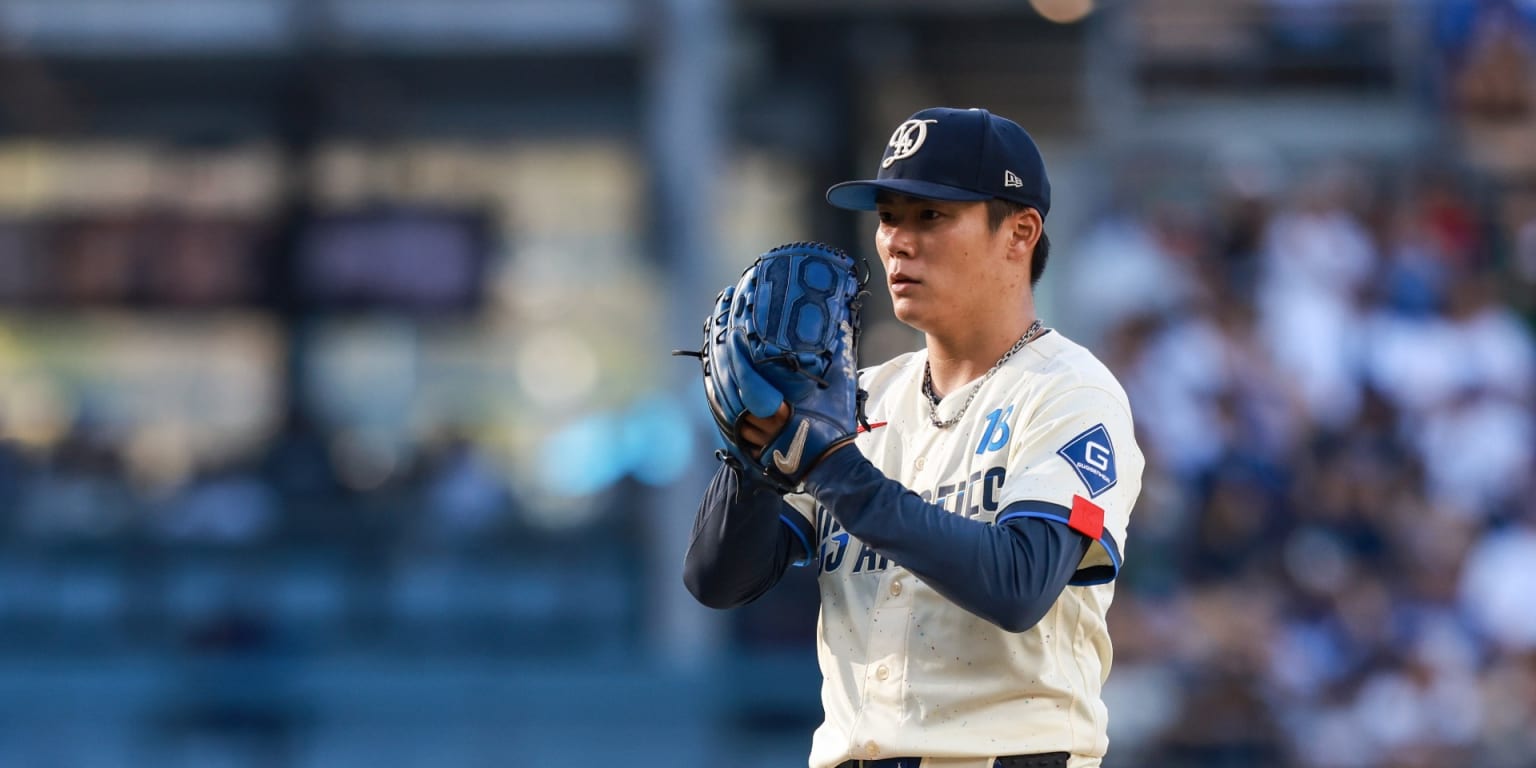
Yoshinobu Yamamoto is now throwing his splitter more than his fastball, a pivot that makes him the only ace in the Dodgers' rotation whose primary pitch is technically a secondary. Through mid-August, he has thrown 531 splitters against 517 four-seamers—a narrow margin that nonetheless marks a fundamental reordering of his arsenal for the first time in his three-year MLB career.
This isn't a spike driven by one or two games. The shift began in the 2025 postseason, when Yamamoto leaned hard on the splitter en route to World Series MVP honors, and it has persisted through 2026. But the mechanism matters: Yamamoto hasn't abandoned his fastball or drastically increased splitter volume in raw terms. Instead, he's trimmed four-seamer usage while modestly elevating splitters and spreading his other pitches—cutters, sinkers, curveballs, sliders—more evenly across counts and situations. The splitter simply won by attrition as the fastball receded. Among the top 10 starters in baseball by Statcast's pitching run value, Yamamoto stands alone: no other elite starter leads with a non-fastball pitch type. Chris Sale comes closest with slider-first usage, but the gap between Yamamoto's splitter dominance and the next-closest non-fastball leader is meaningful.
The deployment pattern reveals even more. Yamamoto's first-pitch splitter usage has nearly doubled from his 2024 rookie season (10%) to 19% in 2026. Yet his two-strike splitter frequency has actually declined. This tells us he's not just using the pitch as a strikeout weapon on favorable counts; he's threading it into early-count sequences and working counts where hitters aren't yet in defensive mode. That mixing function—the splitter as a primary sequencing tool, not just a put-away pitch—is what vaults it to the top of his arsenal. The splitter's tunneling with his fastball (nearly identical release points, overlapping early trajectory before sharp vertical break) means he's able to set hitters up with a false-fastball expectation, then execute the splitter as an out pitch across all count states.
For strikeout modeling, the surface read is straightforward: if a pitcher's best whiff-inducing pitch is now being deployed more broadly across counts, the K-rate should stabilize or rise. Yamamoto's strikeout rate is currently elite—10.2 K/9 through August—which sits near his career 10.4 average. The real edge lies in understanding that his splitter elevation hasn't come at the cost of fastball dominance in two-strike scenarios; he's simply made his fastball work harder in early counts, and his splitter works overtime as a true primary pitch. Opposing hitters can't sit fastball anymore. The line market hasn't fully digested this operational shift because it reads as a usage anomaly rather than a design feature. Take Yamamoto strikeout props in the 8.5-9.5 range: his recent trajectory (K/9 of 10.2 through mid-August) paired with improved splitter deployment and the splitter's demonstrated whiff rate makes those numbers undervalued, particularly in matchups against teams that struggle with late-break secondary pitches. The edge is durable because it's rooted in pitch sequencing architecture, not a hot streak. Any regression would stem from mechanical fatigue or command loss—both visible on Statcast—not from market adjustment alone.
MLB Intelligence — Baseball intelligence beyond the box score. Open MLB Intelligence →