Webb's Dominance Through Seven Frames Masks a Vulnerable Bullpen in Giants' 1-0 Escape
By Justin Erickson ·
Logan Webb's near-no-hitter and Victor Bericoto's first career home run powered San Francisco past Milwaukee, but the relief appearance by Erik Miller exposed an inning-to-inning liability that will constrain future run-line and spread utility.
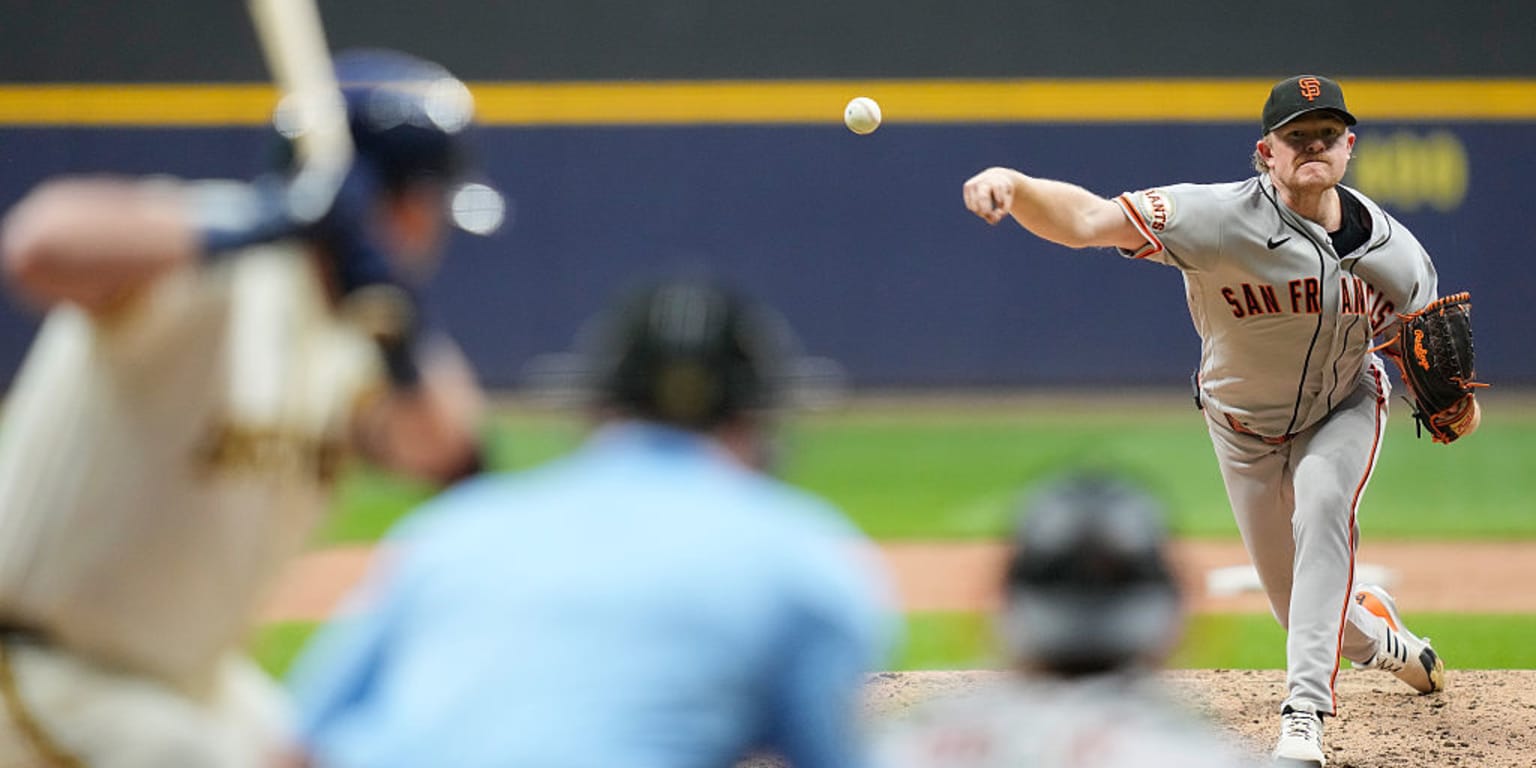
Logan Webb carved through the Milwaukee lineup with the precision of a pitcher in peak form Wednesday night at American Family Field, retiring the first 15 batters and extending his no-hit bid into the seventh inning before Brice Turang broke the spell with a single up the middle. The Giants' right-hander struck out eight over seven scoreless innings on just 95 pitches, lowering his career ERA against the Brewers to 1.79 across eight starts. This was Webb's second outing since returning from a right knee injury, and the velocity and command were both present—he coaxed nine ground balls and induced soft contact throughout, the kind of performance that typically suggests a pitcher ready for extended workloads moving forward.
Yet Webb's dominance gets overshadowed by how San Francisco actually won. Victor Bericoto, a 24-year-old Venezuelan rookie, launched a solo home run off Brewers left-hander Robert Gasser in the fifth inning—his first career MLB blast, an opposite-field drive that sailed over the right-field fence. In a 1-0 game where pitch quality and contact rates will determine margin, that single run was enough. But it also revealed something less encouraging: San Francisco's entire offensive strategy hinged on one swing from a young hitter in limited sample.
The real concern surfaces in Milwaukee's at-bats against the Giants' bullpen. After Webb departed, Erik Miller entered the game and immediately surrendered a leadoff single to Jackson Chourio, followed by a walk to Luis Rengifo with one out. The inning only ended after a double-play ball off the bat of pinch-hitter Gary Sánchez. Keaton Winn took over in the ninth and allowed a leadoff double to Christian Yelich before striking out the next two hitters. In a vacuum, escaping with a win feels clean; in context, those relief appearances reveal a thin margin for error. The Brewers put runners in scoring position multiple times late and failed to capitalize, but the book will remember that they had the chance.
For prop-betting purposes, this game traces two distinct betting patterns. Webb's ability to maintain sub-100 pitch counts through seven innings while recording eight strikeouts is evidence of elite efficiency—the kind of volume-per-inning rate that persists across opponents. His 1.79 ERA against Milwaukee specifically is a nine-start sample size, sufficient to indicate genuine platoon or ballpark advantage. If Webb lines up against the Brewers again this season, his strikeout prop and innings-pitched prop deserve attention; the mechanism is clear (ground-ball generation, low walk rate, tight zone command) and the opponent specifically struggles with his approach. Conversely, the Giants' relief corps—Miller and Winn in particular—showed vulnerability to contact, which suggests their team totals are sensitive to opponent quality and matchup. When San Francisco faces a top-tier offense, lean toward the under on their team total in the second half of games, especially if Webb doesn't start. The Bericoto home run is too small a sample to price into future at-bats; one swing in one at-bat does not establish a hitting pattern.