MLB
Warren's Changeup Mastery Signals Rotation Staying Power as Yankees Offense Remains Adrift
The Yankees pitcher threw his changeup 24 times in a shutout, continuing a staff-wide dominance that's become the team's primary life support.
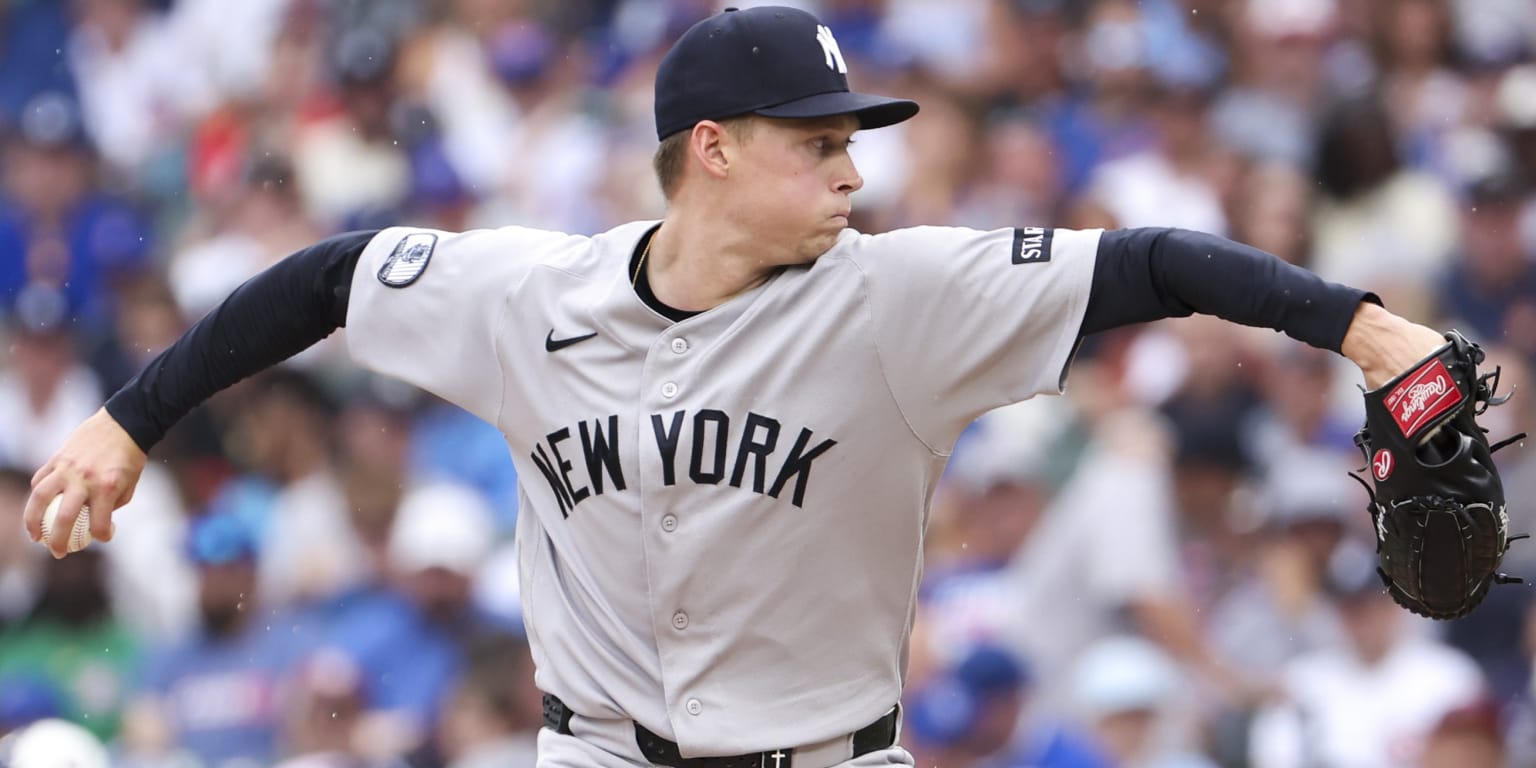
Will Warren did Friday what the Yankees offense couldn't: manufacture exactly what was needed. The right-hander delivered 6 2/3 scoreless innings against the Cubs at Wrigley Field, allowing four hits, no walks, and striking out seven on just 68 pitches in a sharp rebound from a three-inning, six-run disaster against Philadelphia four days earlier. Two solo homers—Amed Rosario's 450-foot blast and Spencer Jones's 418-foot drive—provided all the support Warren required. The 2-0 victory was never in doubt once Paul Blackburn cleaned up a seventh-inning threat.
Warren's mechanics reveal the rotation's current advantage. He deployed his changeup 24 times, a career high, and retired 19 of the first 21 Cubs batters he faced. The pitch worked as both an out-getter and a swing-inducer against off-speed hungry hitters. That sequencing precision matters because it correlates with workload management—Warren threw just 68 pitches through six innings, a efficiency rate that allows recovery for a team that's asking its starters to absorb offensive ineptitude night after night.
The Yankees rotation has now allowed one or fewer runs across their past nine starts (seven of nine have been one-run performances), and the staff has pitched 28 consecutive scoreless innings. That's not a temporary hot streak; it's a structural advantage that's kept New York in games while the lineup manufactures two-run victories. The Cubs mustered eight hits total and never mounted a scoring threat, a microcosm of what happens when a rotation is clicking while an offense is searching.
For prop bettors, the Yankees' starting-pitcher ceiling is rising while the team total risk shifts downward. Warren's strikeout rate—seven K in 6 2/3—sits at a 9.4 per-nine pace and came against a Cubs lineup that doesn't chase aggressively. His changeup usage at 24 pitches indicates comfort attacking deeper into counts without relying on fastball volume. In a team that's now 4-2 over its last six games despite averaging just 2.67 runs per game, the market's pricing on Yankees team totals should account for the reality that their pitching floor is genuinely elite. Team totals under 4.5 have become riskier as the rotation deepens its performance advantage; games decided by single-run margins built on two-homer performances are structurally dependent on that pitching advantage persisting.
The rotation's dominance also creates a path-dependent angle on opposing team totals. Teams facing this Yankees staff are seeing diminished run-scoring environments. If market makers haven't fully adjusted visitor team totals down across the next week of games, that's where the edge surfaces—not on the Yankees' ability to score (the roster hasn't changed), but on the reduced scoring opportunity created by Warren, Blackburn, and the rest of a staff that's turned into a competitive foundation by itself.
MLB Intelligence — Baseball intelligence beyond the box score. Open MLB Intelligence →