Imanaga's Ace Run Masks Cubs' Offensive Crisis Ahead of Deadline
By PropBetEdge Editorial Team ·
The Cubs' rotation anchor delivered a third straight quality start Friday, but a 2-0 loss to the Yankees exposed why Chicago desperately needs lineup help before Monday's trade deadline.
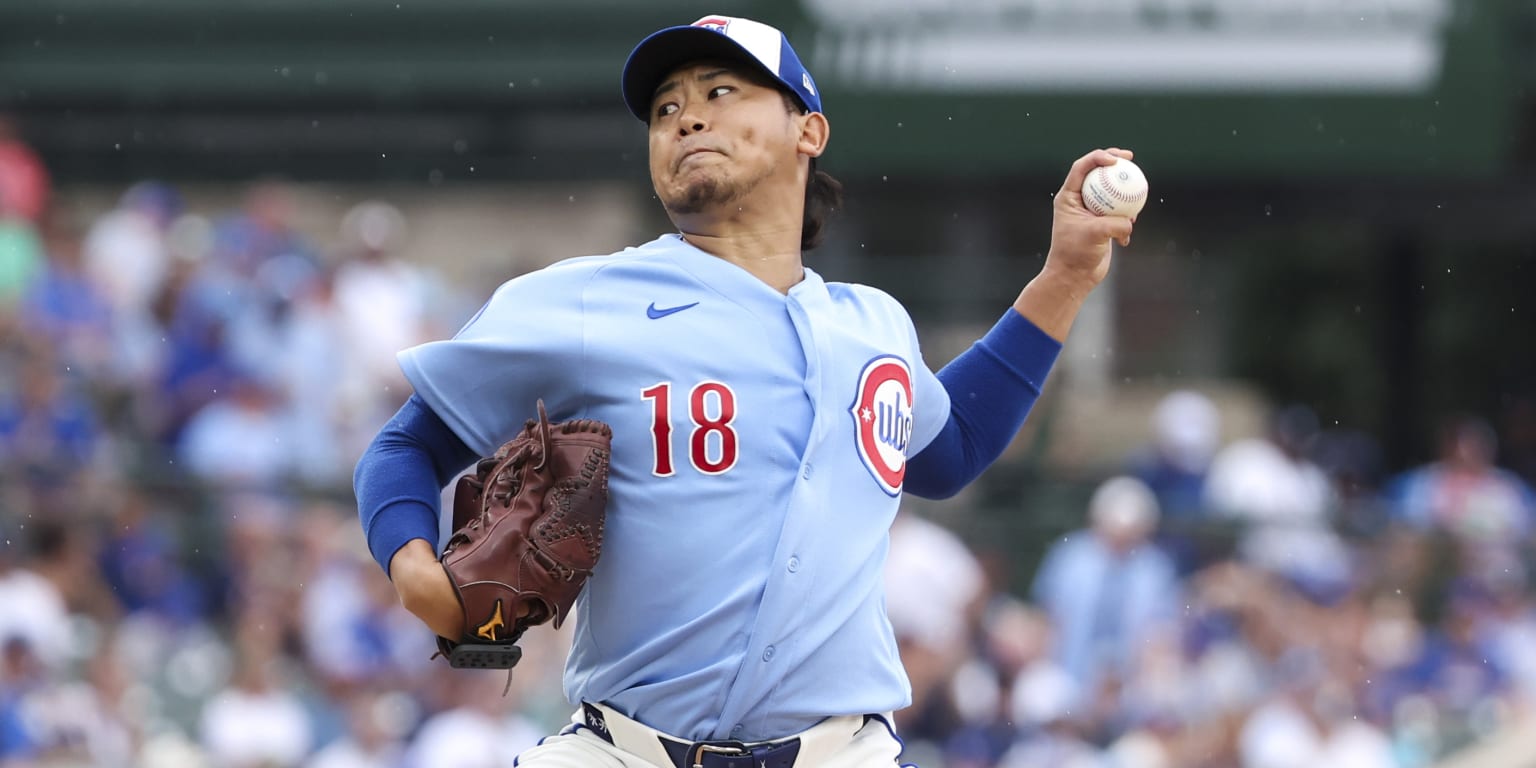
Shota Imanaga tossed 6 2/3 innings of two-run baseball against the Yankees on Friday, striking out six, walking none, and allowing just four hits on 101 pitches. It was his third consecutive quality start and yet another example of why the Cubs' lefty has become essential to any realistic playoff push. Over his last nine starts, Imanaga owns a 2.09 ERA with 45 strikeouts and just 10 walks across 51 2/3 innings—a dramatic improvement from his 4.74 season ERA entering that stretch. The mechanics are there: his fastball-splitter-sweeper arsenal generated 19 swinging strikes Friday, marking his 10th start this season with at least 16 whiffs. That's a staggering leap from just one such outing in all of 2025. The performance matters because it validates what the Cubs have long suspected: they have a front-line starter capable of producing playoff-caliber innings.
But a quality start in a 2-0 loss is the cruelest kind of pitching line. The Cubs' offense never threatened against Yankees starter Will Warren, who deployed an unusual pitch mix to silence Chicago's bats—24 changeups (27% of his pitch diet versus 11% on the season) combined with elevated curveball usage (16% versus his 8% average). Warren scattered four hits across 6 2/3 scoreless innings with seven strikeouts, and the Cubs' inability to execute even with runners in scoring position (two on in the seventh, inning ended with a fielder's choice) underscored a deeper problem: this lineup lacks the depth to consistently punish mistakes. A pitcher at his peak with elite off-speed execution shouldn't dominate this roster. That it did, with the Yankees throwing only two pitches in the zone for stretches, signals that Chicago's order has legitimate offensive vulnerabilities heading into the final two months.
Imanaga's resurgence creates an interesting prop wrinkle going forward. His strikeout production has stabilized at a high floor—his whiff rate sits at a elite tier now, with 10 starts of 16+ swinging strikes in just 51 2/3 innings of work. That consistency suggests his strikeout line should be priced conservatively, likely closer to his recent 9-start average (5.0 K/9 ratio applied to typical 6-inning outings) rather than his full-season rate. The Cubs' pitching depth is secure enough that Imanaga's next five to six starts will likely continue against middle-tier offenses as Chicago holds at or near .500 through the deadline. Lean into strikeout overs on Imanaga's props in the short window before Monday—the market may still be pricing him at his earlier season baseline rather than his current elite-level production. That edge erodes once bookmakers adjust to his new reality, likely within 48 hours of this game filtering into systems.
What's impossible to ignore is the offsetting offensive crisis. The Cubs' inability to score two runs against a Yankees team riding momentum into this series, combined with their third straight loss, creates urgency on the buyer's market before Monday closes. Chicago's front office has already signaled its hand by promoting Antoine Kelly from Triple-A to fill rotation depth, a stopgap move that further confirms the organization's pivot toward plugging holes rather than standing pat. That philosophy should extend to the lineup. Until the Cubs' bats show they can execute against elevated off-speed pitching—a basic survival skill in October baseball—Imanaga's excellence remains a beautiful showcase of individual dominance trapped in a collective vacuum.