Walker's Georgia homecoming ends 14-game power drought in St. Louis rout
By Justin Erickson ·
A three-run blast in the first inning and a seventh-inning rally ignite the Cardinals offense as Walker finishes with four RBIs against Atlanta.
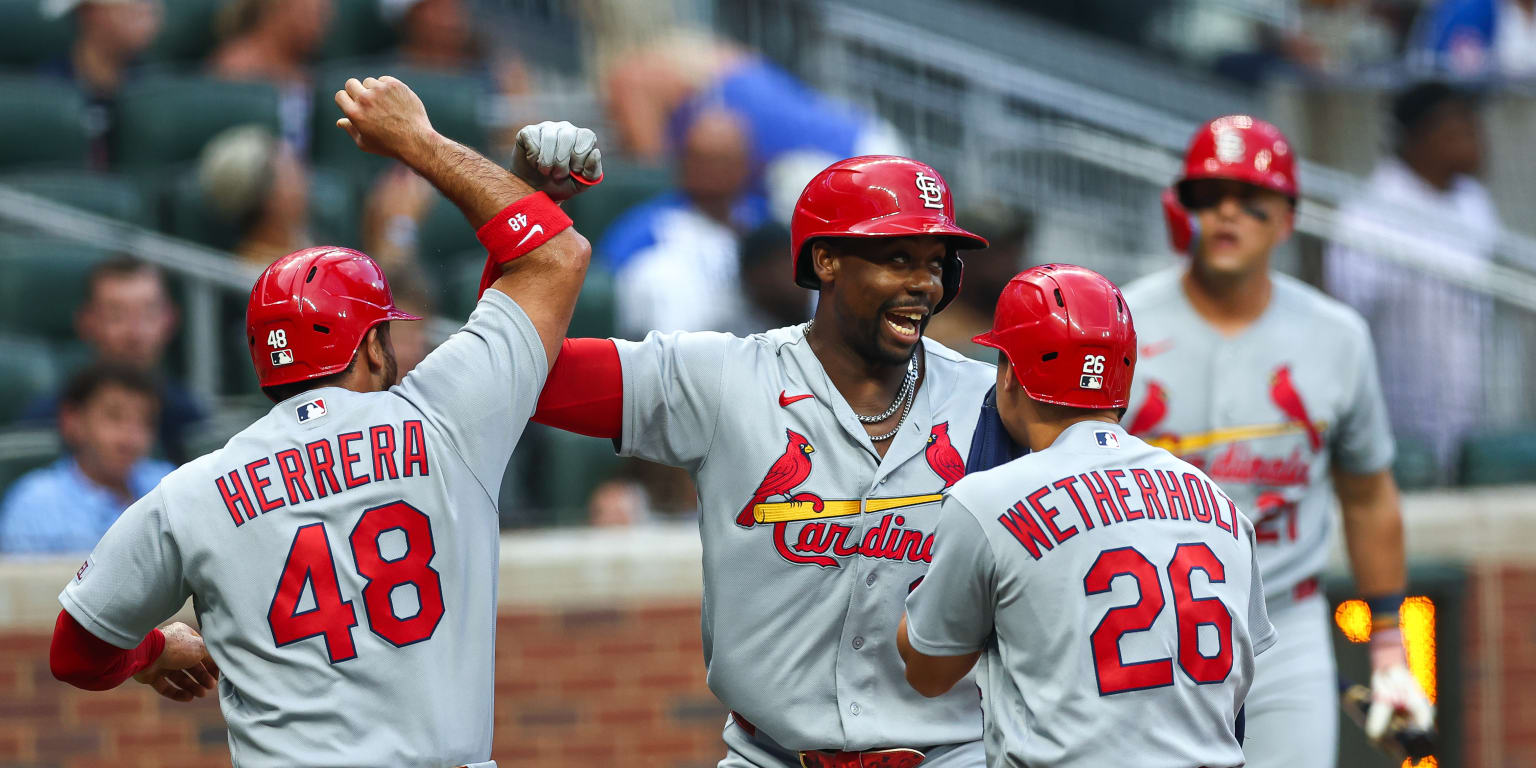
Jordan Walker ended a career-worst 14-game stretch without an extra-base hit by launching a 396-foot home run into left-center field off Braves reliever Kinley in the first inning, driving in three runs and setting the tone for St. Louis's 11-5 victory at Truist Park. The Stone Mountain, Ga., native—playing 28 miles from his hometown with family watching from the stands—added an RBI single in the seventh as part of a seven-run Cardinals rally that seized control of the game.
Walker's power outage heading into this game was noteworthy not because it represented a fundamental skill loss but because of its rarity in his profile. Fourteen consecutive games without an extra-base hit is the kind of drought that typically triggers overreaction in betting markets, creating a narrative that a player has "lost it" when the reality is often just variance—a hitter who still generates quality contact but happens to hit into outs or see batted balls die on the warning track. Walker's 83.8 mph splitter he deposited on the scoreboard came off a pitch location that generates success in his career split data, and the 396-foot Statcast projection confirms the ball had genuine power, not a lucky blooper that ended the skid.
The Cardinals' offensive explosion in the seventh inning—capped by Walker's single and powered by a two-run Nathan Church homer on the first pitch from Kinley—illustrates what happens when a relief pitcher loses his command after recording two quick outs. Kinley threw five pitches to Blaze Jordan (walk), then saw Dylan Lee take over after allowing Church's two-bagger. By the time Walker came to the plate with the infield drawn in, the Braves' bullpen had been shredded for four runs in five batters. This wasn't a narrative shift; it was baseline baseball execution failing against a team capitalizing on a pitcher's loss of zone control.
For prop bettors, Walker's return to power is less a "breakout moment" than a regression to his season expectancy. He entered the game with 18 home runs in 2026, and the 14-game hitless streak in extra bases almost certainly means his home run pace lagged what his underlying metrics suggested. Teams that invested in Walker in the off-season—the Cardinals traded for him in 2025 and he's remained a fixture in their middle order—priced in his ability to hit 25-30 homers annually. One game doesn't reset that calibration, but it does confirm the machinery still functions. If Walker sees continued playing time and Atlanta's pitching continues to offer mistakes in the zone, his home run total props warrant a second look before overreaction pushes his next few games' HR odds to undervalue his past 162-game pace.
Dustin May's exit with a bruised right ankle suffered on a liner in the first inning is worth monitoring, though the injury was classified as non-serious in the Cardinals' immediate update. Atlanta's starter was struck while still in the process of the pitch delivery, the kind of contact that can range from minor to season-altering depending on swelling and range-of-motion tests in the coming 48 hours. For now, treat this as tactical information—May's unavailability shortens St. Louis's bullpen game depth, which may matter if the series extends to extra innings or requires extended relief work.