Guerrero's 16-Degree Laser Signals End of Slump, Not Its Start
By Justin Erickson ·
Vladimir Guerrero Jr. broke a 69-at-bat extra-base drought with a mechanically unusual home run that speaks to deeper offensive health than the scoreboard suggested.
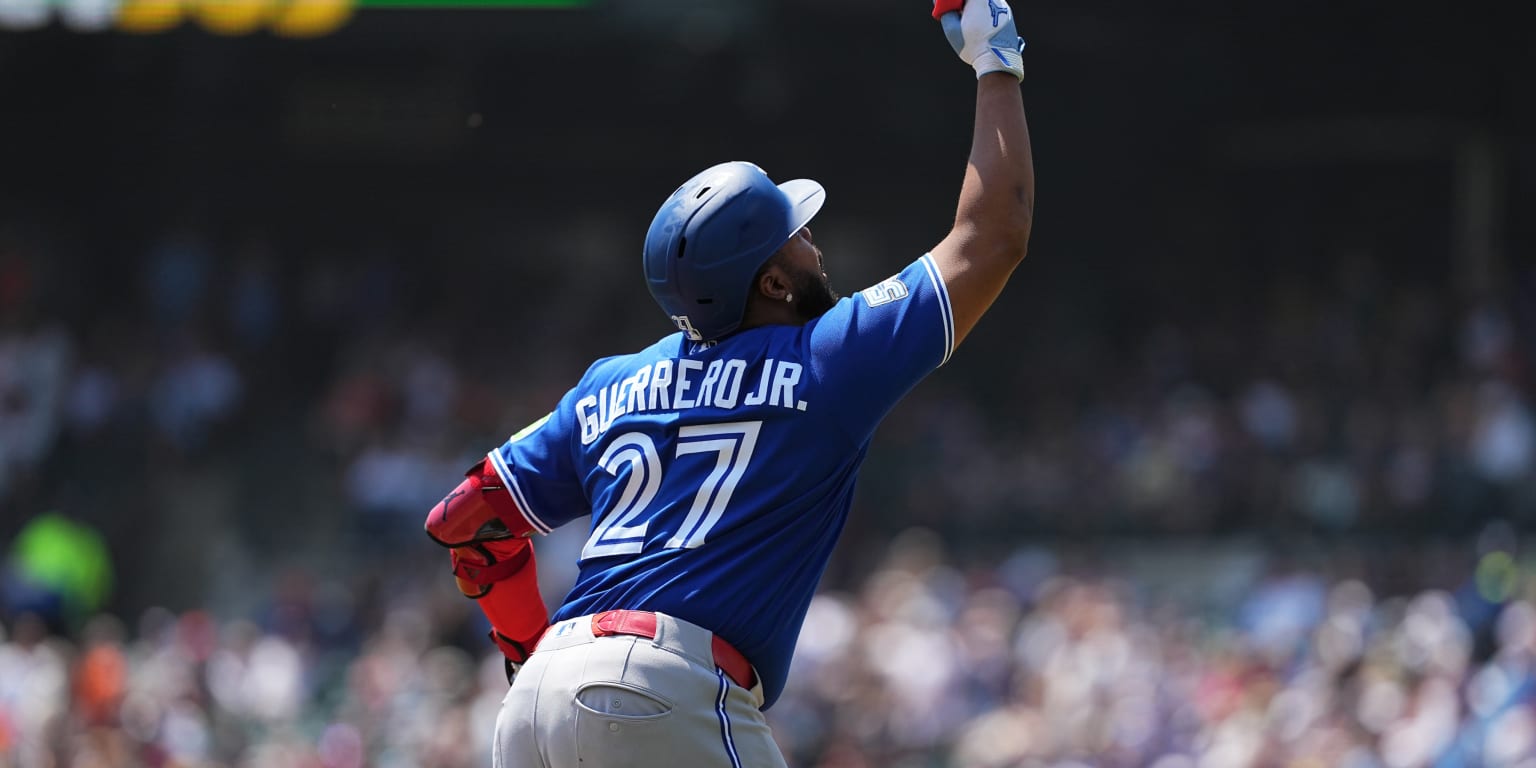
Vladimir Guerrero Jr. ended his May tailspin Sunday in Detroit with a 105.1 mph single off Jack Flaherty—a home run struck at just 16 degrees, the flattest launch angle on any homer hit in MLB this season. The blast traveled 369 feet and felt less like a desperate hack than a statement: precision violence after weeks of mechanical discord. Guerrero had gone 69 at-bats without an extra-base hit, entering Sunday hitting .128 with a .364 OPS across 13 May games. The frustration was visible and justified. But the specifics of this particular home run matter more than the raw drought statistic.
Guerrero's recent struggles have centered on swing path and intent. A 16-degree launch angle on a 105+ mph exit velo is not a fortunate mishit—it's elite bat control. For context, Guerrero has only achieved that angle three times in his career; this season's floor on homer launch angles runs closer to 18-22 degrees for most sluggers. What this tells us is that Guerrero did not suddenly unlock raw power or timing in one at-bat. Instead, he demonstrated he still possesses the spatial awareness and upper-body mechanics that made him a fixture in the MVP conversation. The timing of his breakthrough—paired with a move to the No. 2 slot in Toronto's order, a position he hasn't held in nearly a year—signals the club believes the mechanical issues were correctable, not structural.
The real test arrives Monday when the Blue Jays open a four-game set against the Yankees. Guerrero tends to build momentum once he clears these extended slumps, and the Yankees' pitching staff (especially in first five innings) will be his first real gauntlet. If the mechanical click he demonstrated against Flaherty holds, Guerrero's prop lines—particularly home run totals and slugging output—will have priced in too much dead weight. Books set his season-long averages based on a full month of sub-140 wRC+ baseball; a correction back to his true-talent level (typically 135+ wRC+ over 600 PA) would outrun any current pricing within 7-10 days.
The singles and doubles should return first. Guerrero's barrel rate on extra-base contact rarely deteriorates—it was his willingness to chase or his pitch selection that decayed in May. One home run doesn't erase 69 at-bats, but it does suggest the front office's confidence in the underlying player remains intact. The Yankees series is the marketplace's chance to test whether that confidence is warranted or another false restart in a frustrating May. Watch his launch angles and exit velocities against left-handed relievers; if both trends hold above his May baseline, the correction is real.