Twins Raid Bullpen Floor With Nance Trade—Minnesota's ERA Crisis Finds a Band-Aid Before the Stretch
By Justin Erickson ·
Minnesota's catastrophic relief pitching has forced a mid-season gamble on a 35-year-old journeyman, but Tommy Nance's chase-rate elite signals a real edge in the right leverage spots.
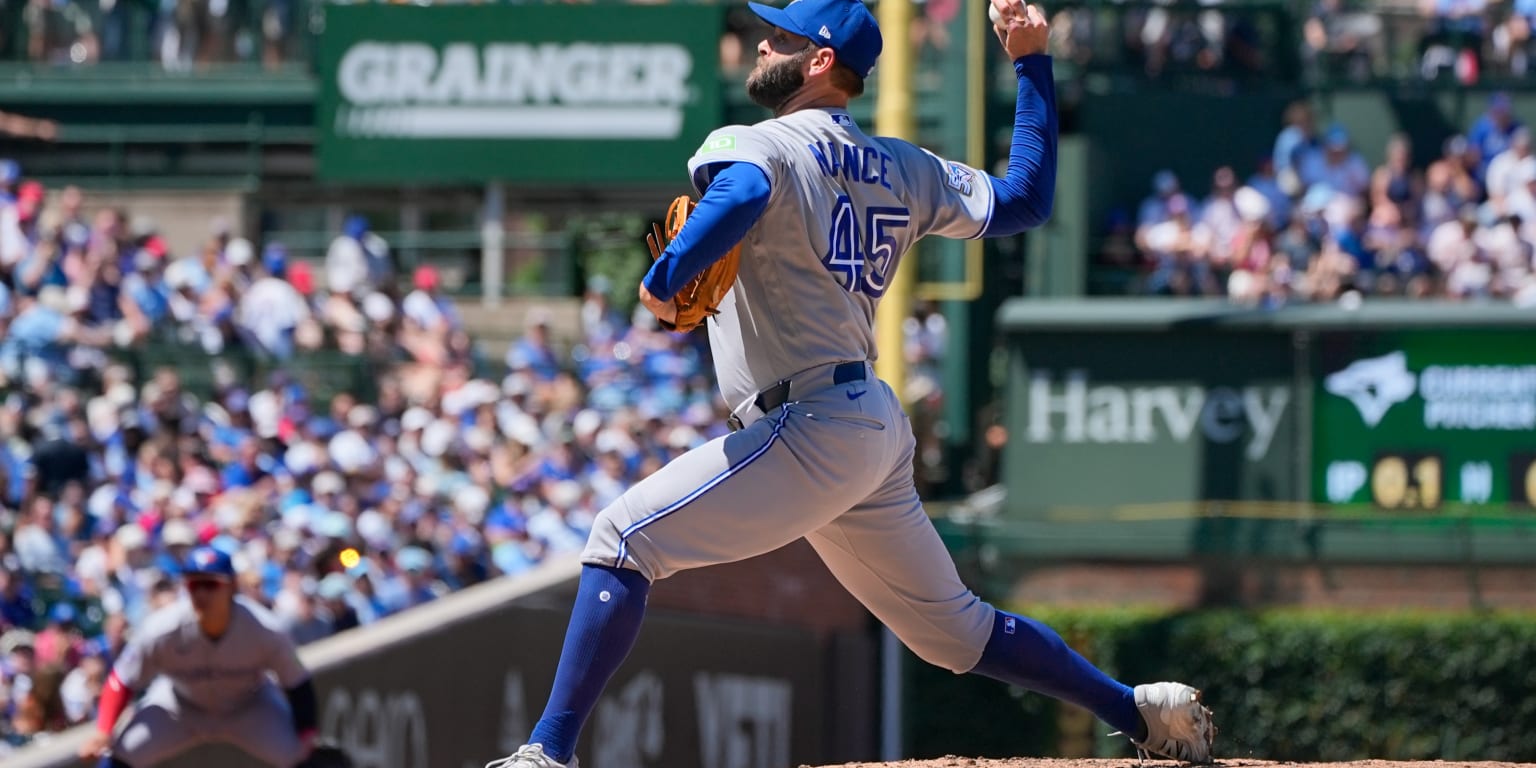
Minnesota acquired right-handed reliever Tommy Nance from Toronto on Friday, per MLB.com, shipping Minor League catcher Ryan Sprock to the Blue Jays in return. The move arrives with urgency: the Twins entered play with a Major League-worst 5.28 ERA in relief, a structural liability that threatens to crater a team that has clawed within two games of first place in the AL Central after winning seven of its last eight series.
Nance carries legitimate weaknesses on his resume—he's 35, he's posted a 4.25 ERA across parts of five seasons, and his 3.82 mark in 32 Toronto outings this year sits in the middle-of-the-pack range for relievers. But he owns a specific skill that separates him from generic bullpen depth: a 36.4% chase rate that ranks in the 95th percentile of MLB. That's a strikeout accelerant. Nance works a three-pitch mix (sinker, curveball, slider) designed to induce contact outside the zone, a profile that generates swings-and-misses in high-leverage situations where the margin between contact and whiff is the difference between a scoreless frame and an inherited runner scoring.
The Twins' bullpen construction is almost comically bad—a 5.28 ERA suggests not depth issues but foundational incompetence. Nance won't fix that. But in a compressed playoff race where Minnesota must maximize every available elimination game, deploying a chase-rate weapon in the seventh and eighth innings creates a measurable edge on strikeout props in those specific windows. His historical rate sits around 8.2 K/9 when healthy, and while his velocity has declined with age, his ability to fool hitters outside the zone remains the one non-negotiable asset.
From a betting lens, Nance's immediate impact is narrow but exploitable. Minnesota's bullpen will still be below-average, and his overall ERA won't crater the team total into unsustainable territory. But in games where Minnesota holds a lead entering the seventh inning, his strikeout rate in live-action relief props should carry edge through the stretch. The market won't immediately re-price Minnesota's bullpen ERA downward—the sample is too small, and one reliever can't rescue a 5.28 team rate. The real angle is leveraging his chase-rate elite in short-term K props during high-leverage situations, where his specific profile (generating swings outside the zone) has the highest conversion probability.
Minnesota paid minimal assets (a mid-tier Single-A prospect) to add a low-cost volatility play. That calculation suggests the front office views this as a deadline insurance move, not a pillar trade. For bettors, that means Nance enters the lineup as a specialist tool rather than a franchise-altering addition—useful in select spots, overdiscounted by the market because of his age and pedestrian career numbers, but likely to underperform if deployed in non-leverage innings where his chase-rate edge disappears into neutral platoons.