Phillies Crack Elite Pitching with Turner Leading the Way; Offensive Momentum Tests Playoff Readiness
By Justin Erickson ·
After months of offensive dysfunction, Philadelphia's recent surge—anchored by Trea Turner's resurgence—has finally answered the franchise's oldest postseason question: can they hit when it matters?
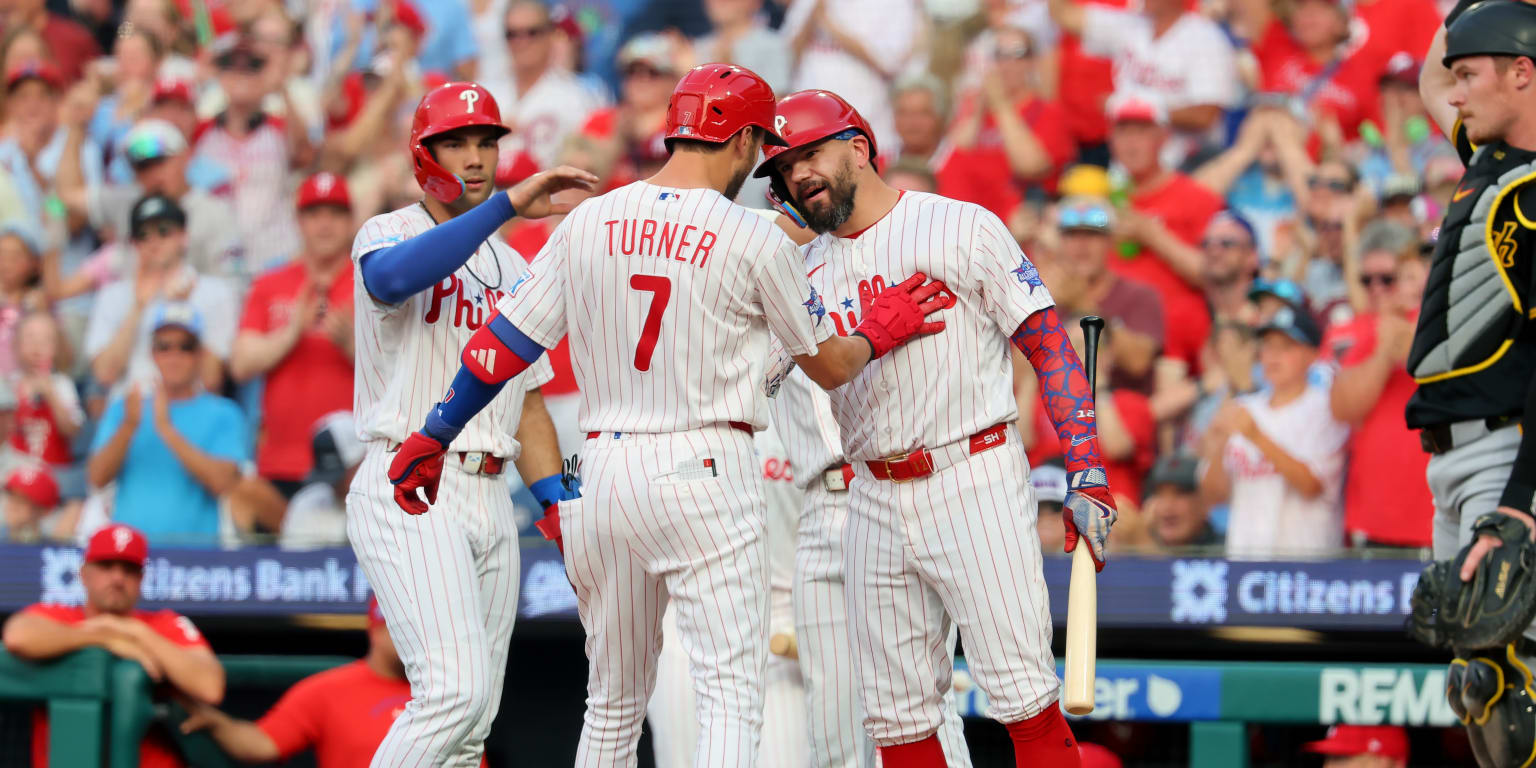
The Phillies took down Paul Skenes on Wednesday, tagging the Pirates' reigning NL Cy Young Award winner for eight runs (seven earned) across four innings in a 10-6 victory at Citizens Bank Park. That's a meaningful scalp. Skenes entered the game off a May 17 start against these same Phillies where he allowed five runs in four frames; the one constant was Philadelphia's ability to get to him early. This time, Trea Turner and Brandon Marsh each drove in runs, and the Phillies made every defensive miscue by Pittsburgh pay—a hallmark of functional offensive units.
What makes this win relevant isn't just the opponent's pedigree; it's the trajectory underneath. The Phillies started the season 9-19 under Rob Thomson, ranking 28th in runs per game at 3.64. Thomson was fired. Under interim manager Don Mattingly, the offense has climbed to ninth in baseball at 4.84 RPG. More tellingly, June was a runaway. The Phillies averaged 5.67 runs per game last month, second in baseball, with four regulars hitting .300 or better: Brandon Marsh (.315), Justin Crawford (.307), Bryce Harper (.305), and Kyle Schwarber (.305). That's not noise. That's a team finding its identity.
Turner is the fulcrum. He entered Wednesday batting .216 with a .595 OPS through June 15—effectively a sunk asset in a franchise desperate for right-handed power. Over his last 13 games, he's hit .345 with a .907 OPS, a four-doubles, two-homer stretch capped by three consecutive games with a home run. The mechanical reset appears genuine. The Phillies' internal evaluation of Turner's buyback potential just shifted upward materially; a player they might have been quietly shopping in May is now a net-positive contributor to a team that still needs starting pitching and bullpen depth but is no longer collapsing under offensive inertia.
For bettors, the angle is straightforward: Phillies team totals have been catching books off-guard. A lineup that averaged sub-4 RPG two weeks ago is now finishing games at 5+ RPG under Mattingly, with Turner functioning as a legitimate RBI outlet against top-tier arms. The market has not yet fully recalibrated. Phillies games over the next 10 days—before larger sample sizes force a repricing—carry value on the team total side, particularly in matchups where opposing starters are relatable but not elite (below-Cy Young tier). Turner's .345/.907 line over 13 games is a persistent edge, not a fluke-game spike; he's been tested in that stretch and held the floor. Lean team totals in the 4.0–4.5 range when the Phillies are favored or even, and watch the next Turner strikeout prop closely—his recent BP work suggests he's making harder contact, not just getting lucky, which means K rates should normalize downward from his season average.