Mets Demote Tong After Command Collapse; Bullpen Volatility Enters Late-Inning Mix
By Justin Erickson ·
A rookie reliever's inability to locate his fastball forces the Mets into rotation limbo and opens the door for an untested successor.
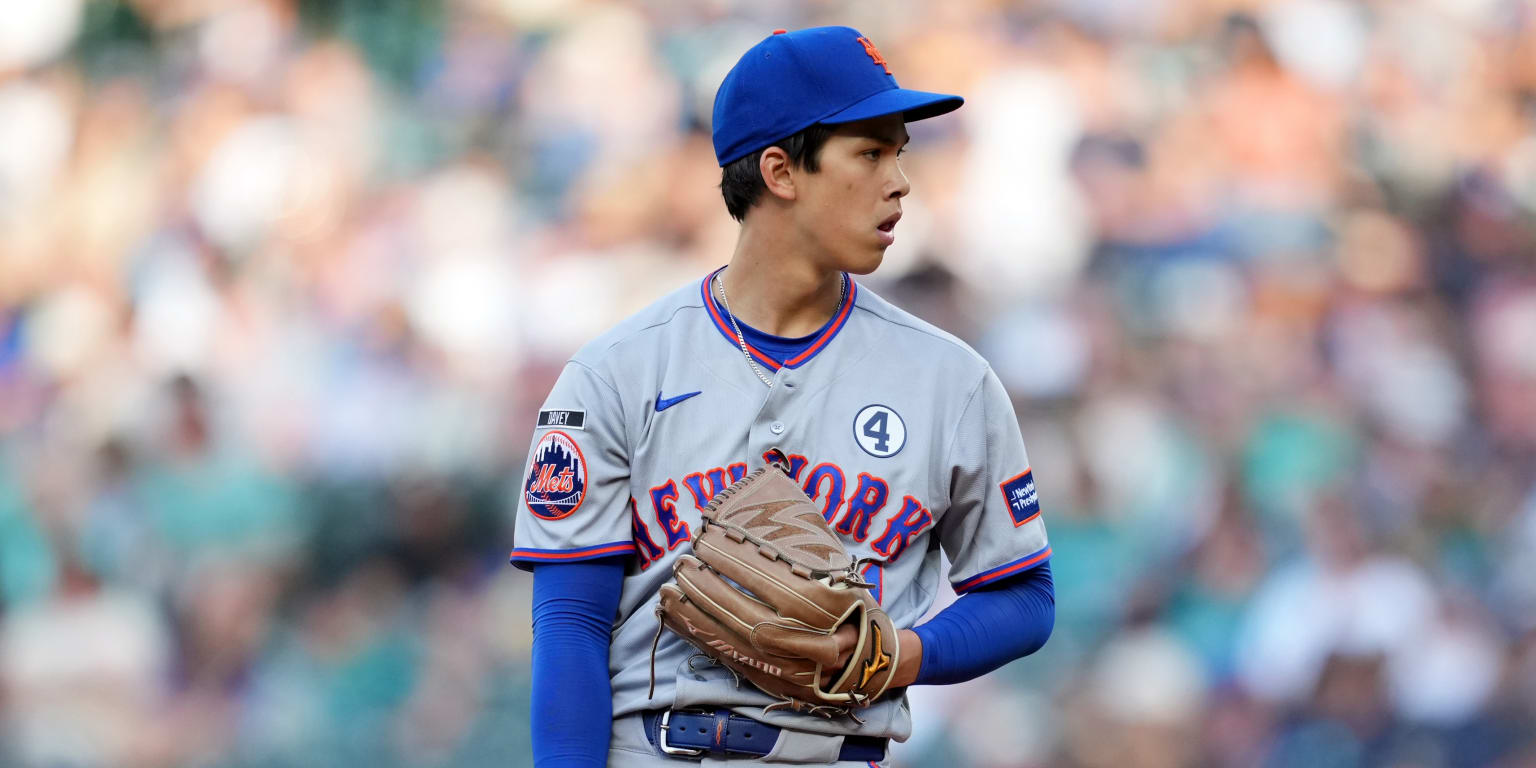
The Mets optioned right-hander Jonah Tong to Triple-A Syracuse on Wednesday, cutting short his big-league window after three appearances that exposed a mechanical flaw too severe to ignore at the major-league level. In his final outing against Seattle on Tuesday, Tong surrendered five runs across 3 1/3 innings—a sequence that followed six walks in his previous six frames of work. The issue was simple and damning: his fastball command had deteriorated to the point where he was no longer a functional option in the Mets' bullpen.
Tong's overall 3.60 ERA across his three appearances masks the inefficiency underneath. He averaged more than 22 pitches per inning in his final two outings, a usage pattern that makes him a drain on bullpen depth rather than a stabilizer. For context, a reliever working 22+ pitches per frame burns through a staff's arms and forces early hooks in tight spots—exactly what a team fighting for positioning cannot afford. Manager Carlos Mendoza acknowledged the talent is there ("He's too talented") but made clear the margin for development at this level has closed. Tong needs repetitions in controlled environments where he can rebuild confidence in his primary weapon without the pressure of major-league consequences.
The roster move itself is straightforward: the Mets recalled right-hander Joey Gerber to bolster the bullpen and can temporarily operate with a four-man rotation because of off-days on Thursday and June 10. The rotation slot won't need filling until June 13, by which point Kodai Senga (lumbar spine inflammation) could return from his minor-league rehab assignment—or the organization will pivot to Zach Thornton, jack Wenninger, or an external free-agent band-aid. What matters for bettors is the interim bullpen composition and leverage usage.
Gerber's promotion suggests the Mets view him as the safest high-leverage option available in-house right now. His track record and trust level will determine whether late-inning spots against stronger competition remain stable or contract. If Gerber is unproven or carries injury flags, the Mets' ability to protect leads in the sixth, seventh, and eighth innings—particularly in close games—narrows. This directly impacts bullpen ERA and inherited runner scoring rates, which feed into team total unders and game spread volatility. A bullpen in flux typically sees: (1) increased inherited runners scoring, (2) higher leverage reliever usage that elevates injury risk, and (3) a wider band of outcomes in close games.
The propositional play here is cautious betting into team totals for the Mets in the next 7-10 days. As long as Gerber is the only new relief body and Tong's slot isn't permanently filled, New York's bullpen carries elevated volatility. Late-inning meltdowns become more probable; games that should be comfortable wins turn into squeakers. If the Mets' offense scores 4.5+ runs in their next matchup, the under on team total over 4.5 carries more juice than usual because the bullpen is more likely to leak runs in innings 6-9. Similarly, moneyline odds for Mets favorites should be approached with skepticism until the rotation/bullpen picture stabilizes. The market likely hasn't priced in the incremental collapse risk that comes from removing a young arm and replacing it with an unproven commodity—that's the edge window.