Skubal's Deadline Uncertainty Sharpens Tigers Favorite Status Against Royals
By Justin Erickson ·
Detroit's unexpected surge into wild-card contention complicates the trade calculus for its ace, but Friday's matchup against Kansas City still carries structural advantages for the home side.
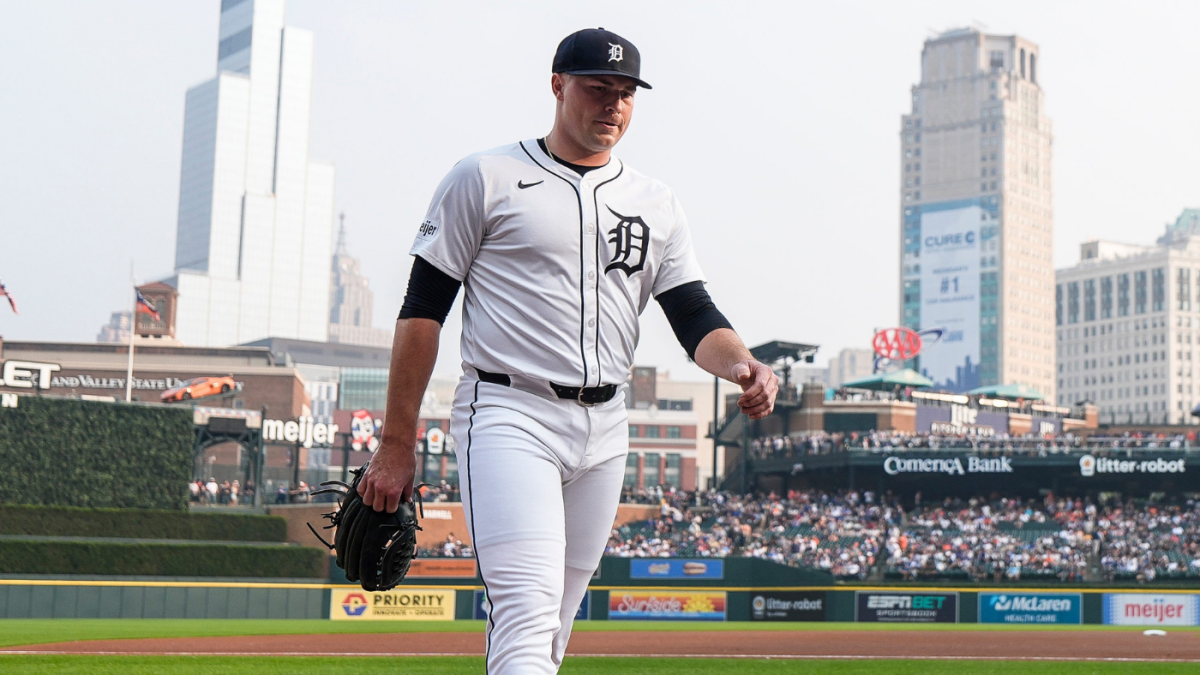
The Detroit Tigers were 16 games under .500 at the end of May. A Tarik Skubal trade seemed inevitable. Now, after posting a 27-16 record over their last 43 games, the Tigers sit just four games behind Boston for the third wild card spot in a fragmented American League. That reversal doesn't erase the pre-deadline whispers around Skubal—the two-time Cy Young winner remains movable at the Aug. 3 trade deadline—but it does inject genuine uncertainty into whether Detroit's front office actually pulls the trigger. For Friday's start against Kansas City, Skubal's availability is no longer a foregone conclusion. The Tigers are -271 favorites, a steep ask that reflects both their recent form and the structural mismatch in this matchup.
Kansas City's decision to deploy an opener rather than a traditional starter creates the kind of bullpen vulnerability that compounds against a Tigers offense that desperately needs a confidence injection. Detroit has generated just 37 RBIs with runners in scoring position—tied for 25th in baseball—a telling indictment of late-inning execution. The Royals, arriving after their own travel grind, have no such luxury. An opener-heavy approach on the road against a team hitting into that specific weakness is a concession, not a tactical innovation. When the Royals' pitching plan forces them to burn relievers early just to survive the bottom of the first, Detroit's contact-dependent hitters gain runway against tired arms in innings three through six.
The prop angle here threads through Detroit's situational vulnerability rather than raw hitting prowess. Yes, the Tigers have underperformed in RISP situations, but that statistical drag has actually depressed the line. Sportsline's model grades Royals +1.5 at -104 as a 'B'—a mild endorsement that assumes Kansas City can thread the needle through Detroit's early-inning chaos. That grade underweights the opener's built-in fatigue tax and the Tigers' ability to manufacture runs via small ball once Skubal exits around the 90-pitch mark. The -271 moneyline is aggressive, but it's not bloated; it's proportionate to the underlying mismatch in bullpen depth and situational execution.
For Yankees-Phillies, the prop conversation centers on Jesus Luzardo's domination of the strikeout zone. Over his last seven starts, Luzardo has posted a 1.49 ERA with 63 strikeouts in 42⅓ innings—a 13.4 K/9 rate that sits comfortably above his season average. The Yankees, conversely, own the league's highest strikeout rate against southpaw pitchers and sport a sub-.300 OPS in that platoon split over the last month. Luzardo's 15% swinging strike rate and 114 Stuff+ metric over the last 30 days represent sustainable edge, not variance spike. The over 7.5 total pitcher strikeouts at +108 is mechanically sound: Luzardo's velocity profile and chase rates against a strikeout-prone lineup create a two-way advantage. The line hasn't adjusted for his recent form; it's priced as if his season-long rate applies. Take the over.
Washington's ATS profile against Arizona presents a fatigue arbitrage. The Diamondbacks played the Athletics on Wednesday, flew to St. Louis for a makeup game Thursday, then flew to Washington for Friday's contest—a three-city, two-game gauntlet compressed into 48 hours. The Nationals had Thursday off. Washington has been one of the most profitable ATS teams of the season, and the sportsline model assigns a 'B' grade to Nationals +1.5 at -158 with a 70% cover probability. That grade likely underweights the travel toll on Arizona's position players and late-inning bullpen availability. Nationals +1.5 is mechanically sound as a lean.