MLB
Max Clark's Tiger Debut Opens a Rookie Volatility Play
Detroit's No. 3 overall prospect arrives with upside but a track record too young to anchor reliable prop pricing.
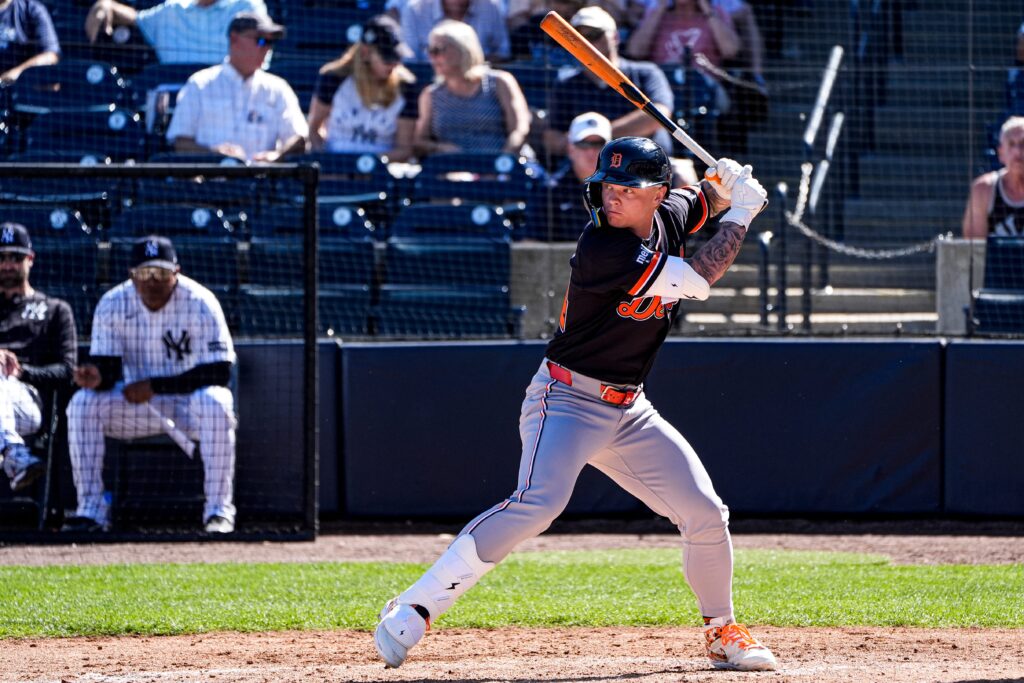
The Tigers are promoting Max Clark, their 2023 first-overall pick, to the majors for his debut. Clark ranked No. 16 on Baseball America's most recent Top 100 prospect list and has spent the season in the minor leagues, working toward readiness for big-league competition.
Clark's calling represents the natural arc of prospect development: a tooled-up young outfielder with a high draft pedigree transitioning from controlled minor-league environments to live MLB pitching. The Tigers clearly believe the timing is right. What matters for prop bettors is understanding what we don't know yet. Clark has never faced major-league velocity, sequencing, or defensive positioning. First-time callups—even highly drafted ones—carry inherent variance in their early plate appearances. Some adapt in real time; others need a 20-30 at-bat runway before their minor-league numbers translate.
The market's initial response will likely price Clark conservatively on strikeout rates (expecting regression from minor-league K/9, which often understates major-league difficulty) and cautiously on hit-based props. Sportsbooks will assume elevated strikeout risk and lower contact floors until he proves otherwise in live at-bats. This is rational; rookies with limited MLB reps carry genuine execution uncertainty. His minor-league hit rates, walk rates, and power metrics exist in a different context now.
For prop players, the edge depends on timing. If Clark gets immediate starts in the next 24-48 hours, the first wave of props (K rates, H+R lines, team total contributions) will be priced defensively—books hedge against unknown unknowns. If he's eased in as a bench bat or DH-eligible piece, prop volume will be minimal or non-existent, limiting opportunity. The real angle surfaces only if Clark racks up consecutive games of 3+ AB before the market has processed a meaningful sample. Early strikeout unders could offer value if he makes contact at minor-league rates (suggesting he's further along the adjustment curve than the book assumes), but that's a contrarian bet that requires conviction and patience—not a default play. Evaluate his actual minor-league peripherals (K%, BB%, xBA) against the opening lines; if the book prices him 3-4 strikeouts higher than his minor-league walk-rate suggests, that's a fade candidate. Right now, with zero MLB data, that call is speculative.
MLB Intelligence — Baseball intelligence beyond the box score. Open MLB Intelligence →