Tigers Trade Skubal, Call Up Clark: A Prospect Reset Signals Lineup Volatility Ahead
By Ty Whitney ·
Detroit's midseason dismantling—trading its ace and promoting an elite prospect—reshapes offensive production for the second half; fantasy lineups face immediate depth exposure.
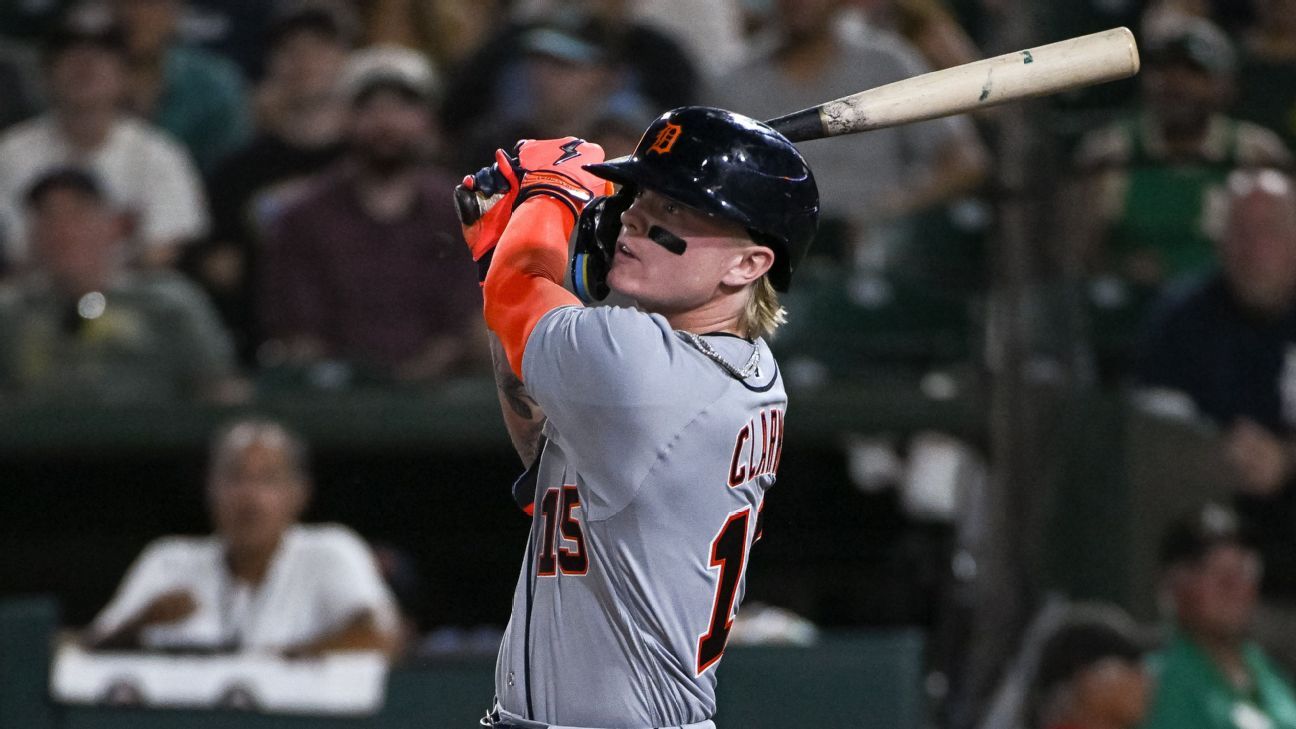
The Detroit Tigers formally pivoted toward 2027 over the weekend, first by shipping out Tarik Skubal, the two-time defending AL Cy Young winner, in a deadline trade that cleared payroll and closed the door on a competitive window. The second move—recalling 21-year-old outfielder Max Clark from Triple-A—carried more subtext than surface value. Clark's promotion arrived ahead of the August 14 threshold after which a prospect exhausts his rookie eligibility window, a timing choice that matters significantly for how the team intends to deploy him. The Tigers appear committed to installing Clark as an everyday player rather than shuttling him back to minor league reps, suggesting they've abandoned any pretense of contention this season and are running out their prospect timeline.
Clark's minor league résumé supports the decision. At 21, he carried a .276/.368/.434 slash with 11 home runs and 21 stolen bases (89.2% success rate) into his recall. More critically, he caught fire after early June: .294/.402/.506 with nine of those 11 homers in a 40-game window. His calling card isn't raw power—it's plate discipline paired with legitimate speed. He owns a 14.6% walk rate and 78.8% contact rate across his professional career, a rare combination for a young outfielder. In his opening weekend at the majors, Clark drew five hard-contact results on nine balls in play with a 13.3% miss rate, early evidence that his elite approach translates to big-league velocity.
The Skubal trade widens a pitching crater that compounds Detroit's offensive uncertainty. Without their ace—a workhorse who accumulated 200+ innings annually—the Tigers' rotation loses both innings depth and the gravitational pull that keeps mediocre lineups from ballooning offensive totals against weaker competition. Clark's arrival creates a hedge: a young outfielder with elite speed and walk rates entering an expanded role in a team explicitly resetting for next season. Fantasy assets in downward-spiraling franchises often see spike opportunity because workload expands and matchups deteriorate (weak pitching invites more offensive opportunity against other clubs). Clark fits that mold. His stolen-base floor is secure given his 89.2% career success rate; his home run ceiling rises if the Tigers lean on him daily in a below-replacement rotation environment.
For prop bettors, the angle hinges on Detroit's offensive production volatility over the final two months. With Skubal gone and Clark plugged into a full-time role, Tigers team total unders below 3.5 runs carry risk in spots where they face equal-or-worse rotation competition. Clark's stolen-base prop (if offered, typically 0.5 per game as a recall baseline) likely opens conservative; his walk rate and contact discipline suggest early-season overs hold value as sportsbooks calibrate his usage patterns. The broader signal: prospect call-ups in fire-sale franchises don't stabilize; they compress variance upward. Teams pulling prospects up before the eligibility deadline are signaling that evaluation and development—not winning—drives September. That creates opportunity for elevated offensive totals on nights when Detroit faces journeyman starters.