Flaherty's Early Exit Signals Deeper Trouble for Detroit's Rotation
By Justin Erickson ·
Jack Flaherty's three-inning departure Friday compounds a season already defined by ineffectiveness and injury risk, forcing the Tigers into bullpen depth they cannot afford.
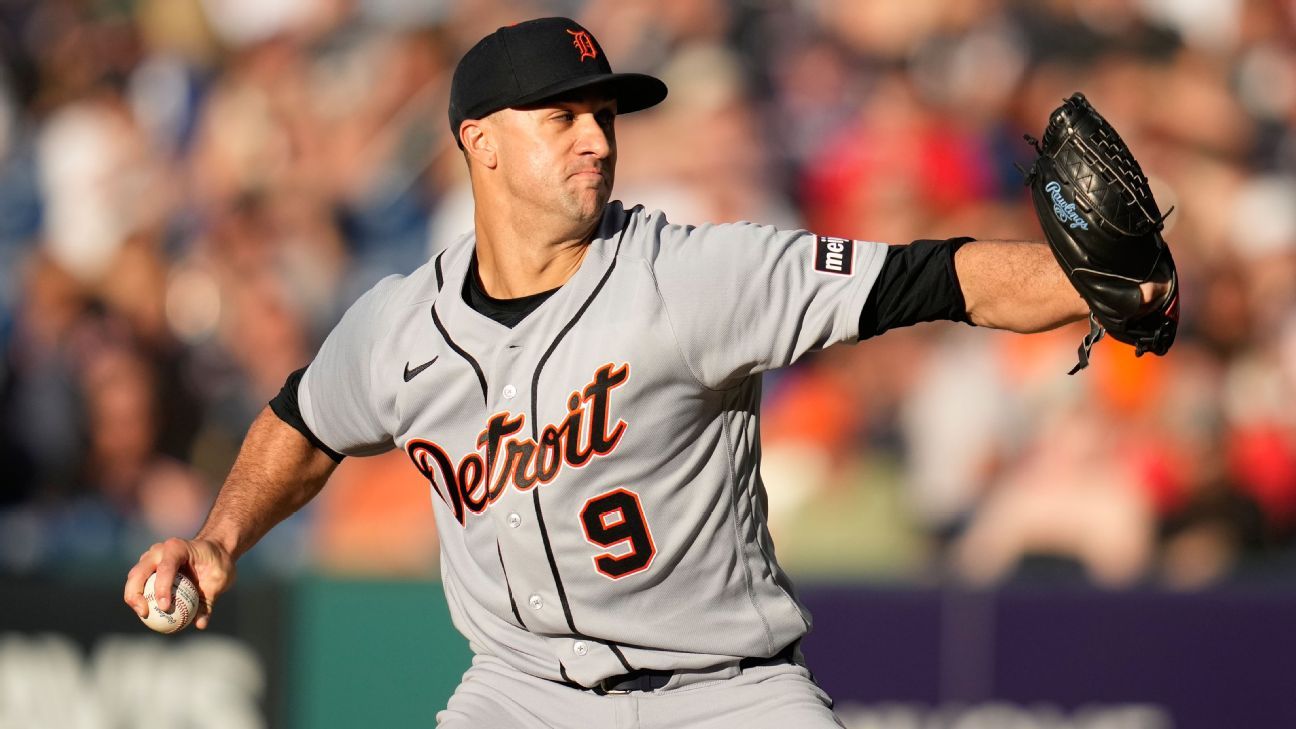
Detroit Tigers right-hander Jack Flaherty exited Friday night's game against Cleveland after just three innings due to left leg discomfort, the second time this season he has failed to complete four frames. He allowed two runs on three hits with a 1-1 strikeout-to-walk ratio across 63 pitches before departing with the Guardians leading 2-1. The injury comes as Flaherty continues to spiral through what has become an unraveling 2026 campaign: he enters tonight's outing with a 1-7 record and a 5.35 ERA across 15 starts.
The larger context here is grim. Flaherty's early exit follows a similarly abbreviated outing on April 25 against Cincinnati, when he lasted two innings and surrendered six runs in a 9-2 blowout. That April disaster was nominally roster management (injury precaution); Friday's departure reads differently—a live-game discomfort that forced the Tigers' hand mid-outing, with no advance warning. For a rotation already stretched thin by depth issues and competing injury concerns, losing even three potential innings of production in real time forces the bullpen into oversaturation that typically degrades performance over the subsequent 48 hours.
Flaherty's ineffectiveness predates Friday's injury. His 5.35 ERA and 1-7 record reflect a pitcher who has lost command consistency and is getting hit hard in the zone. Over his 15 starts, he has given up hard contact that suggests his underlying stuff has not held up under big-league scrutiny this year. The strikeout rate relative to his walk rate indicates he is not dominating the zone—he is just surviving in it, and barely. A left leg discomfort on a pitcher is often benign (corking, mild strain, overuse tightness), but it can also cascade into load-management decisions that limit his availability going forward, further hollowing out Detroit's rotation depth.
For bettors, the immediate implication is straightforward: Detroit's team totals should contract over the next 7-10 games, not because Friday's loss was definitive, but because the Tigers now have a documented injury concern attached to a starter who was already underperforming. When a team loses innings from its rotation—whether temporarily due to injury management or permanently due to ineffectiveness—opposing pitchers benefit from shorter pitch counts against weaker relievers. Cleveland roughed up Flaherty on Friday and may see a similar quality of pitcher if Detroit elects to skip or further delay his next start. Unders on Tigers team totals at 4.0 or higher over the next two weeks carry an embedded edge rooted in depleted rotation depth and a live injury that will almost certainly result in reduced offensive support (fewer games, more rest, tighter pitch counts for hitters following bullpen fatigue).
The strikeout prop angle is subtler but worth tracking: if Flaherty does return to the mound within 10-14 days, his K rate will likely remain suppressed given the combination of reduced command and potential load management. Fading Flaherty strikeout overs until he logs at least two consecutive clean starts becomes a reasonable intermediate play, assuming the injury does not sideline him entirely.