MLB
Braves' Luck Runs Deeper Than One Outfield Collision
Atlanta's eight-game winning streak isn't propped up by freak moments—it's built on consistent offensive output and a bullpen that's stopped leaking.
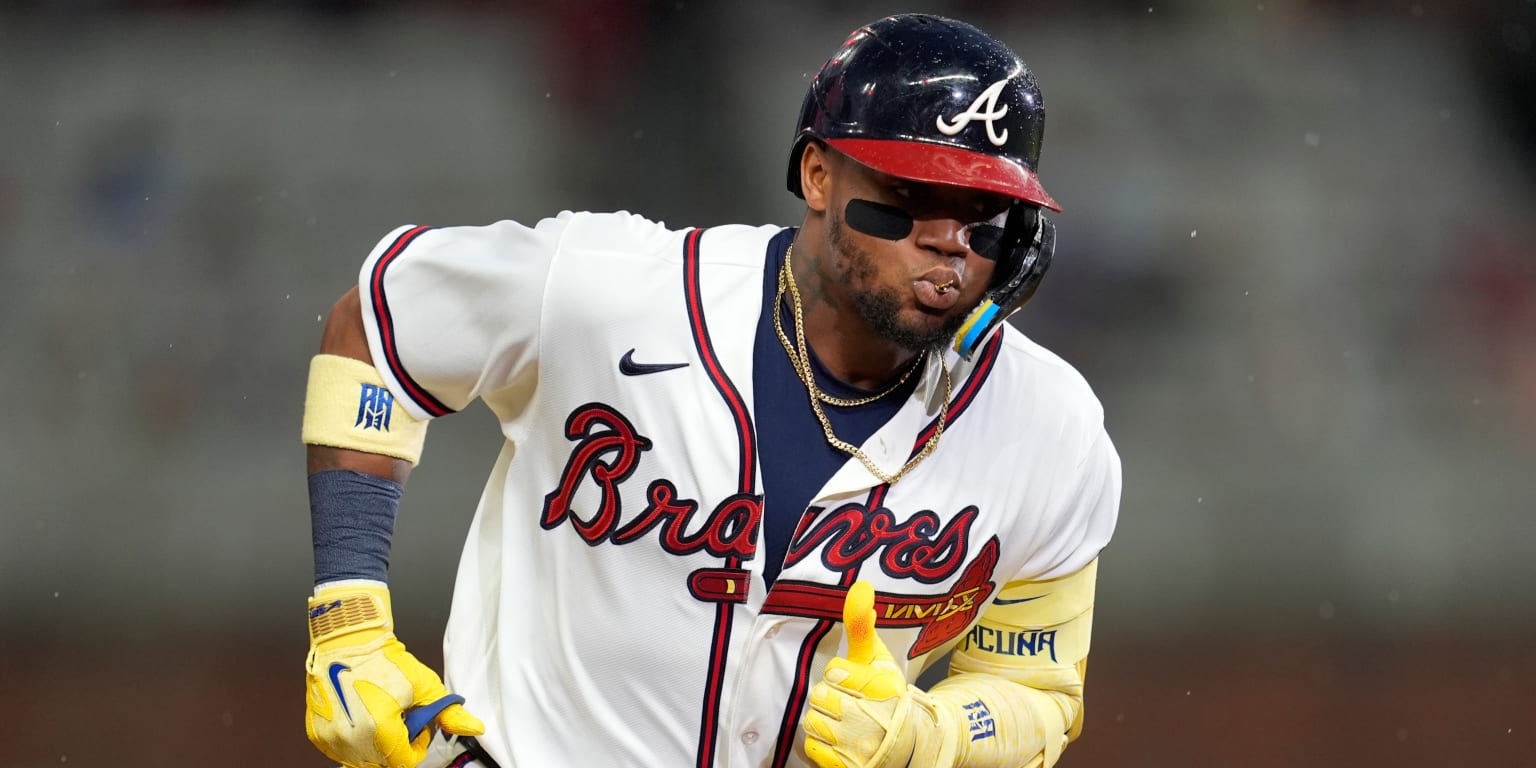
Ronald Acuña Jr. hit two home runs in Thursday's 11-3 rout of Miami, including one that ricocheted off the gloves of two Marlins outfielders who collided on the left-center track. The second-inning oddity—where Esteury Ruiz and Heriberto Hernández's miscommunication turned a catchable ball into a two-run homer—is the kind of play that gets replayed for comedic value. But it's also a useful lens for understanding what's actually happening with Atlanta right now: the Braves aren't winning eight straight because of bounces. They're winning because everything else is clicking.
The context matters. Miami deployed an unfamiliar outfield pairing—Ruiz in center, Hernández in left—because starter Martín Pérez forced the Marlins into a right-handed-heavy lineup. That duo has played together just 11 times all season. It's an understandable decision against a left-handed starter, but it also meant one less familiar ground was covered in the outfield. This is execution risk, not luck. The Braves have now won 15 of 20 since the All-Star break and built an eight-game division lead by beating teams that aren't executing at full capacity.
Accounting for Acuña's relentless production against Miami is more straightforward. He carries a 1.036 OPS across 102 career games against the Marlins entering Thursday and has now homered off them 28 times—more than any other team he's faced. That's not variance; that's a structural advantage. The Marlins have surrendered the most home runs to any single player in baseball. Matt Olson also extended his power surge, hitting his 32nd home run of the season—his 12th in his last 30 games. When your two best power hitters are both in extended hot stretches, and you're facing an opponent with a patchwork lineup, eight-game winning streaks become predictable rather than lucky.
The betting angle here is about separating signal from noise. The Braves' recent form has underpinned aggressive line movement favoring Atlanta in divisional matchups. But much of that movement has been reactive to the winning streak itself rather than rooted in the underlying mechanics: a top-three offense by wRC+, pitching stability post-All-Star break, and a bullpen ERA that's dropped from 4.1 to 3.6 over the same stretch. Miami, by contrast, is fundamentally undermanned—the outfield miscommunication was a symptom, not the disease. If sportsbooks are leaning into Atlanta's momentum without fully pricing the gap in roster construction, unders on Braves team totals become vulnerable in their next matchup against a fully healthy opponent. The 11 runs they scored Thursday inflated their implied total; regression won't come from bad luck reversing, but from facing teams that can execute their defensive assignments.
Watching Acuña casually toss his bat after contact—convinced his eighth-inning homer was an out—captures something true about this team's advantage. They're not banking on rain delays or outfield collisions. They're just better right now, and the market's pricing has already begun to reflect that. The real edge is in fading the extreme, not chasing the streak.
MLB Intelligence — Baseball intelligence beyond the box score. Open MLB Intelligence →