Yankees' Catcher Desperation Opens a Deadline Angle on Offensive Output
By Justin Erickson ·
With Austin Wells posting a .524 OPS, New York faces a 10-day window to add catching production or lean into run-prevention bets.
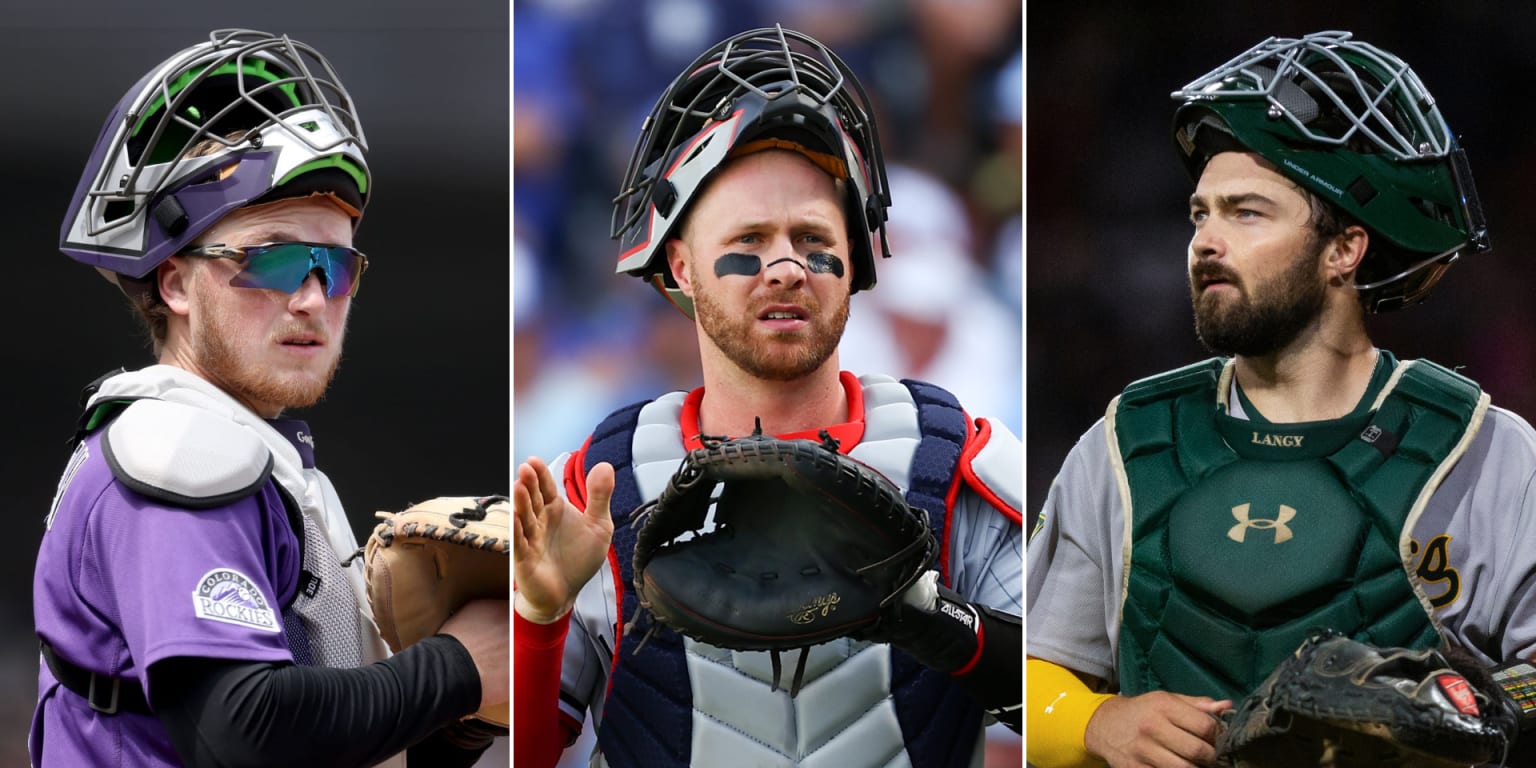
The Yankees' catching position has become a liability at the plate, and the front office has fewer than two weeks to address it. Austin Wells, their primary backstop, owns the second-worst OPS (.524) among qualified hitters in baseball, a gap so wide that even the White Sox—historically the league's worst-hitting team behind the plate—are outperforming New York at the position. The Trade Deadline arrives August 3, leaving the Yankees a 10-day window to either upgrade significantly or commit to a defensive-first arrangement for the remainder of the season.
The most probable target, Minnesota's Ryan Jeffers, carries a .933 OPS through 44 games and hits right-handed, addressing both the power and platoon concerns. But the Twins remain 2.5 games outside a playoff spot entering late July, meaning they're likely to hold firm on asking price. More tantalizing targets exist—Shea Langeliers (.848 OPS over two years, controlled through 2028), Hunter Goodman (.890 OPS, .563 slugging percentage, only 26 years old and under team control through 2029)—but both Oakland and Colorado have signaled they view these catchers as cornerstones of future competitiveness, not deadline chips. The cost to pry either loose could approach a prospect like Giancarlo Stanton or a young starter. Francisco Alvarez of the Mets sits somewhere in the middle: controllable through 2029, movable (he's not on the untouchable list), but still unproven enough that his 107 wRC+ doesn't justify a blockbuster return. Adley Rutschman in Baltimore is essentially untouchable—division rival, wrist injury, and the Orioles' stated preference to hold.
For bettors, the arithmetic is straightforward. If the Yankees acquire a catcher with a .850+ OPS (Jeffers, Langeliers, or Goodman), their offensive ceiling in September shifts measurably. A .524 OPS catcher rotates out; a .850+ OPS catcher rotates in—that's roughly 60-80 additional points of slugging percentage and 40-50 points of OBP from 40-50 plate appearances per month. Against a league average catching OPS of roughly .755, Wells underperforms by 230 basis points; Jeffers or Langeliers overperform by 80-100 basis points. The swing across September and October is non-trivial for team totals and run-line pricing.
But timing matters. If no upgrade materializes by August 4, the Yankees likely accept the Wells-based offensive profile for the final two months. In that case, team total overs become exposed to downside risk in high-leverage moments, particularly against bullpen-heavy teams where early offensive support becomes critical. Conversely, if the deadline passes with an acquisition in place, overs that priced the team as a .524-OPS catching offense should offer value; the market may not fully repriced the position overnight. Watch the August 3 deadline clock closely. If a deal lands by mid-morning, early-evening overs move sharply and the edge evaporates. If negotiations stall, unders become the safer play against New York in the second half, especially in tight contests where the catcher's bat might swing a one-run game.