May's Rookie Surge Rewrites Prospect Value: Where the Betting Market Is Sleeping
By Justin Erickson ·
The ten hottest rookies in May came from wildly different pedigrees—a $140K Dominican signing and a $8.95M first-overall pick both dominating—and that variance exposes a critical gap between prospect ranking and actual production.
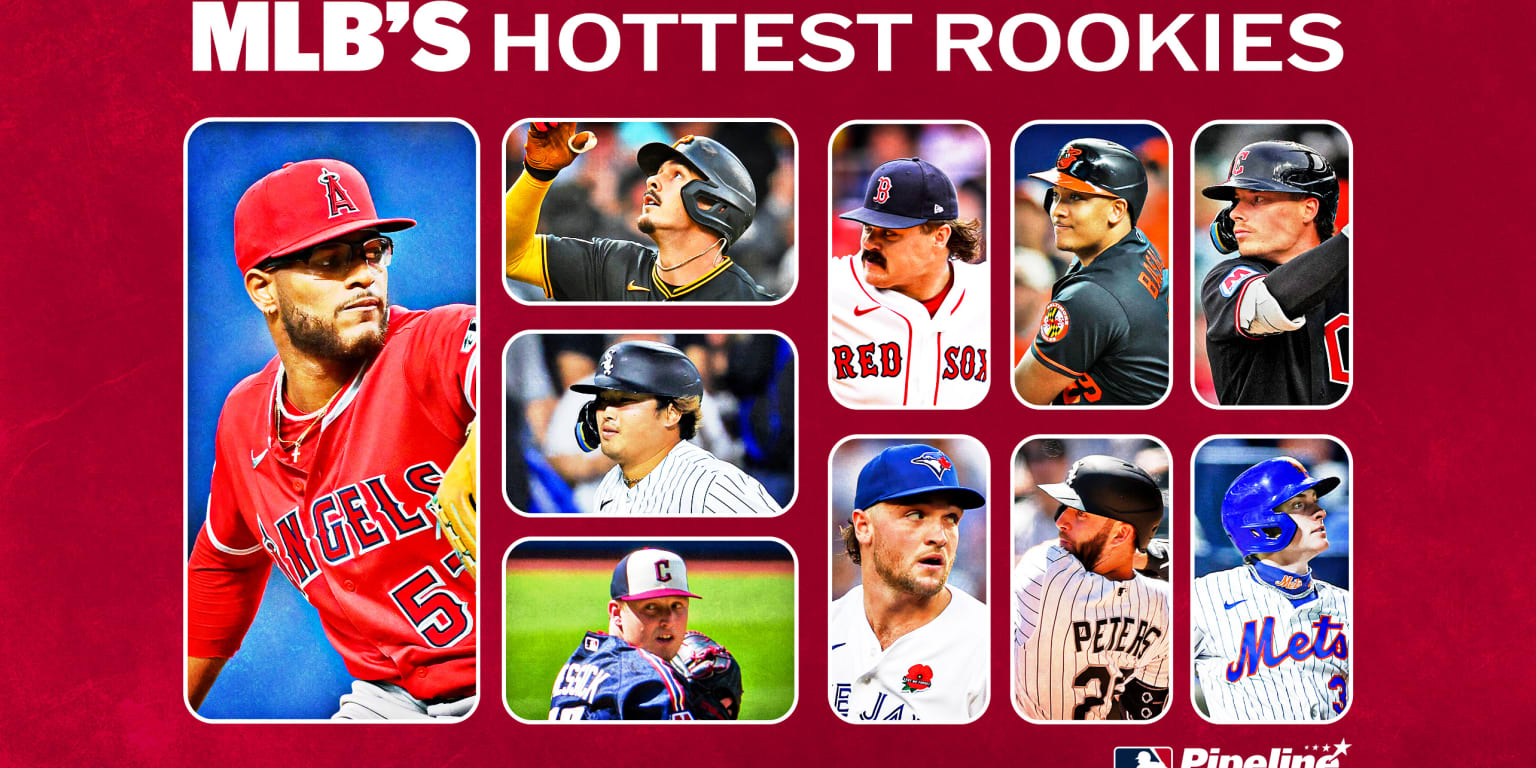
Walbert Ureña entered May with a 4.76 ERA and zero wins. He left it 2-1 with a 1.64 ERA and a .553 opponent OPS across six starts. Ureña was ranked 19th on the Angels' prospect board before his call-up, signed for $140,000 out of the Dominican Republic, and is now the framework for a legitimate rotation answer. Meanwhile, Travis Bazzana—the 2024 first-overall pick who inked an $8.95 million deal—posted .311/.398/.476 numbers with 11 extra-base hits and eight steals in his first full May, exactly validating Cleveland's bet on him. The disparity in origin stories matters because it tells you something the market hasn't fully priced: rookie production doesn't correlate linearly with draft capital or signing bonus.
The May cohort doesn't follow the typical prospect hierarchy. Munetaka Murakami leads baseball with 20 homers, but he's now sidelined 4–6 weeks with a hamstring strain—a sharp reminder that hot stretches can collapse into injury. Trey Yesavage (2.56 ERA, 36 strikeouts in 31⅔ innings) returned from shoulder impingement and immediately looked postseason-ready on his fastball carry and splitter. Payton Tolle, a Red Sox left-hander, held opponents to a .171/.227/.244 line against his fastballs in May—elite stuff on a full season of data. Samuel Basallo struggled in 2025, recovered in April, then exploded in May (.338/.397 with 11 extra-base hits), pairing with Adley Rutschman to create the most productive catching tandem in baseball. The through-line: May performance maps to specific mechanical advantages or offensive toolkit expression, not to where scouts ranked these players nine months ago.
For bettors, this creates two immediate layers of opportunity. First, the market's initial lines on young arms like Ureña and Yesavage were built on spring-era expectations and April struggles. Once May numbers land, books adjust, but they typically overcorrect toward the hot streak rather than settling on a sustainable baseline. A pitcher who posts a 1.64 ERA in six May starts gets lined as if that's repeatable; it usually isn't, but the over on strikeout totals and the under on opponent runs in the next week can represent genuine value because the market is chasing recency. Conversely, hitters like Bazzana and Griffin—both 2024 first-rounders who went through early-month doldrums before May production—are being repriced upward by books that assume the draft capital predicts sustainability. This is where the inverse play lives: their May totals are elevated relative to their season-long floor, and that premium fades once the market normalizes.
The Murakami injury is the wildcard. He led baseball with 20 homers before the hamstring forced the IL; any team total or over-unders tied to Angels production for the next month will compress downward as books pull forward the loss of his 0.938 OPS and .560 slugging percentage. That creates an immediate fade on Angels team totals over 4.5 in June games, because 4–6 weeks removes an elite power bat mid-stretch. Conversely, pitching props for Angels opponents spike—if Ureña's fastball is sitting 98–101 mph but Murakami's absence strips run support, the under on Angels team runs becomes more valuable than the market's initial open. The mechanism is straightforward: injury doesn't just remove a player; it reallocates the entire team's offensive structure and how opposing pitchers can approach lineups.
The deeper betting edge lives in recognizing that May performance on top-ten rookie lists is heavily weighted toward positive noise and injury-adjacent volatility. Ureña's second-month surge doesn't guarantee a 1.64 ERA in June; Yesavage's shoulder clearance is real, but fastball-splitter guys don't sustain those strikeout rates indefinitely against MLB hitters adjusting. The smart play isn't to chase the May momentum—it's to fade overs and team totals tied to rookies whose May carries all the hallmarks of a single hot month, not a sustained skill. Bazzana and Griffin, drafted in the top tier, are safer bets to hold value because their production aligns with preseason organizational investment. Murakami's injury, Ureña's ERA compression, and Yesavage's reliance on a returning arm all carry expiration dates measured in games, not seasons.