Cubs Break the Drought: Ben Brown's Emergence and the Mechanics Behind Chicago's Series Win
By Justin Erickson ·
Chicago's first series victory in over a month hinges on a rotation stabilizer and a lineup finally capitalizing on early pressure—both developments that reshape the Cubs' pitching and batting props for the stretch run.
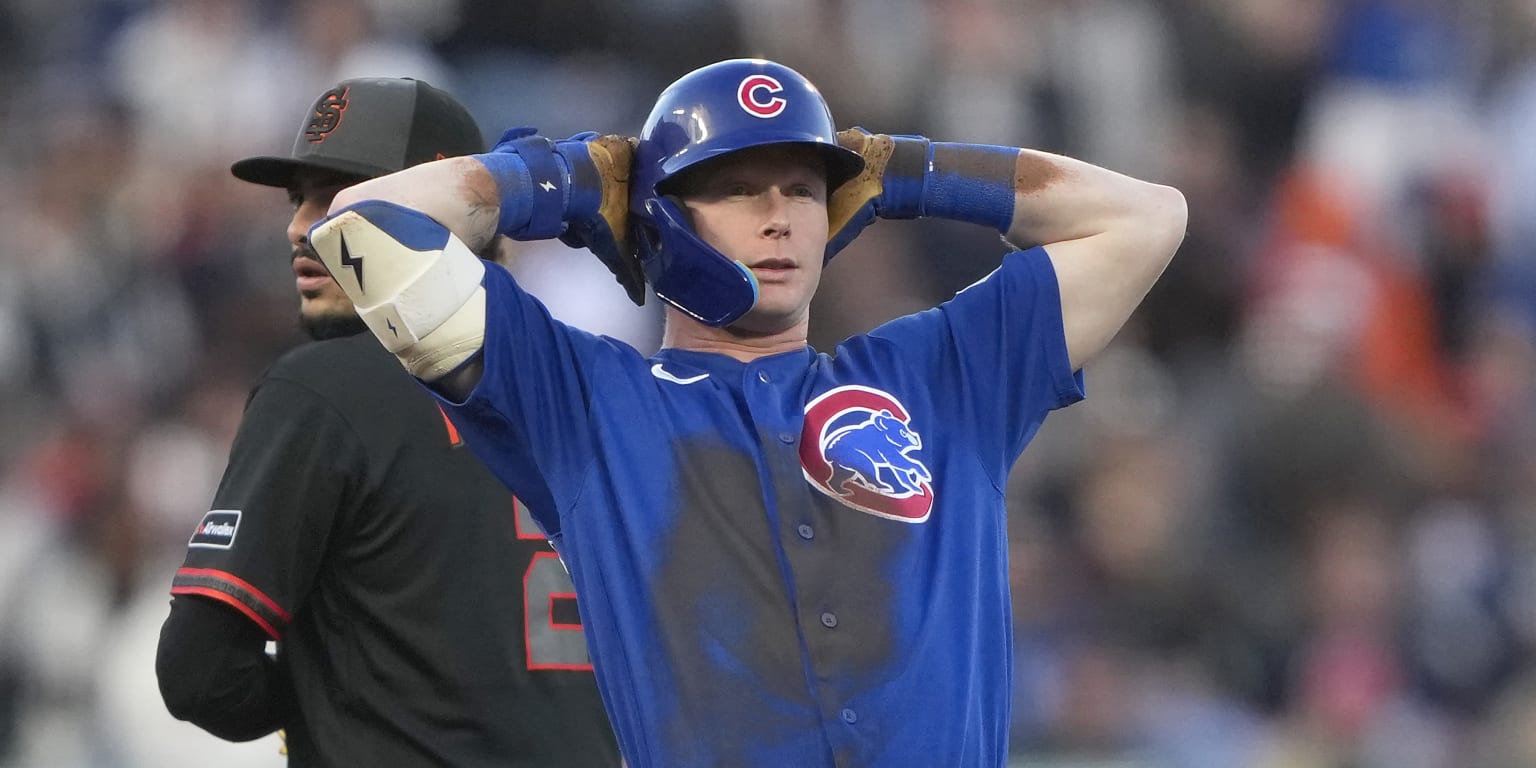
The Cubs took down the Giants 6-1 on Saturday to secure their first series win since May 4-7, snapping a 10-series winless streak that had defined their June until now. The victory capped a three-game winning streak—their first since a 10-game run that spanned late April into early May. The mechanical shift wasn't subtle: Ben Brown, the 26-year-old right-hander, delivered five innings of one-run baseball, scattering seven hits while walking three and striking out five against a lineup that included Rafael Devers. Brown's performance extended a stretch that has become difficult to ignore. Over his past four starts, the Cubs righty has posted a 1.16 ERA across roughly 31 innings; for the full season, his 1.74 mark ranks among the rotation's most reliable anchors. The strikeout rate sits at a respectable 9.2 per nine, and his walk rate—3.4 per nine—suggests he's avoiding the wild periphery that plagues young starters.
The Cubs' offensive explosion provided the real separation. Pete Crow-Armstrong opened the game by launching a first-pitch slider into left field for a game-opening homer, the first of his career to lead off. He finished 3-for-4 with two runs scored, signaling that his recent promotion to leadoff—installed in late May—has unlocked timing and aggressiveness. Ian Happ added a solo shot in the fifth; Pedro Ramírez hit his first career home run in the same inning. The offensive output ranked as the most explosive Chicago had produced in weeks, and the timing matters: a lineup that had been starved for early counts and first-pitch opportunities finally showed the discipline to attack them.
Seiya Suzuki's early exit on a right knee injury clouds the picture. The right fielder departed in the fourth after stepping awkwardly on a catch attempt, marking a recurrence of the same knee he injured during the World Baseball Classic earlier in the year. Before leaving, Suzuki went 1-for-1 with an RBI and made two strong defensive plays, including a throw to second that caught Bryce Eldridge attempting to stretch a hit. Suzuki has been Chicago's most consistent two-way contributor—both offensively and in the field—and any absence will test the depth.
For prop bettors, the Brown angle is the durable edge. A starter posting a 1.16 ERA over his last four outings isn't statistical noise; that's a repeatable compression of walk and home-run rates that suggests the Cubs have genuinely stabilized their rotation. When Brown takes the ball against lineups without elite right-handed power (and especially those weak to fastballs up in the zone), his strikeout prop—currently priced in the 5.5-to-6.5 range depending on opponent—becomes undervalued given his recent velocity and command profile. The next three Cubs rotation starts will likely feature Brown again, and each carries elevated value on strikeout totals over 5.5 until the market reprices his recent form. Fade unders on Brown's K total and lean toward game totals under 8 runs when the Cubs' stronger defensive unit is healthy and Brown is on the mound; the combination of a tightening pitcher and a lineup showing discipline in counts adds up to scoreboard compression.
Crow-Armstrong's integration at leadoff also reshapes team offensive props. His 3-for-4 night wasn't an outlier—it reflected a pattern: leadoff hitters who get 25-30% of their plate appearances in favorable early counts see elevated run-scoring rates because they reach base more often ahead of the middle of the order. The Cubs' next few team totals should be monitored for overpricing on the high side if the market hasn't yet adjusted to Crow-Armstrong's stability in that spot and Brown's rotation reliability.