The Misiorowski Velocity Spike: Why Strikeout Props Get Dangerous in October
By Justin Erickson ·
Jacob Misiorowski's 1,053 fastballs at 100-plus mph in 2026 rewrites the starter's heat chart—and creates a dangerous mismatch between regular-season dominance and playoff volatility.
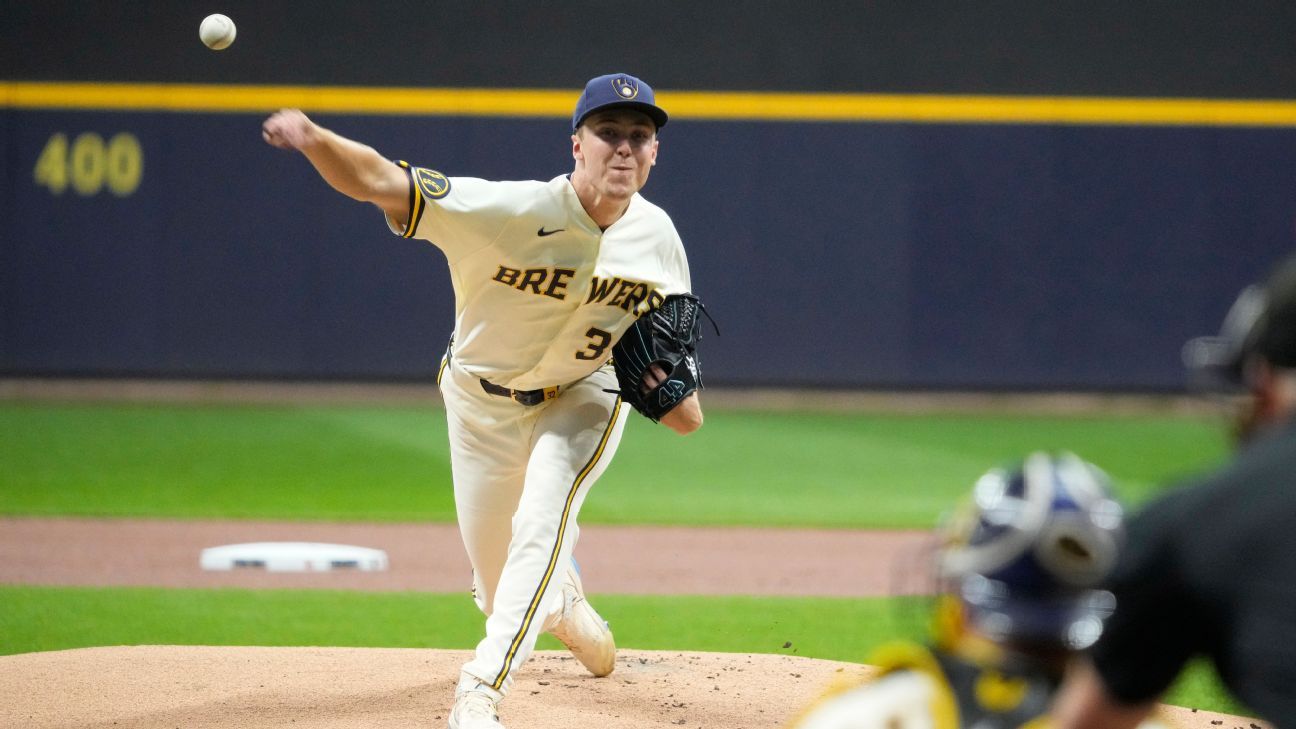
Jacob Misiorowski's 2026 campaign has obliterated every precedent for fastball deployment at the highest level. The Milwaukee Brewers' 24-year-old right-hander has thrown 1,053 pitches at 100 mph or faster—582 more than the second-place pitcher in baseball—while maintaining a 1.89 ERA, 0.81 WHIP, and 243 strikeouts. His June 26 fastball to Pete Crow-Armstrong clocked 105.5 mph, the fastest pitch thrown in MLB this season. In isolation, those numbers argue for a Cy Young ballot placement that's already assumed in the betting market.
But here's what separates sustained dominance from a velocity spike built on unsustainable leverage: Misiorowski has executed this arsenal exclusively as a starter, which is the mechanical and metabolic difference that matters. Jordan Hicks threw 659 triple-digit fastballs in 2018, Aroldis Chapman and Mason Miller logged their own heat-soaked seasons, but all three operated out of the bullpen in high-leverage, low-inning settings. Misiorowski has powered through 30+ starts at that velocity. His catcher William Contreras has called every pitch; his teammates note that opposing hitters often know the fastball is coming and still cannot square it. Brandon Woodruff's deGrom comparison is apt—pure location, pure velocity, minimal deception needed.
The regular-season track record is genuine. But postseason baseball introduces a variable that regular-season strikeout props cannot price: fatigue compounding in a compressed schedule, the regression toward mean velocity in high-leverage innings, and the reality that even 105 mph fastballs get hit when a batter has seen them four times in a series. Misiorowski's strikeout rates this season have been anchored by sheer volume—he's thrown more 100-mph pitches than anyone, so naturally he's struck out more batters with them. As the days to the World Series narrow, that volume advantage flattens under the pressure of elimination games and short rest.
For prop bettors, the seduction is obvious: take Misiorowski strikeout overs in his playoff starts, lean into the Cy Young narrative that the market is already pricing, assume the velocity carries through October. The trap is equally obvious. His 243 strikeouts came across 180+ innings at cruising velocity with full recovery between starts. Postseason Misiorowski will pitch fewer innings per outing, face hitters who have tape on him, and operate on shorter rest if Milwaukee makes a deep run. The strikeout volume that made him a regular-season juggernaut—1,053 triple-digit fastballs—will compress into 25-40 pitches per playoff appearance. His K/9 rate is elite, but his K total is a volume story.
The Brewers' playoff odds have shifted on Misiorowski's emergence, but sharp money has already begun pricing out the strikeout props for his postseason starts. Early playoff lines for his K total will carry inflated overs built on the 243-strikeout season anchor. Those overs will fade as October baseball exposes the difference between 30-start consistency and sudden-death execution. The angle is not fade Misiorowski—he's legitimately excellent. The angle is understand what regular season strikeout volume does not predict about playoff performance, and avoid chasing a category built on unsustainable pitch counts.